Snapbar Pricing: Worth It or Consider Simple Booth? August 2026
If you’ve ever tried to find out what Snapbar costs, only to land on a “build your own quote” form with no dollar figures, you know the feeling: less like shopping, more like applying for a mortgage.
Snapbar serves 10,000+ brands including Microsoft, Adobe, ServiceNow, and Dell, turning event engagement into leads and branded content.
The platform covers AI photo booths, persona quizzes, trading cards, and AI-generated video, all accessible through a browser with no app download. But Snapbar’s pricing is opaque. It lists starting prices for individual experiences, but not complete plans or final package prices. No self-serve options.
Every engagement requires a custom quote and an individually negotiated Master Services Agreement. Snapbar itself acknowledges that its starting cost is higher than competitors and rates its own DIY capability at 3 out of 10.
We’ve analyzed Snapbar’s pricing model, feature set, and service approach. It’s the right choice if:
- You’re running large-scale corporate events with 500 to 50,000+ attendees
- You have the budget for a vendor-managed activation service
- You want a dedicated team to design and configure your experience
- You need experience types like AI Stories, Persona Quizzes, or Trading Cards
- You’re an enterprise brand or agency that can justify custom contracts and 2 to 3 week lead times
Snapbar might not be the right choice if:
- You want to know what you’ll pay before talking to a sales rep
- You’re a photo booth rental operator, venue, or small business
- You need to set up and run activations yourself without vendor support
- You prefer published, self-serve pricing you can budget around
- You run frequent, smaller events where custom quotes for each one aren’t practical
In that case, consider Simple Booth: a photo booth platform with published pricing starting at $14.99/week, a self-service iPad app you can set up in under a minute, and the same core capabilities (AI effects, lead capture, branded galleries, virtual booth) without a sales conversation or a custom contract.
We’ve included a detailed pricing comparison with Simple Booth in this review. If you want to jump straight to the Simple Booth pricing breakdown, go ahead with this link.
Disclaimer: Snapbar does not publish pricing. All pricing details in this article come from Snapbar’s own statements, publicly available information, and third-party sources. Actual costs may differ based on individual negotiations.
Snapbar Pricing Summary
| Snapbar | Simple Booth | |
|---|---|---|
| Self-Service Level | 3/10 (self-rated); requires vendor collaboration | Full self-service; set up in under a minute |
| Minimum Commitment | Quote approval 8 business days before event | No minimum; cancel anytime |
| Free Trial | No free trial or free plan | 7-day free trial with 25 free AI credits |
| Published Pricing | Starting prices by experience; final pricing is custom-quoted | Plans from $14.99/week to $249/month |
| Pricing Model | Per-event custom contracts via MSA | Per-device subscription (weekly, monthly, or annual) |
| Best For | Enterprise brands and agencies running large-scale, custom experiential activations with vendor support | Photo booth operators, venues, and marketers who want published pricing and full control over setup and operation |
Snapbar Pricing: In-Depth Overview
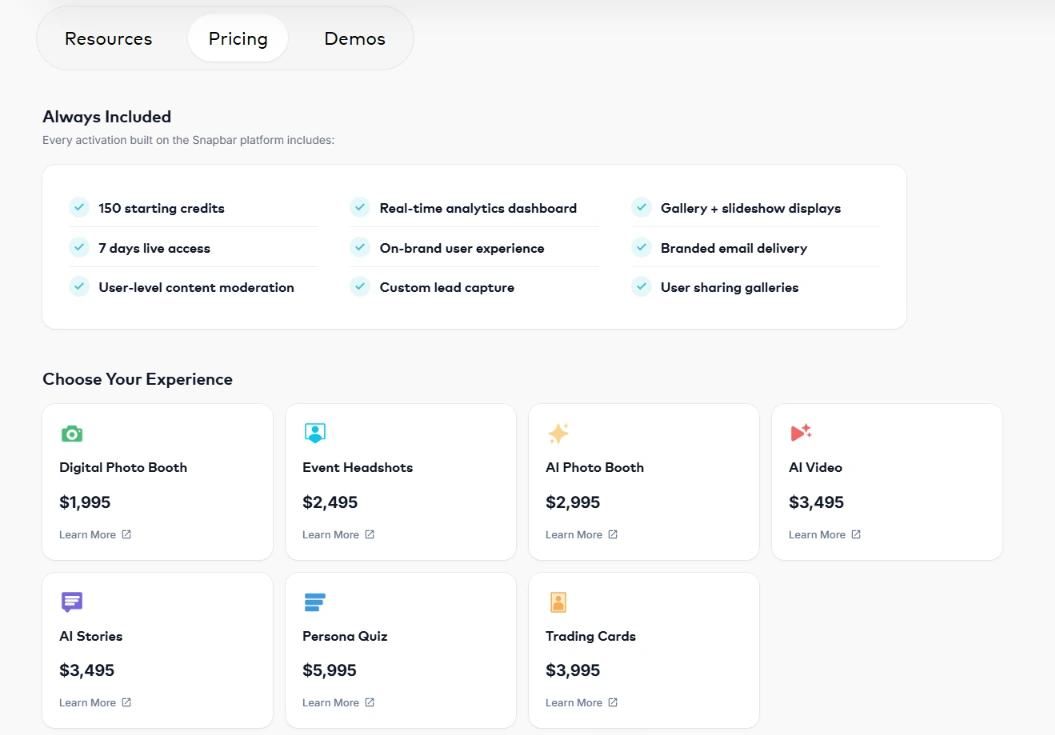
Snapbar operates on a custom quote model where every customer receives individually negotiated final pricing based on products selected, expected attendance, and customization required. While starting prices are listed for individual experiences, there are no published tiers, standard packages, or self-serve checkout.
Source: Snapbar
The company’s Terms of Use confirm that a Master Services Agreement and an applicable Proposal govern all commercial terms. Here is what’s publicly known about how Snapbar prices its services.
How Snapbar’s Quote-Based Pricing Works
| Factor | Details |
|---|---|
| Pricing Model | Custom quotes per event/project |
| Published Prices | Starting prices listed by experience; final pricing is custom-quoted |
| Quote Process | “Build your own quote” on pricing page |
| Contract Type | Master Services Agreement + Proposal |
| Lead Time | Design form due 6 business days before event; quote approval 8 business days before event |
| Payment Processor | Stripe |
Snapbar’s pricing page lets buyers select from the product lineup (AI Photo Booth, AI Video, AI Stories, Persona Quiz, Digital Photo Booth, Trading Cards, Event Headshots) and shows starting prices for each experience, but not a final package price.
It generates a quote request. Custom activations beyond these products require contacting the sales team directly.
Four variables likely drive pricing: which experience type you select, how much customization you need (custom AI styles, branded microsites, email templates), expected attendee volume, and whether you need hardware like Selfie Stations.
Snapbar’s own competitive comparison states: “Because we work with each client to customize the experience, our starting cost is higher, meaning our platform is not the most budget-friendly option for smaller events or organizations.”
| Custom Quote Model Pros | Custom Quote Model Cons |
|---|---|
| Pricing tailored to your exact needs | No way to estimate costs before a sales call |
| Includes collaborative design support | Extends evaluation and procurement timelines |
| Flexible for large or complex activations | Impractical for frequent, smaller events |
| Covers setup, configuration, and support | No self-serve option for budget-conscious buyers |
The Bottom Line: The custom quote model works for enterprise buyers with procurement teams and activation budgets, but it blocks anyone who needs to know costs upfront.
What a Snapbar Engagement Includes
| Component | Details |
|---|---|
| Experience Design | Snapbar team collaborates on branding, UX, AI styles, and lead capture |
| Configuration | Branded microsite, email templates, lead forms, and display settings |
| Deployment | QR code or URL-based access; iPad kiosk option available |
| Support | Named Customer Success Manager; email support at events |
| Analytics | Dashboard with participation metrics, lead export (CSV), and content moderation |
| Onboarding Timeline | 2 to 3 weeks from concept to launch |
Unlike self-serve platforms where you sign up and start immediately, Snapbar’s model is collaborative. A Customer Success Manager handles onboarding, gallery settings, and design form coordination.
The Product Turn Around Schedule requires quote approval 8 business days before the event and design form submission 6 business days out.
This guided approach serves enterprise clients who want a partner handling the details. But for operators running multiple events per week, the timeline and vendor dependency add friction.
Snapbar’s Experience Types and Likely Cost Drivers
| Experience Type | Complexity | Likely Cost Impact |
|---|---|---|
| Digital Photo Booth | Standard capture with overlays and backgrounds | Lower tier |
| AI Photo Booth | Custom AI style design and generation | Mid-to-higher tier |
| Event Headshots | Five output methods from real photo to AI-stylized | Mid tier |
| Trading Cards | Custom card templates with AI portraits and dynamic fields | Mid-to-higher tier |
| AI Stories | Fill-in-the-blank narrative with AI portrait generation | Higher tier |
| Persona Quiz | Multi-question quiz engine with persona matching and AI portraits | Higher tier |
| AI Video | Image-to-video AI generation with branded overlays | Highest tier |
Snapbar offers seven experience types plus four display formats (Live Slideshow, Social Wall, Mosaics, Photo Booth Gallery). Each involves different levels of AI processing, design work, and content generation, which likely affects the quote. Simpler activations like the Digital Photo Booth probably cost less than AI Video, which generates a 5-second video clip per participant.
Snapbar Hardware: Selfie Stations
| Factor | Details |
|---|---|
| Hardware Type | iPad-based kiosk designed for global shipping |
| Pricing | Not published |
| Requirement | Optional; all experiences also run on guests’ own devices |
| On-Site Technician | Not required |
Snapbar invented the Selfie Station in 2017 as a portable, shippable photo booth kiosk. Hardware pricing is not published and adds to the activation cost. Since all Snapbar experiences run in-browser on any device, the Selfie Station is optional. Event teams can deploy activations with just a QR code and guests’ phones.
Additional and Hidden Costs
Since Snapbar’s pricing is entirely quote-based, the full cost picture emerges only during the sales process. Based on public information, additional costs may include:
- Hardware rental or purchase: Selfie Station kiosks for events needing a physical presence
- Gallery embedding fees: Embedding galleries via iframe into external websites requires CSM enablement and additional fees
- Custom activations: Experiences beyond the standard seven products cost extra
- Social Wall integration: Walls.io is included at no additional cost, but scope may vary by contract
- Printing: Snapbar documents no direct printing integration; on-site printing requires a third-party vendor
Where Snapbar Falls Short
Snapbar delivers enterprise activations backed by 14 years of event work, but its pricing model and service approach create real challenges for many buyers:
- Limited Published Pricing Creates Evaluation Friction
- Buyers can see starting prices, but cannot determine the final cost without engaging the sales team
- Smaller procurement departments struggle to build budgets without baseline figures
- The quote process adds days or weeks to the evaluation timeline
- Competitors with published pricing win buyers who need fast answers
- Low Self-Service Capability Limits Independence
- Snapbar rates its own DIY score at 3 out of 10, meaning most setup requires vendor involvement
- Gallery settings like password protection and manual approval require a Customer Success Specialist to enable
- The 2 to 3 week concept-to-launch timeline doesn’t work for last-minute events
- Operators running weekly events need a platform they can configure themselves
- No Free Trial or Self-Serve Entry Point
- No free trial, freemium plan, or demo account is available
- Competitors offer 7-day trials or free tiers for hands-on evaluation
- The only way to test the platform is through a sales-initiated demo
- Small operators and individual event professionals cannot try before buying
- Limited Integration for Post-Event Lead Routing
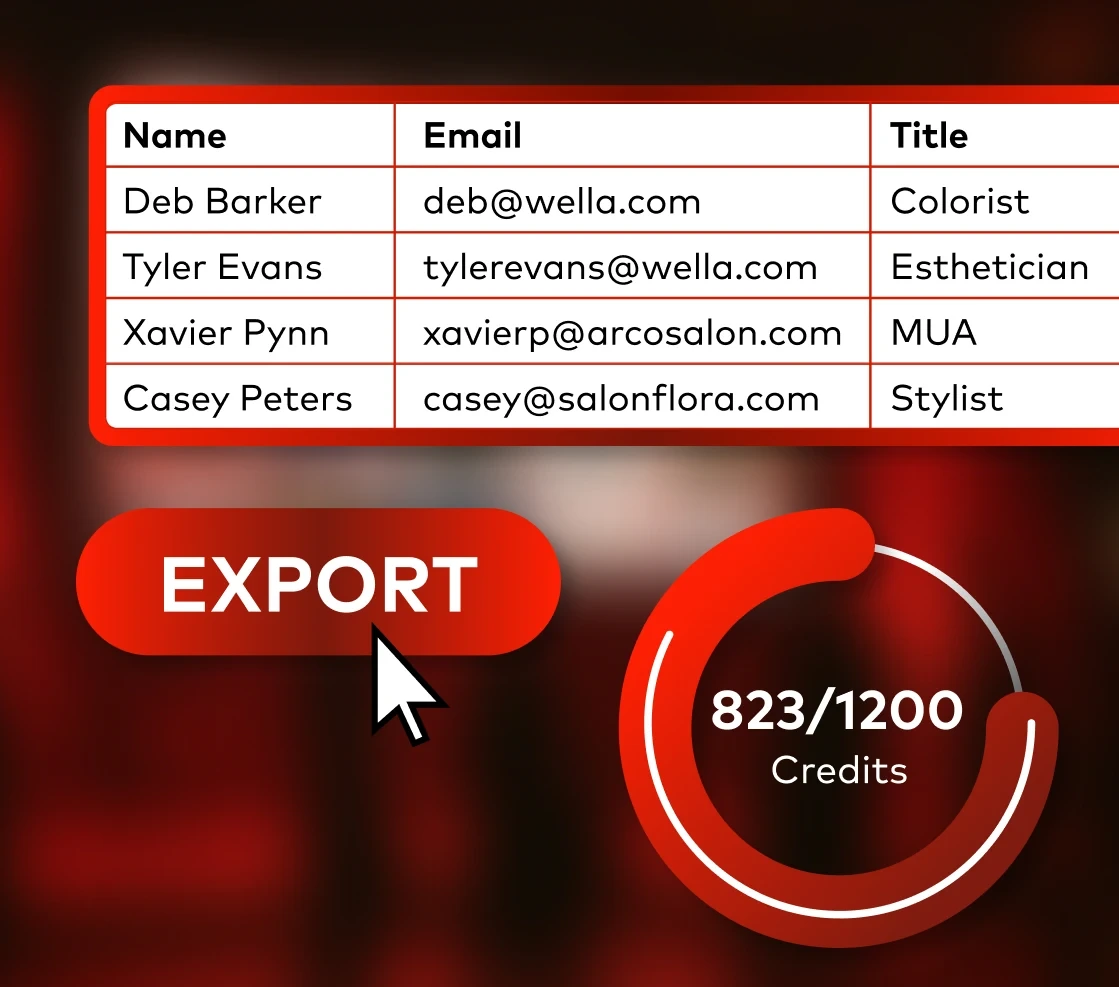
- You can export lead data as CSV, but there are no native real-time push connectors to CRM systems
Source: Snapbar
- No documented Zapier, Make, or webhook-based lead routing for the event platform
- Event teams must manually import CSV files into Salesforce, HubSpot, or Marketo after each event
- This manual step delays follow-up between event engagement and sales outreach
These limitations have led many event professionals and photo booth operators to look for alternatives with published pricing and full self-service control…
Best Snapbar Alternative - Simple Booth
Simple Booth delivers professional photo booth experiences with published pricing, self-service setup, and no sales calls required.
If Snapbar’s opaque pricing, vendor-dependent setup, and enterprise-only positioning don’t fit your needs, Simple Booth fills the gaps: subscription plans starting at $14.99/week, a 1-minute setup process, and the same core capabilities (AI effects, lead capture, branded galleries, multi-channel photo delivery) without a sales conversation or custom contract.
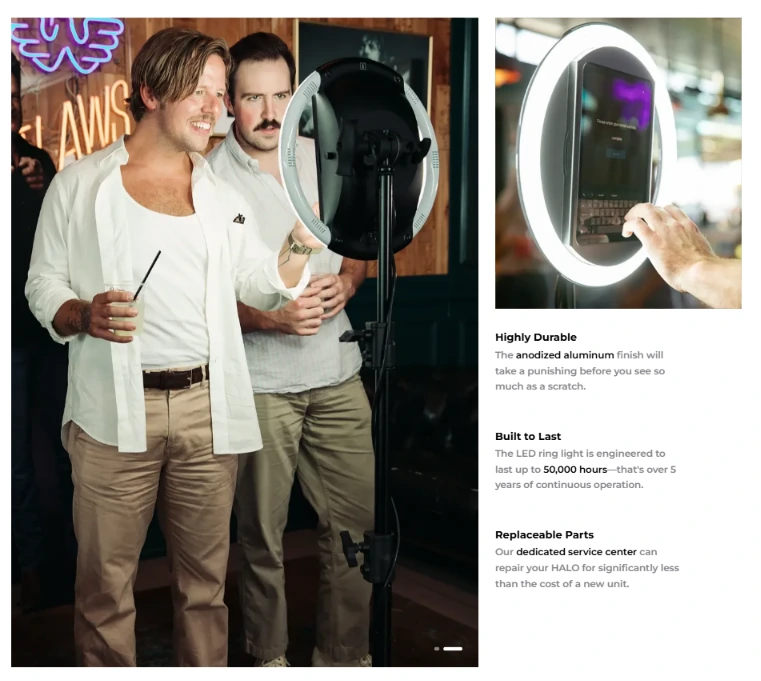
Built around the HALO ring-light photo booth and a subscription iPad app, Simple Booth serves 30,000+ customers globally across event rental companies, permanent venues, and brand activations.
Source: Simple Booth
Its 4.7-star App Store rating from 2,400+ reviews reflects operators who run events weekly without vendor support.
Simple Booth works best for photo booth rental operators who need reliable, repeatable setups, venues that want an always-on guest engagement tool, and marketers who need published costs and immediate deployment.
Simple Booth Lite Plan: $14.99/week or $29.99/month or $289.99/year
| Feature | Details |
|---|---|
| Billing Options | $14.99/week, $29.99/month, or $289.99/year |
| Availability | App Store only |
| Capture Modes | Motion and still capture |
| Features | Custom digital and print layouts, online galleries, dashboard, themes, props, filters, Glam effect |
| Support | 7-day support |
Lite is the entry point for personal events and occasional operators. It provides the full capture and delivery experience with custom layouts, online galleries, and the dashboard.
It displays ads in the app and excludes custom branding, DSLR camera support, video recording, analytics, and lead capture. For professional use, Core is the practical starting point.
| Lite Plan Pros | Lite Plan Cons |
|---|---|
| Lowest entry price at $14.99/week | Ads displayed in the app |
| Full photo capture and delivery | No custom branding |
| Online galleries included | No DSLR or video support |
| No commitment beyond the billing cycle | No lead capture or analytics |
The Bottom Line: Lite works for birthday parties and personal events, but professional operators need Core or above to remove ads and access business features.
Simple Booth Core Plan: $24/week or $49/month or $490/year
| Feature | Details |
|---|---|
| Billing Options | $24/week, $49/month, or $490/year |
| Capture Modes | Still photos, GIFs, Rebound clips, full-length video |
| Camera | iPad camera + DSLR/mirrorless (Canon and Sony) |
| Key Additions | Ads removed, multiple layouts, background replacement and blur, Dropbox sync, Virtual Booth, AI effects |
| AI Credits | 50 bonus credits on new subscription |
Core removes ads and unlocks the features that separate Simple Booth from consumer photo apps. DSLR and mirrorless camera support gives operators professional image quality through the HALO workflow.
Background replacement works without a green screen, and AI Effects transform guest photos using text prompts. Virtual Booth enables browser-based experiences with no hardware required, similar to Snapbar’s Digital Photo Booth.
| Core Plan Pros | Core Plan Cons |
|---|---|
| DSLR camera support for professional quality | No custom branding on photos |
| AI effects and background replacement included | No lead capture |
| Virtual Booth for remote/virtual events | No analytics or reporting |
| Video and GIF capture modes | No custom delivery messages |
The Bottom Line: Core delivers professional photo booth capabilities at $49/month, a fraction of what a single Snapbar activation likely costs, with full self-service control.
Simple Booth Plus Plan: $49/week or $99/month or $990/year
| Feature | Details |
|---|---|
| Billing Options | $49/week, $99/month, or $990/year |
| Key Additions | Custom branding, analytics and reporting, custom digital props and stickers, guest-editable text layers, custom AI effects |
| AI Credits | 100 bonus credits on new subscription |
Plus is where Simple Booth becomes a brand activation tool. Custom branding lets operators apply client logos, colors, and overlays to every photo.
Analytics and reporting give marketers the participation data they need.
Guest-editable text layers let participants type names, captions, or hashtags directly onto their photo before sharing, personalizing output without operator involvement.
| Plus Plan Pros | Plus Plan Cons |
|---|---|
| Full custom branding on all outputs | No lead capture forms |
| Analytics and reporting dashboard | No API access |
| Guest-editable text for personalization | No phone support |
| Custom AI effects with your own prompts | No moderation tools |
The Bottom Line: Plus gives event rental companies and brand activators the branding and analytics they need at $99/month, with annual billing bringing the cost under $83/month.
Simple Booth Pro Plan: $149/month or $1,490/year
| Feature | Details |
|---|---|
| Billing Options | $149/month or $1,490/year (no weekly option) |
| Key Additions | Lead capture (up to 6 fields), API integration, advanced SMS/email customization, drawing tool, phone support, AI guest inputs, moderation, age gate, data compliance tools |
| AI Credits | 150 bonus credits on new subscription |
Pro is where Simple Booth competes directly with Snapbar’s core value: lead capture at events. The customizable data capture form collects email, name, phone, postal code, and date of birth with opt-in rates of 87 to 89%.
Brand moderation lets operators approve photos before delivery or gallery display. API integration enables CRM delivery for teams that need automated lead routing.
| Pro Plan Pros | Pro Plan Cons |
|---|---|
| Lead capture with 87 to 89% opt-in rates | No in-app custom legal terms |
| Brand moderation before delivery | No demographic analytics |
| API access for CRM integration | No security questionnaire support |
| Phone support for live event issues | Higher monthly commitment |
The Bottom Line: Pro delivers lead capture and moderation at a published price, a fraction of Snapbar’s custom quotes, with full self-service operation.
Arizona Opera grew its email list by 1,000 addresses in a few events using Simple Booth’s lead capture. (Simple Booth)
Simple Booth Select Plan: $249/month or $2,490/year
| Feature | Details |
|---|---|
| Billing Options | $249/month or $2,490/year (no weekly option) |
| Key Additions | In-app custom legal terms, security questionnaires and IT assessments, demographic analytics (face detection: age estimation, gender breakdown, average group size) |
| AI Credits | 200 bonus credits on new subscription |
Select is Simple Booth’s enterprise tier, adding compliance and demographic analysis for regulated industries and Fortune 500 activations.
Custom legal terms embed client-specific privacy policies and terms of service into the booth experience. Demographic analytics via face detection show marketers who their activation actually reached.
| Select Plan Pros | Select Plan Cons |
|---|---|
| In-app legal terms for compliance | Highest monthly cost at $249 |
| Demographic analytics via face detection | Only available via web checkout |
| Security questionnaire support for enterprise IT | May exceed needs for most operators |
| Everything in Pro included | Annual commitment recommended for value |
The Bottom Line: Select serves enterprise and regulated-industry buyers who need compliance tools at a fixed price, eliminating the uncertainty of Snapbar’s custom contracts.
Simple Booth Additional Costs
Beyond subscriptions, Simple Booth has three cost categories to plan for:
Add-On Licenses for Multi-Device Operations:
| Plan | Weekly Add-On | Monthly Add-On | Annual Add-On |
|---|---|---|---|
| Core | $24/device | $36/device | $360/device |
| Plus | $49/device | $74/device | $740/device |
| Pro | N/A | $111/device | $1,110/device |
| Select | N/A | $186/device | $1,860/device |
AI Effect Credits: $0.10 per credit. Nano Banana 1 consumes 1 credit, Nano Banana 2 consumes 2, and Nano Banana Pro consumes 3 per generation. Purchased credits never expire. Testing prompts outside booth mode costs nothing.
HALO Hardware Kits: Sold separately at buy.simplebooth.com, starting at about $2,090 for an Event Kit with iPad and Simple Care protection plan. 0% financing available. The Simple Care protection plan ($299) extends the warranty to 2 years and covers 2 accidental damage repairs.
Snapbar Feature Value Breakdown (vs Simple Booth)
Pricing Transparency and Accessibility
Snapbar’s Approach: Snapbar requires a sales conversation for every engagement. The pricing page generates a quote request, not a price.
The company negotiates each contract individually via MSA and Proposal documents. Snapbar acknowledges that this means higher starting costs and less accessibility for smaller organizations. No free trial exists.
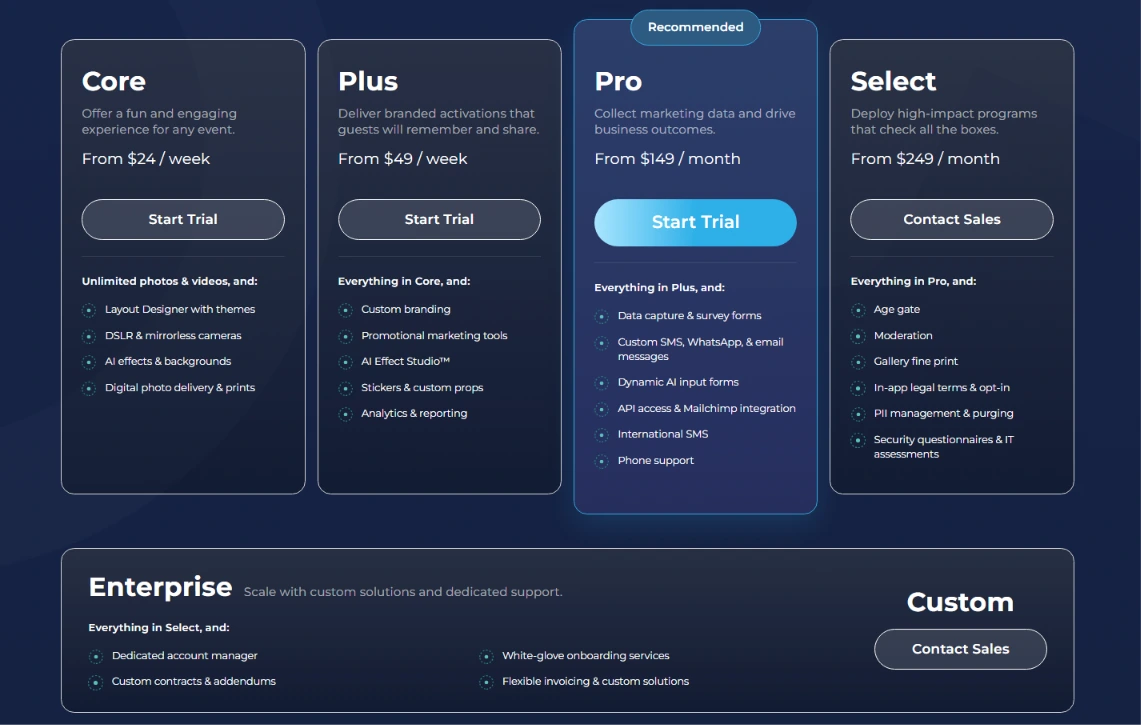
Simple Booth’s Approach: Simple Booth publishes every plan, price, and feature on its website. Operators choose a plan, start a 7-day free trial, and begin running events the same day.
Source: Simple Booth
Billing cycles range from weekly (for seasonal demand) to annual (for permanent installations), and cancellation requires no contract negotiation.
🪙 Value Verdict: Simple Booth is better for any buyer who needs to know costs before committing, wants to test the platform before paying, or runs events frequently enough that per-event quoting is impractical.
Setup and Operational Independence
Snapbar’s Approach: Snapbar’s collaborative model assigns a dedicated Customer Success Manager to handle onboarding, design configuration, and gallery settings.
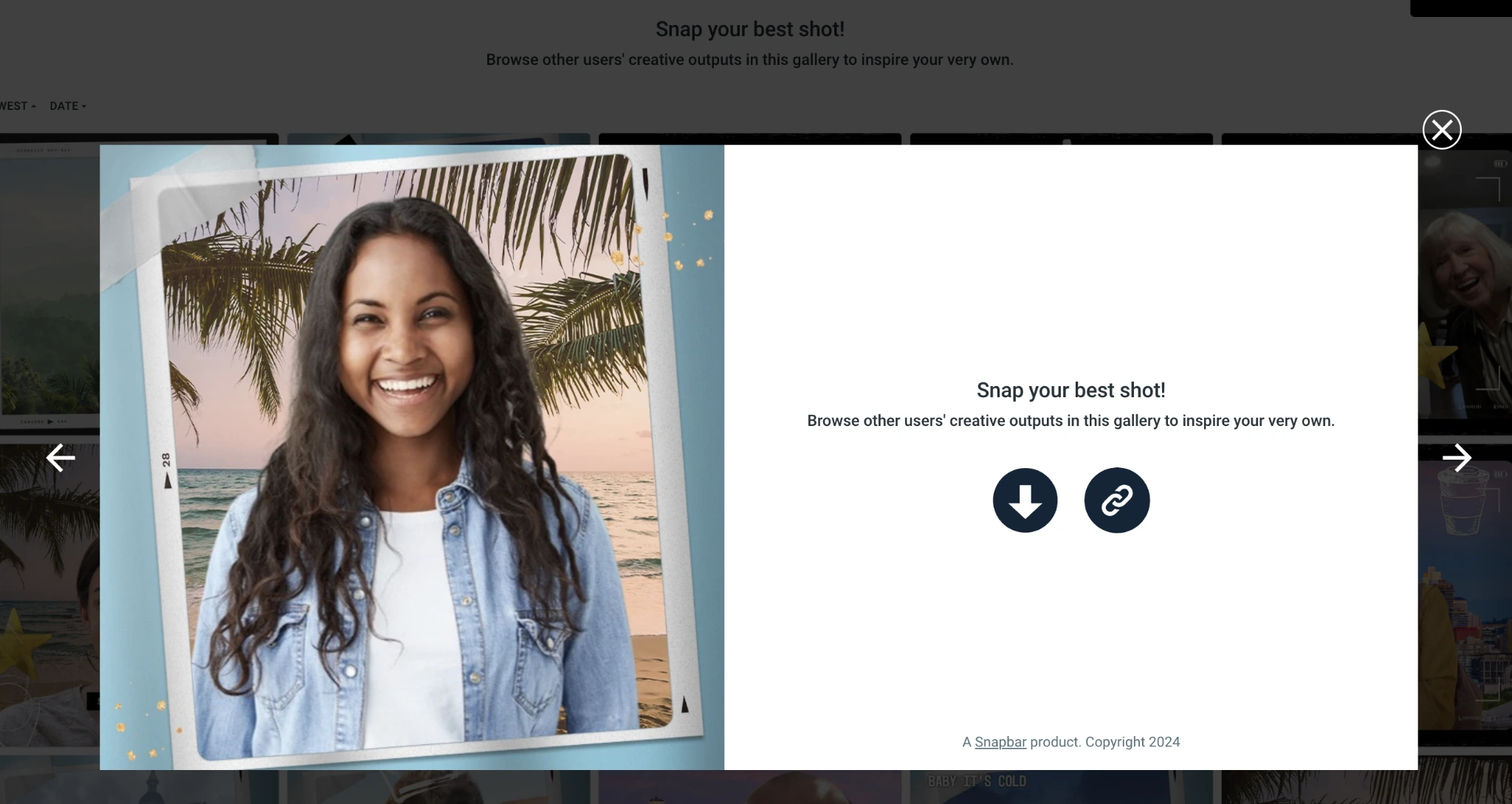
The 2 to 3 week concept-to-launch timeline produces consistent results but creates dependency. Snapbar rates its own DIY capability at 3 out of 10, describing the customization depth as “a little overwhelming to fine-tune every element.” Gallery settings like password protection require CSM enablement.
Source: Snapbar
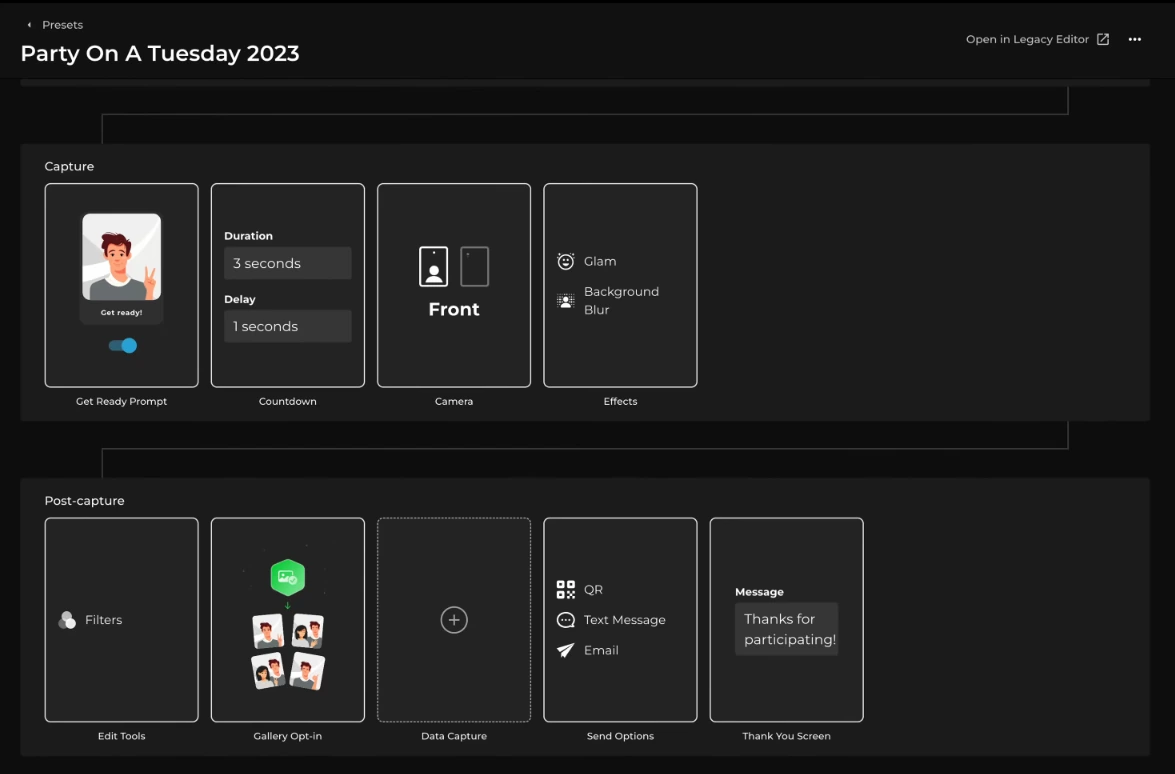
Simple Booth’s Approach: Simple Booth is designed for operators who set up and run events on their own. The HALO hardware deploys in under a minute with no tools. The redesigned preset editor in HALO 5.0 shows the entire booth flow visually.
Source: Simple Booth
Mission Control, a hidden two-finger pinch overlay, lets operators monitor and adjust settings during live events without interrupting the guest experience. Remote dashboard management enables multi-booth operations without on-site presence.
🪙 Value Verdict: Simple Booth is better for operators who need to set up, configure, and run events on their own, whether that’s a rental company doing three weddings a weekend or a venue with an always-on photo experience.
“I knew nothing about photo booths when we started.” (Amore Entertainment, which launched during COVID and scaled to multiple booths using Simple Booth.) (Simple Booth)
AI Capabilities
Snapbar’s Approach: Snapbar builds custom AI styles per activation with its design team. Each activation features an AI style matched to the brand’s visual identity.
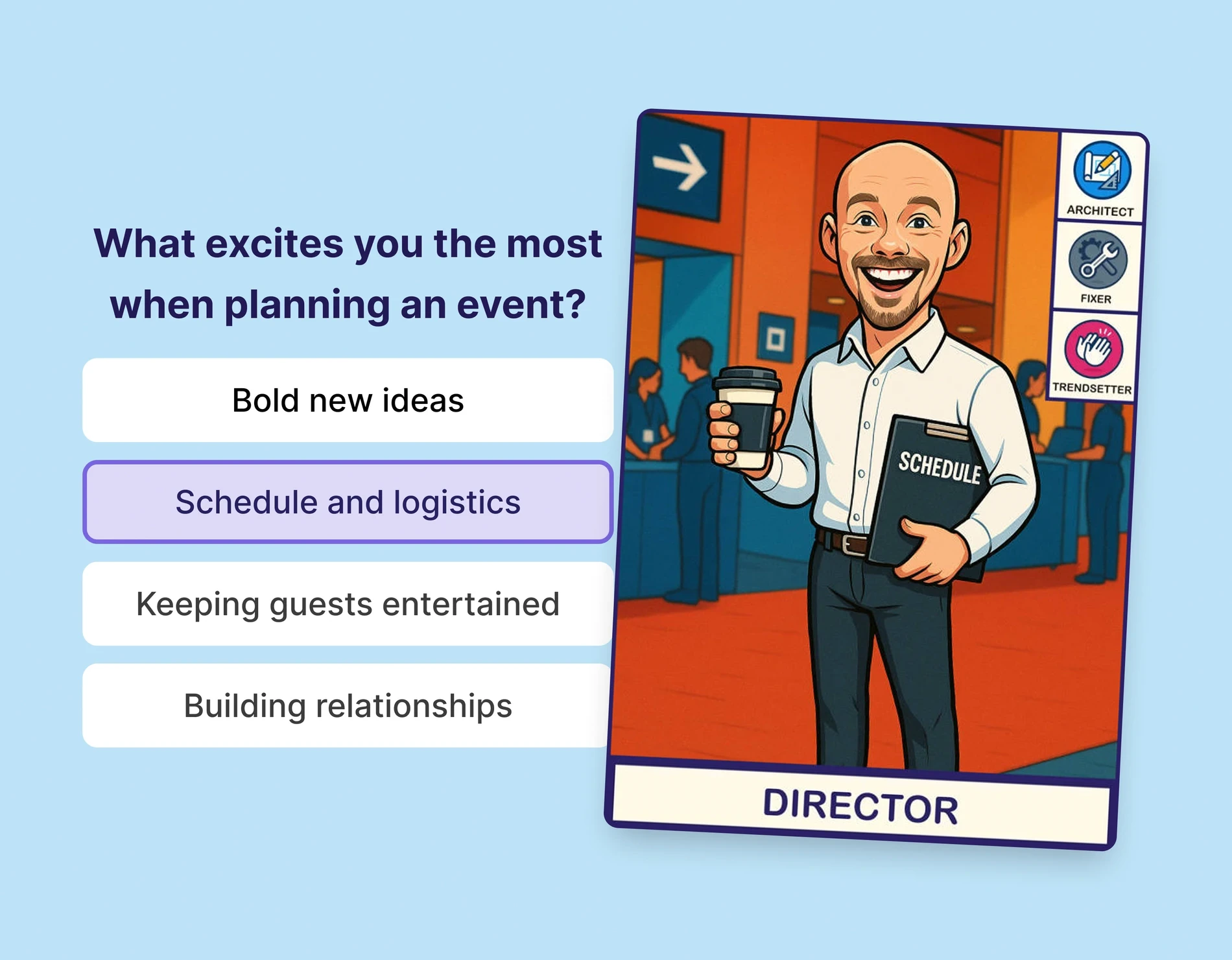
The platform also offers AI Video (image-to-video animation), AI Stories (narrative-driven AI portraits), and Persona Quizzes (quiz-matched AI portraits). These are distinct experience types that go beyond photo filters. Access requires the full quote-and-contract process.
Source: Snapbar
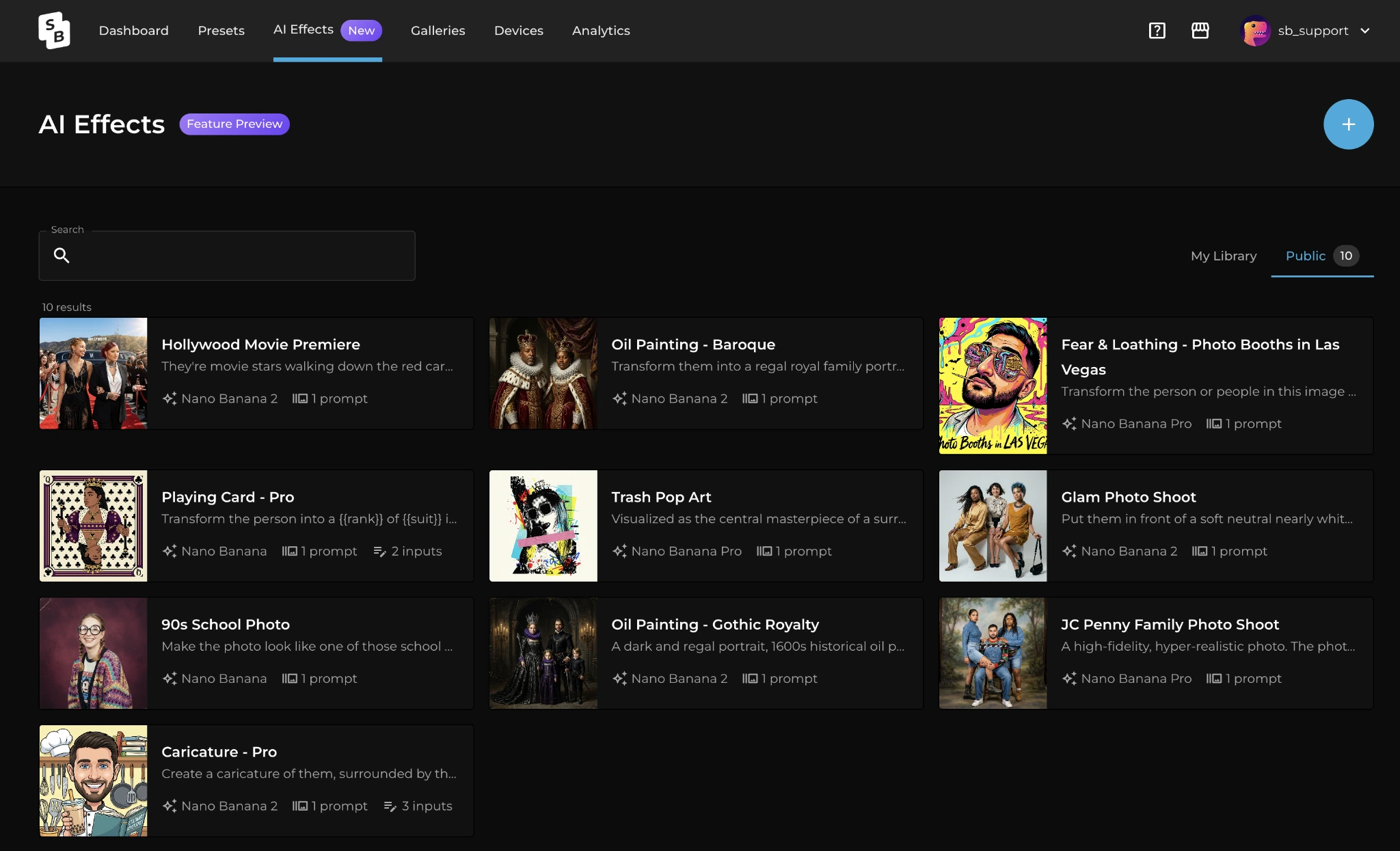
Simple Booth’s Approach: Simple Booth’s AI Effects use three Nano Banana AI models with different speed and quality tradeoffs.
Operators choose from a library of ready-made prompts or write their own. Per-frame multi-prompt support lets operators assign a different AI transformation to every frame in a multi-frame layout.
Guest Input AI Effects inject participant answers into prompts as template variables, producing personalized outputs per guest. Testing prompts costs nothing; live generations cost $0.10 per credit. Credits never expire.
Source: Simple Booth
🪙 Value Verdict: Snapbar offers more AI experience types (AI Video, AI Stories, Persona Quizzes) that go beyond photo transformation. Simple Booth offers more accessible AI photo capabilities with published credit pricing and full control over prompt creation and testing.
Lead Capture and Data Collection
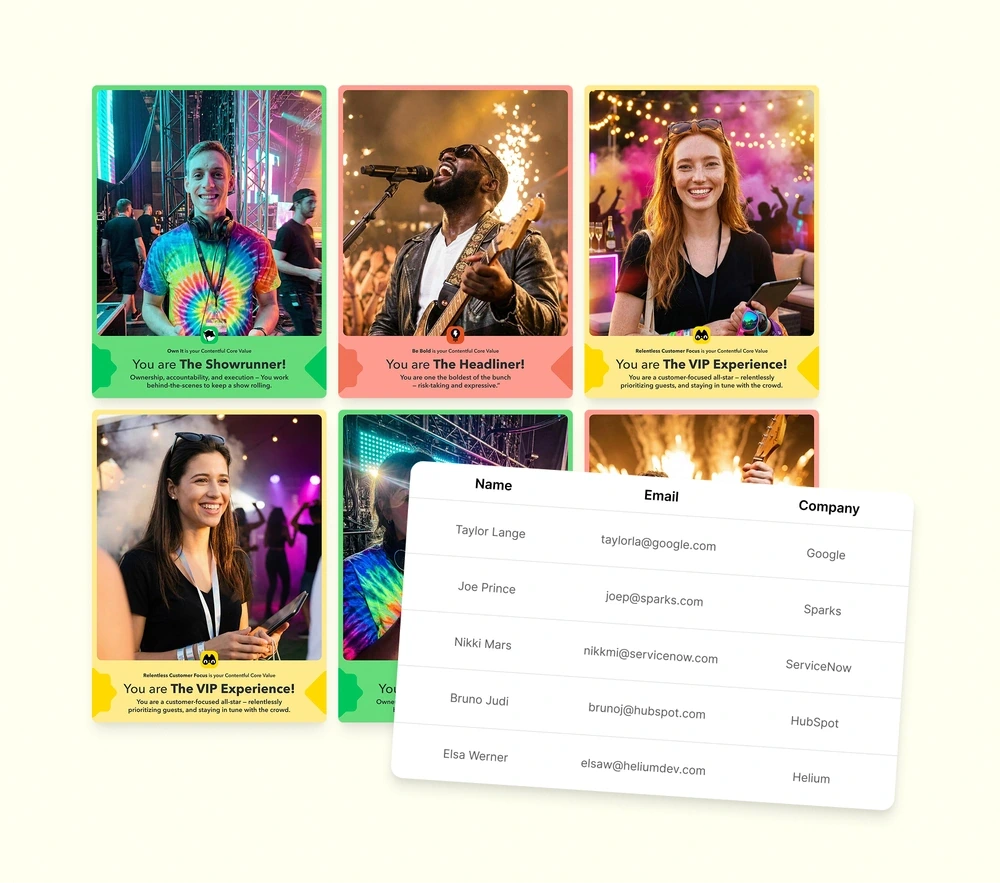
Snapbar’s Approach: Lead capture is embedded in every Snapbar experience, collecting name, email, company, job title, and custom fields.
Source: Snapbar
The platform reports 95% email open rates on content delivery emails, which double as follow-up messages. Lead data exports as CRM-ready CSV for Salesforce, HubSpot, and Marketo, though there is no documented native real-time CRM connector for the event platform.
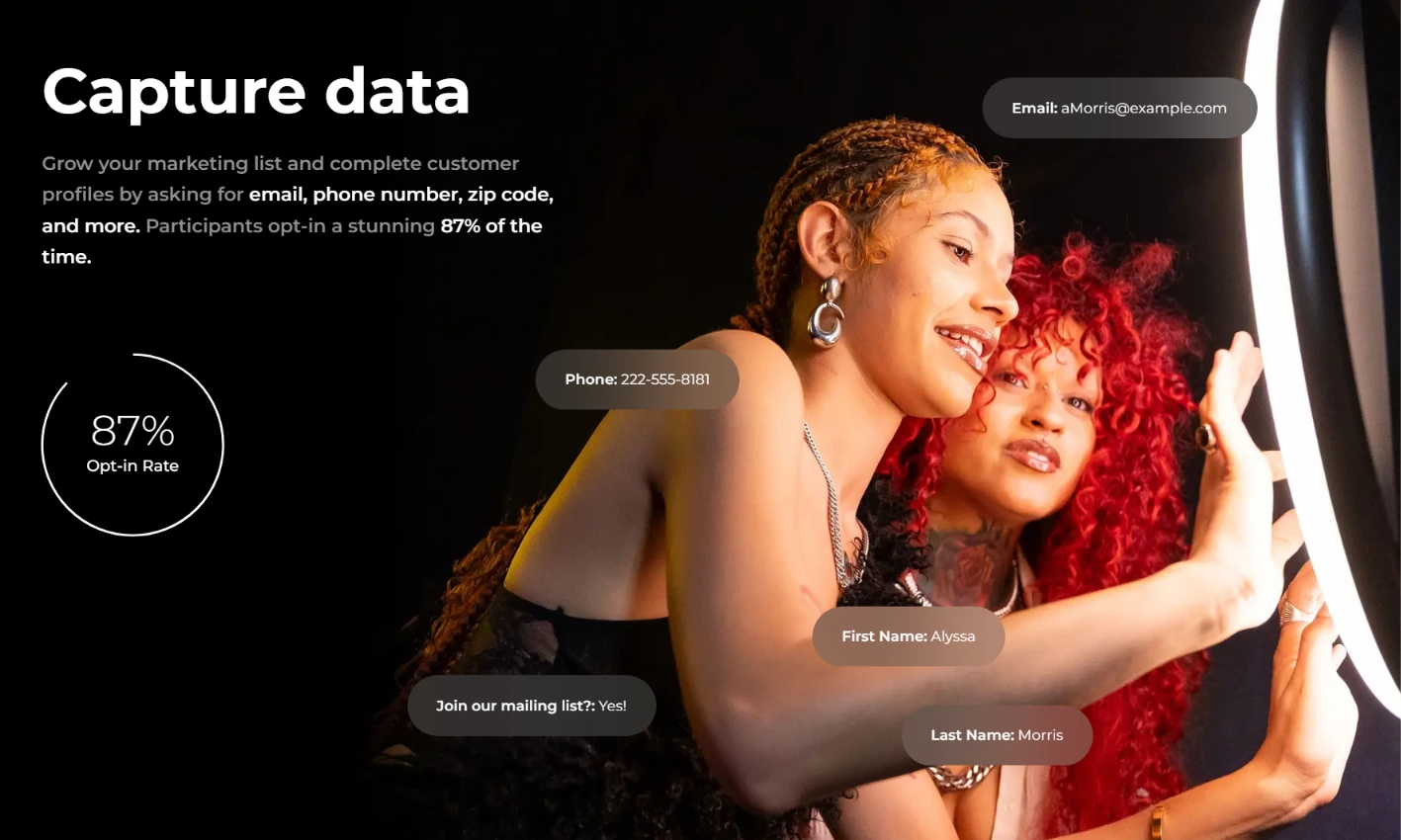
Simple Booth’s Approach: The Pro plan captures up to 6 standard fields (email, first name, last name, phone, postal code, date of birth); Select extends this to 10 custom fields including checkboxes and required legal terms.
Simple Booth reports 87 to 89% opt-in rates. Data exports as CSV, syncs natively with MailChimp, and routes to custom CRM systems via the Open API on Pro and Select plans.
Source: Simple Booth
🪙 Value Verdict: Both platforms capture leads effectively during the photo experience. Snapbar offers richer data through quiz and story-based inputs. Simple Booth offers comparable opt-in rates at published prices with native MailChimp integration.
Treetop Golf built 150,000 unique email addresses across its locations using Simple Booth’s lead capture at permanent installations. (Simple Booth)
Scalability and Event Types
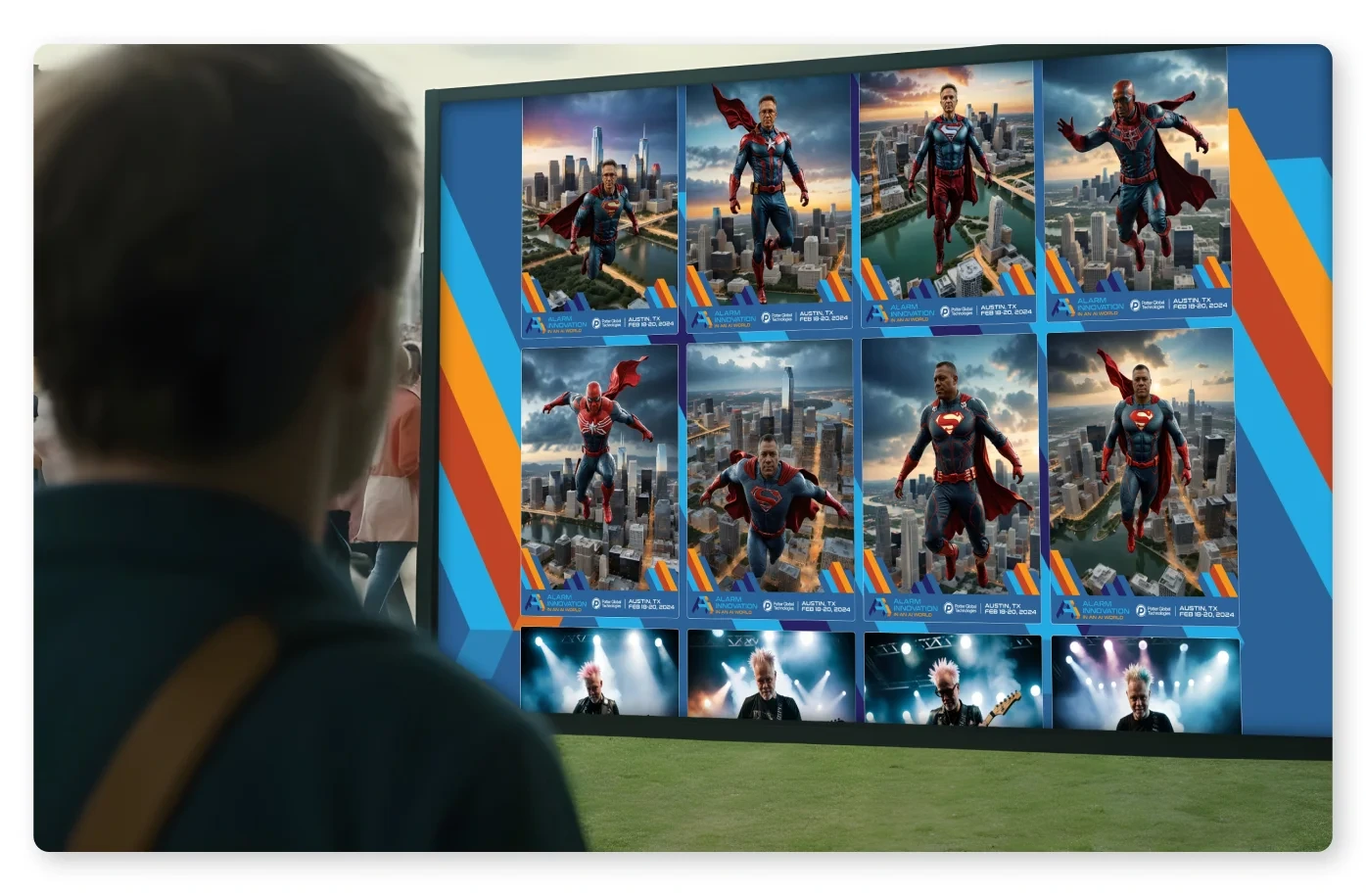
Snapbar’s Approach: Snapbar scales from 50 to 50,000+ attendees and supports in-person, virtual, and hybrid events. Eight experience types plus four display formats (Live Slideshow, Social Wall, Mosaics, Gallery) cover a wide range of activation scenarios.
Source: Snapbar
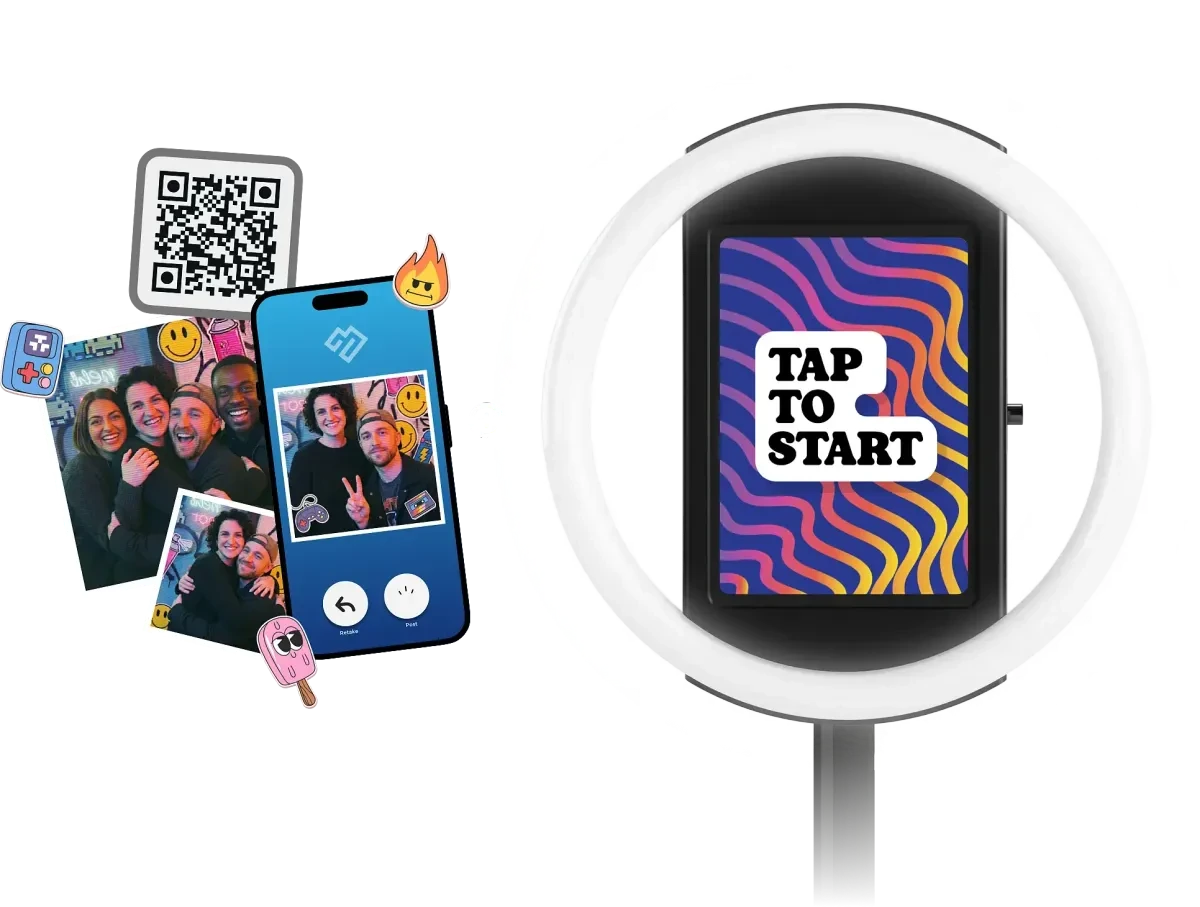
Simple Booth’s Approach: Simple Booth supports physical events via the HALO hardware and app and virtual events via Virtual Booth, which runs in any browser and supports up to 1,000 participants per event with automatic localization into 9 languages.
Source: Simple Booth
Multi-device operations use add-on licenses. The Live Feed display turns any gallery into a real-time slideshow for TV or projector. Enterprise deployments include Live Nation VIP events and Sports Illustrated Tickets.
🪙 Value Verdict: Snapbar has a broader range of experience types and display formats, plus a platform built for large-scale enterprise events. Simple Booth covers the most common activation scenarios (photo booth, virtual booth, live display) at a published cost, with enterprise deployments of its own.
Final Verdict: Snapbar vs Simple Booth
The choice between Snapbar and Simple Booth comes down to event scale, budget, and how much control you want over setup and operations.
Snapbar is a vendor-managed event marketing platform for enterprise brands and agencies running large-scale activations where custom AI experiences, managed setup, and unique engagement formats justify custom-quoted pricing.
With a 2 to 3 week onboarding process, dedicated Customer Success Managers, and experience types like AI Stories, Persona Quizzes, and AI Video, it lets marketing teams deploy activations that combine lead capture with branded content at events with hundreds or thousands of attendees.
This approach works best for enterprise brands with event marketing budgets, agencies managing multi-event programs, and organizations running fewer, larger activations where per-event custom pricing makes sense.
Simple Booth is a self-service photo booth platform with published pricing and independent operation, designed for professionals who need to set up, run, and manage photo experiences without vendor dependency.
With plans from $14.99/week to $249/month, a 7-day free trial, and hardware that deploys in under a minute, it delivers AI effects, lead capture, branded galleries, and multi-channel photo delivery at a cost you can see before you buy.
This makes it a fit for photo booth rental companies running multiple events per week, venues and restaurants with permanent installations, and brand marketers who want activation capabilities without custom contracts or sales negotiations.
Get started with Simple Booth here.
The fundamental difference isn’t features or quality. It’s the operating model. Snapbar asks “How can we build the right activation for your brand?” Simple Booth asks “How can we give you everything you need to run it yourself?”
“It paid for itself pretty quickly. Now it’s just extra money coming in.” (Kurt Nielson Photography.) (Simple Booth)
Snapbar Pricing FAQ
Does Snapbar publish its pricing?
Snapbar publishes starting prices for its individual experience types, but not complete package pricing. Final costs are determined through a custom quote based on the selected experience, customization, attendance, and other requirements.
Is there a free trial for Snapbar?
No. Snapbar does not offer a free trial, freemium plan, or demo account for self-service evaluation. The only way to experience the platform is through a sales-initiated demo. Simple Booth, by contrast, offers a 7-day free trial with 25 free AI credits and no commitment required.
What is Snapbar’s DIY score?
Snapbar rates its own DIY capability at 3 out of 10 in its published competitor comparison. Most setup and configuration require collaboration with Snapbar’s team. Gallery settings, design elements, and experience configuration are typically handled through a Customer Success Manager rather than self-service.
How far in advance do I need to book Snapbar?
Snapbar’s Product Turn Around Schedule requires quote approval at least 8 business days before the event and design form submission at least 6 business days out.
Most activations take 2 to 3 weeks from concept to launch. This lead time is standard for enterprise activations but makes Snapbar impractical for last-minute events.
Can Snapbar integrate with my CRM?
Snapbar exports lead data as CRM-ready CSV files formatted for Salesforce, HubSpot, and Marketo. There is no documented native real-time push connector for the event platform.
You must manually download and import lead data after each event. Simple Booth offers native MailChimp integration and an Open API for custom CRM delivery on Pro and Select plans.
How does Simple Booth compare to Snapbar for brand activations?
Simple Booth’s Pro ($149/month) and Select ($249/month) plans include lead capture with 87 to 89% opt-in rates, brand moderation, custom branding, AI effects, analytics, and API access.
These cover the core brand activation use case at published prices. Snapbar offers additional experience types (AI Stories, Persona Quizzes, Trading Cards, AI Video) and a higher-touch service model, but at undisclosed prices requiring custom contracts.
Which platform is better for photo booth rental businesses?
Simple Booth is designed for rental operators, with weekly billing for seasonal demand, 1-minute hardware setup, offline mode for venues with unreliable Wi-Fi, and remote multi-device management. Snapbar focuses on enterprise marketing activations and does not target the photo booth rental market.
Does Snapbar require special hardware?
No. All Snapbar experiences run in a browser on any camera-equipped device. Guests access activations via QR code or URL on their own phones.
Snapbar also sells Selfie Station iPad kiosks for events that want a physical presence, but they are optional. Simple Booth similarly offers a browser-based Virtual Booth alongside its HALO hardware system, which combines a machined aluminum ring light with an iPad mount for professional lighting.
Keep reading
 Showdowns
Simple Booth vs Snapbar: Which Photo Booth Platform Fits Your Events in 2026?
Self-serve hardware vs managed enterprise experiences. Simple Booth or Snapbar?
 Alternatives
7 Snapbar Alternatives: Photo Booth & Event Engagement Solutions for Every Budget (2026)
Priced out of Snapbar's custom quotes? These alternatives fit every budget.
 Reviews
Snapbar Review 2026: Is This Experiential Marketing Platform Right for You?
Enterprise AI experiences, no self-serve or public pricing. Snapbar, reviewed.