Snapbar Review 2026: Is This Experiential Marketing Platform Right for You?

Snapbar spent 14 years evolving from a garage photo booth rental into an experiential marketing platform built on AI. Today it serves enterprise event marketers at companies like Microsoft, Adobe, and ServiceNow with AI photo transformations, video generation, persona quizzes, and trading cards, all designed to turn live event engagement into qualified leads and branded content. It’s built for teams that run large activations and need data to justify event spend.
To write this Snapbar review, we analyzed it extensively. We believe it’s the right choice if:
- You run corporate events, trade shows, or brand activations with 500+ attendees
- You want a managed-service partner to design and deploy AI-powered experiences
- You need lead capture tied directly to event activations
- You value variety across experience types (AI photos, video, quizzes, trading cards) for a full event calendar
- You have the budget for custom-quoted engagements and a 2 to 3 week setup timeline
However, Snapbar might not be the best choice if:
- You need a self-service platform you can configure and launch independently
- You run smaller or more frequent events where custom quoting creates friction
- You want published pricing you can evaluate before talking to sales
- You need physical hardware integrated with your software in one ecosystem
- You’re a photo booth rental operator, DJ, or photographer building an events business
In this case, you should consider Simple Booth: a self-service photo booth platform that pairs an iPad app with dedicated ring-light hardware, letting operators set up in under a minute, manage booths remotely, and deliver branded photo experiences with lead capture, all on published weekly, monthly, or annual plans starting at $24/week for professional operators.
We’ve included a detailed look at Simple Booth at the end of this Snapbar review as the best alternative for operators and marketers who want to own and run their photo booth experiences independently. If you’re ready to try it, you can start a free trial of Simple Booth here.
What is Snapbar?
Source: Snapbar
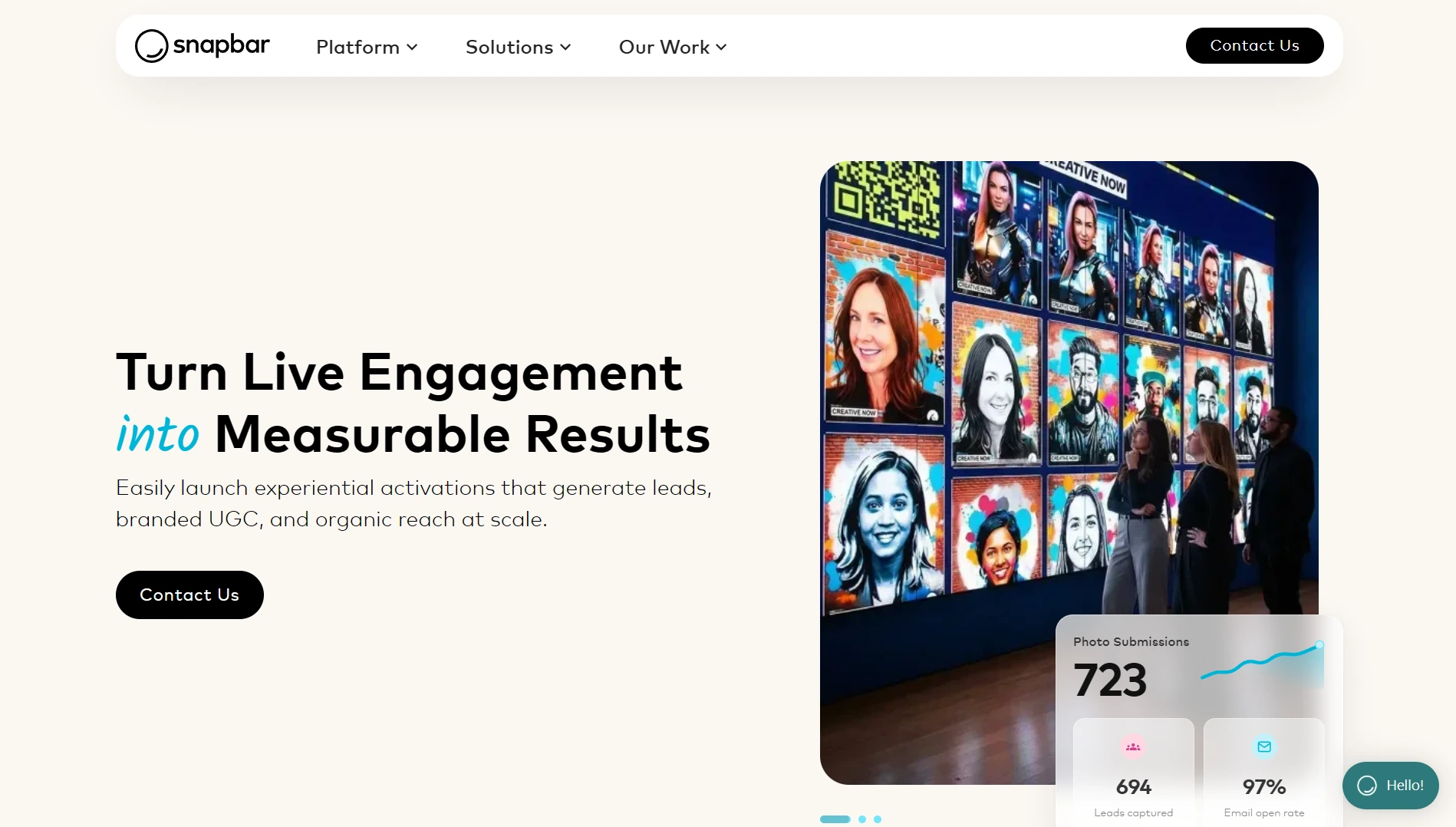
Snapbar was founded in 2012 by brothers Sam Eitzen and Joe Eitzen, who built their first custom photo booth for a friend’s wedding. What started as a part-time rental business funded with “a few hundred dollars and a lot of determination” grew into one of the fastest-growing private companies in the US, ranking #473 on the Inc. 5000 in 2019.
The company’s trajectory changed twice. First, the 2020 pandemic forced a pivot from in-person event staffing to software: Snapbar launched what it claims was the first virtual photo booth that summer. Second, generative AI arrived at scale in 2023, and CTO Patrick Ellis (a Forbes 30 Under 30 honoree) led the technical shift into AI-native event experiences.
Today, Snapbar calls itself “an AI-focused tech company”, not a photo booth company. Its platform offers eight experience types (AI Photo Booth, AI Video, AI Stories, Persona Quiz, Digital Photo Booth, Trading Cards, Event Headshots, and Selfie Stations) plus four display formats (Live Slideshow, Social Wall, Mosaics, and Photo Booth Gallery). The company reports 10,000+ brands served and 1 million+ moments captured.
Snapbar’s ideal customer is a corporate event marketer or experiential agency running multiple large activations per year: trade show exhibitors, conference organizers, and brand experience teams at mid-to-enterprise companies who need measurable lead capture alongside engagement.
Snapbar Pros & Cons
| Pros | Cons |
|---|---|
| Wide variety of AI-powered experience types | No published pricing (custom quotes only) |
| Scales from 50 to 50,000+ attendees | Low self-service capability (self-rated 3/10 DIY) |
| Browser-based, no app downloads required | 2 to 3 week lead time from concept to launch |
| Lead capture built into every activation | No native real-time CRM push integration |
| 95% email open rate on content delivery | No printing integration available |
| Custom AI styles designed per activation | Higher starting cost for smaller events |
| Branded stakeholder reporting included | Limited public review volume for peer evaluation |
Snapbar Review: How it Works & Key Features
AI Photo Booth: Snapbar transforms guest selfies into AI-generated imagery tied to lead capture.
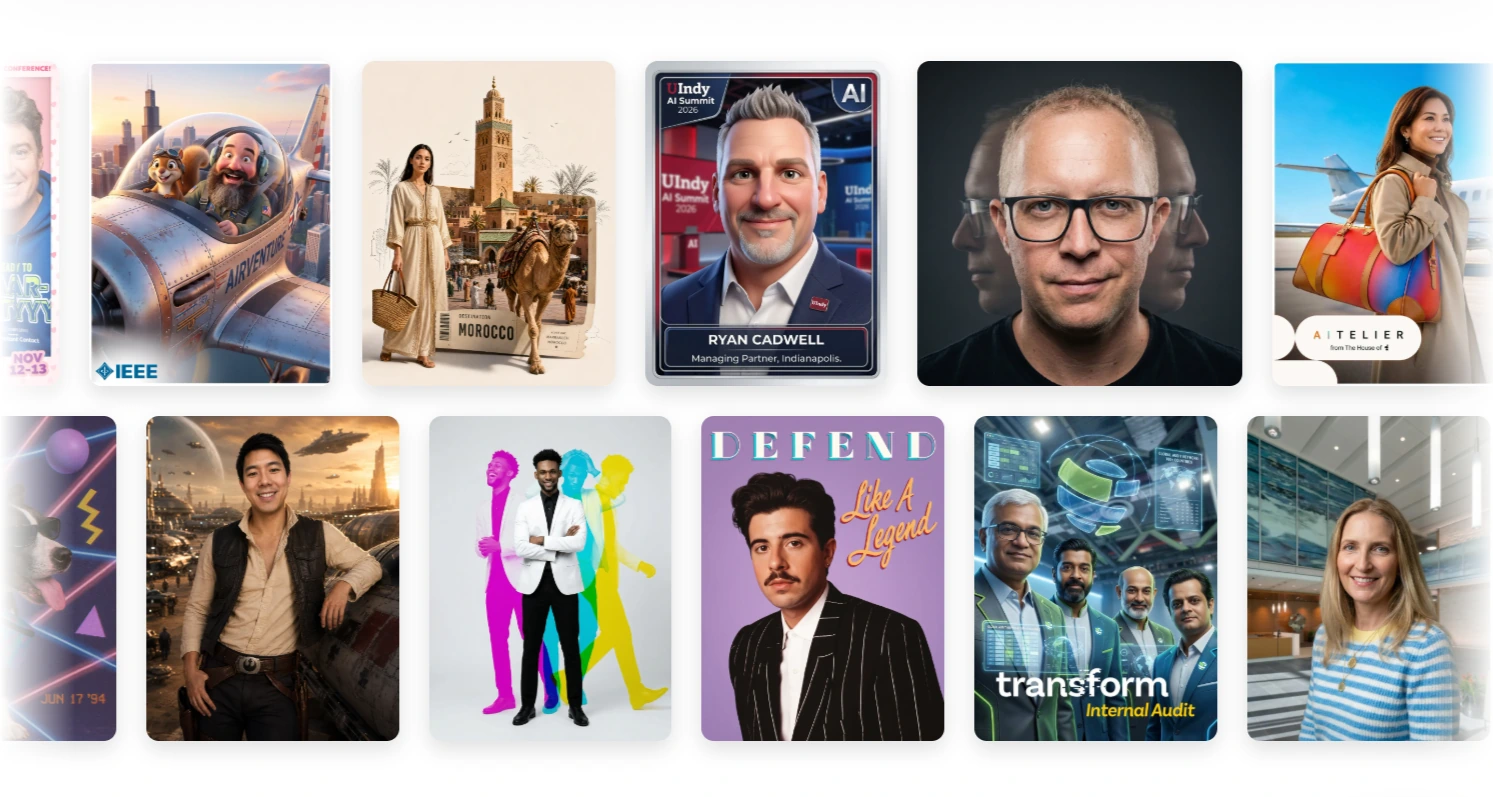
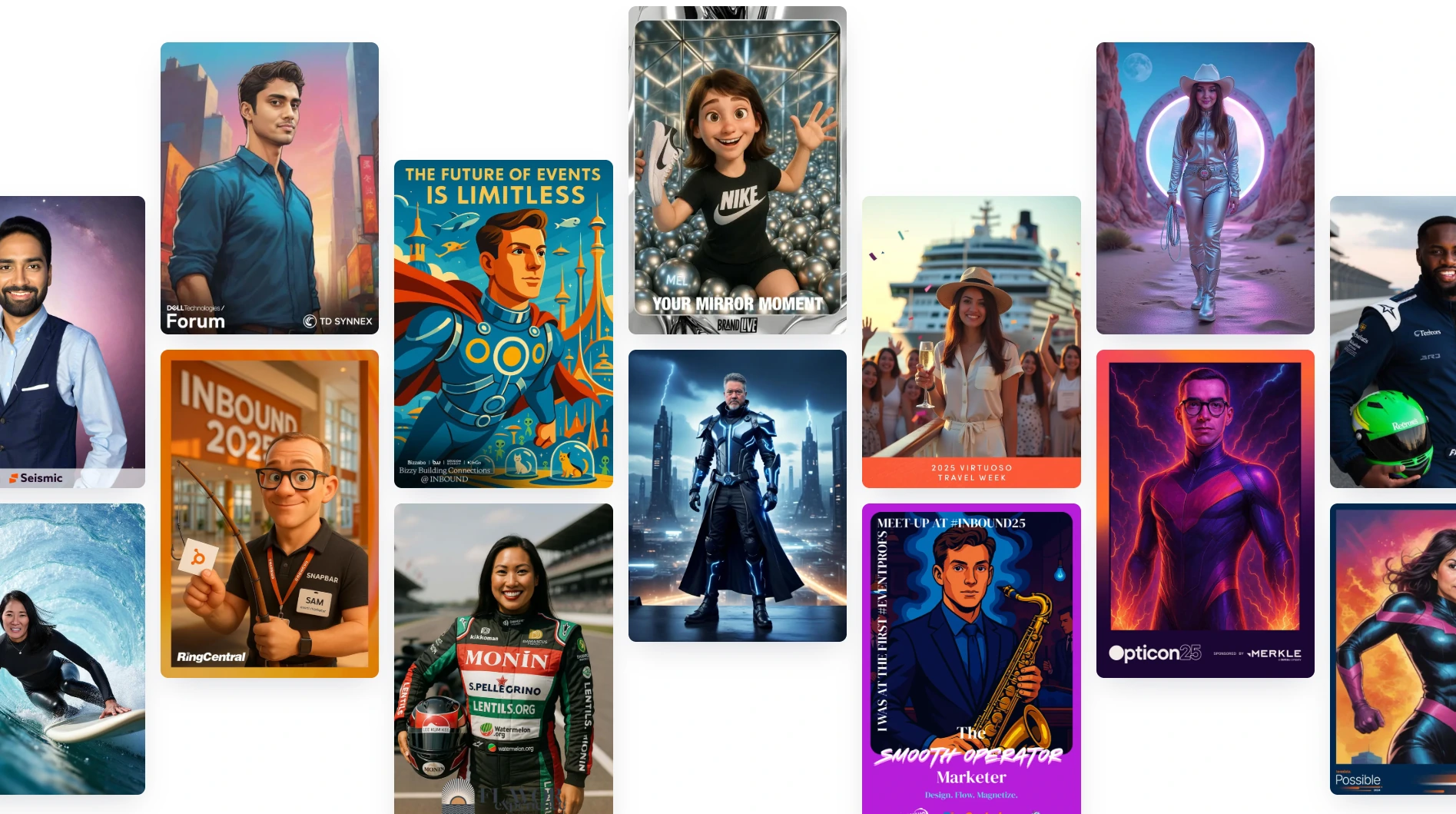
Snapbar’s AI Photo Booth is the platform’s flagship activation. Guests take a photo via their phone (QR code access) or an iPad kiosk, and the AI transforms their image into branded artwork, from flat illustration and watercolor to superhero personas, movie posters, and Pixar-style animation. Each activation uses a proprietary AI style built with Snapbar’s design team, not a generic filter menu.
Source: Snapbar
The personalization goes beyond aesthetics. Quiz answers, story inputs, and lead form responses feed directly into the AI prompt, so the generated content differs per person. Each submission produces 4 portrait variations in the configured theme. Guests receive results via a branded email averaging a 95% open rate (a high figure because guests are waiting for their personalized content).
The activation supports group photos with custom layouts, AI background removal, and real-time dashboard moderation. It scales from 50 to 50,000+ participants and requires no dedicated hardware or on-site technician; guests access the experience from any camera-equipped browser.
For lead capture, configurable forms collect name, email, company, job title, and custom fields as part of the content retrieval flow, with data exportable as CSV for Salesforce, HubSpot, and Marketo.
AI Video and AI Stories: Snapbar extends photo activations into motion content and narrative-driven personalization.

AI Video Booth animates a guest’s photo into a short branded video clip. Snapbar uses image-to-video AI rather than text-to-video, so the guest’s face and likeness are preserved in the animation. Output is a 5-second MP4 at 720p, 24fps, available in seven aspect ratios covering every major social platform format. Branded overlays and animated logo outros can be added to every clip.
Source: Snapbar
Snapbar is honest about the technology’s limits: its documentation acknowledges that AI video consistency still trails AI image generation and that audio remains underdeveloped.
AI Stories takes a different approach. Instead of visual transformation, guests fill in a Mad-lib-style story template (their name, company, a business challenge, a personal action) and the platform generates a unique AI illustration reflecting their answers. Each blank doubles as a lead-capture field, so sales teams receive contact records with qualitative data appended, not just a name and email. Per-guest session time runs 60 to 90 seconds, and the activation goes from concept to launch in 2 to 3 weeks.
Source: Snapbar
Persona Quiz and Trading Cards: Snapbar turns lead capture into interactive formats that generate structured audience data.

The Persona Quiz follows a Buzzfeed-style format. Guests answer multiple-choice questions and are matched to one of the brand’s personas, receiving a personalized AI portrait and a tailored email built around their result. One designated “key question” determines the persona match; secondary questions drive engagement but don’t affect the assignment.
Source: Snapbar
What makes this useful for sales teams: every lead arrives tagged with a persona and the specific answers they gave, enabling pipeline routing by persona type. That’s a layer of structured data that badge scanning can’t produce.
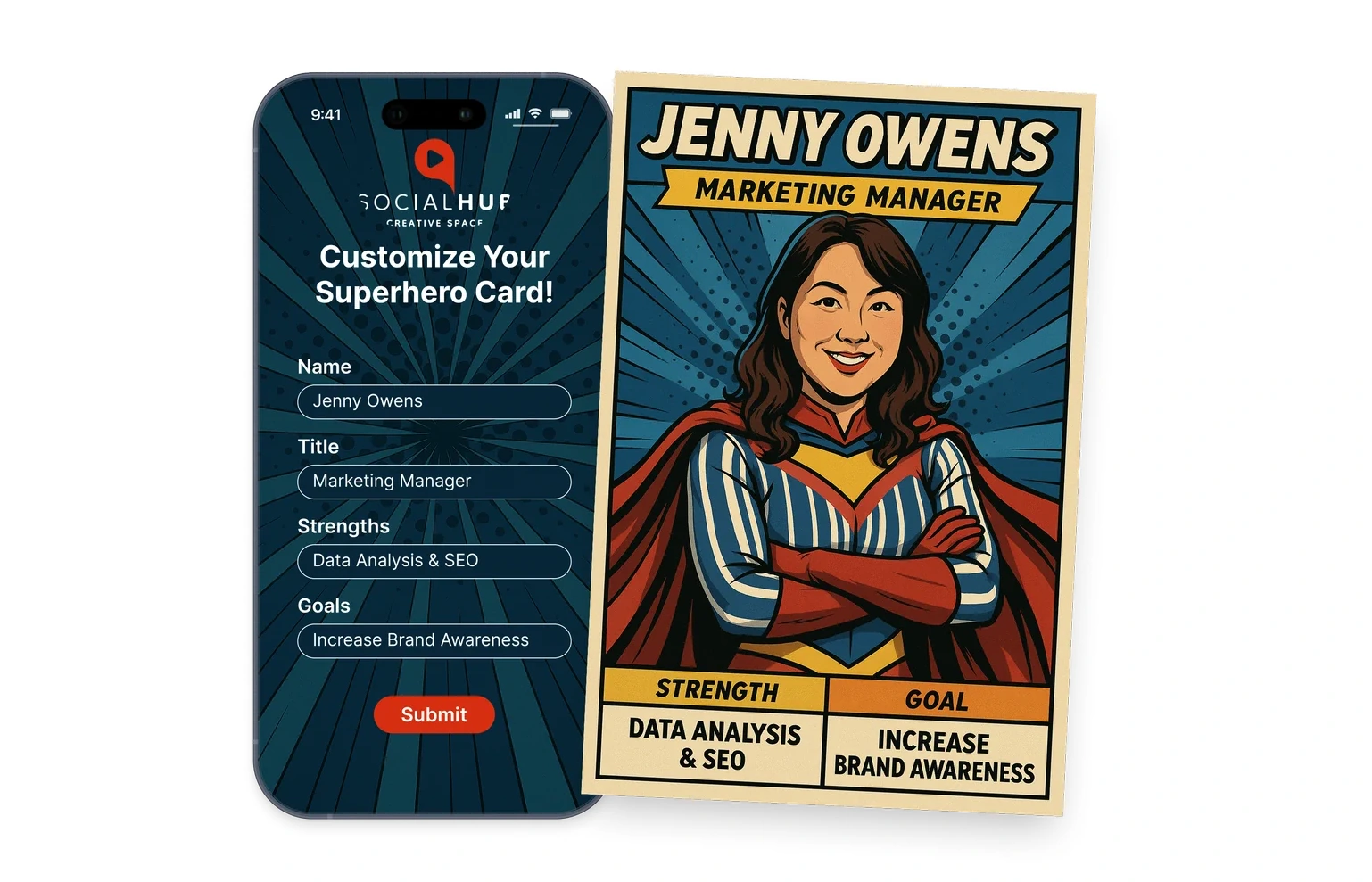
Trading Cards turn attendee photos into AI-generated collectible cards with the guest’s name, title, and survey responses visible on the card. Every survey field personalizes the card and captures lead data at the same time. Six card style categories (Sports, Beauty, Celebration, Festival, Gaming, and Causes) cover a range of event types.
Source: Snapbar
Both formats feed into Snapbar’s live display system, where seeing others’ results on-screen motivates more participation.
Real-time Displays and the Experiential Marketing Platform: Snapbar surfaces user-generated content on event screens and centralizes measurement.

Snapbar offers four display types from a single content pipeline: Live Slideshow, Social Wall (powered by a Walls.io partnership at no additional cost), Mosaics (live, static, and video formats), and Photo Booth Gallery. The Live Gallery comes with every activation by default. Moderation actions sync across all display surfaces; hiding a submission in the gallery removes it from the slideshow too.
Source: Snapbar
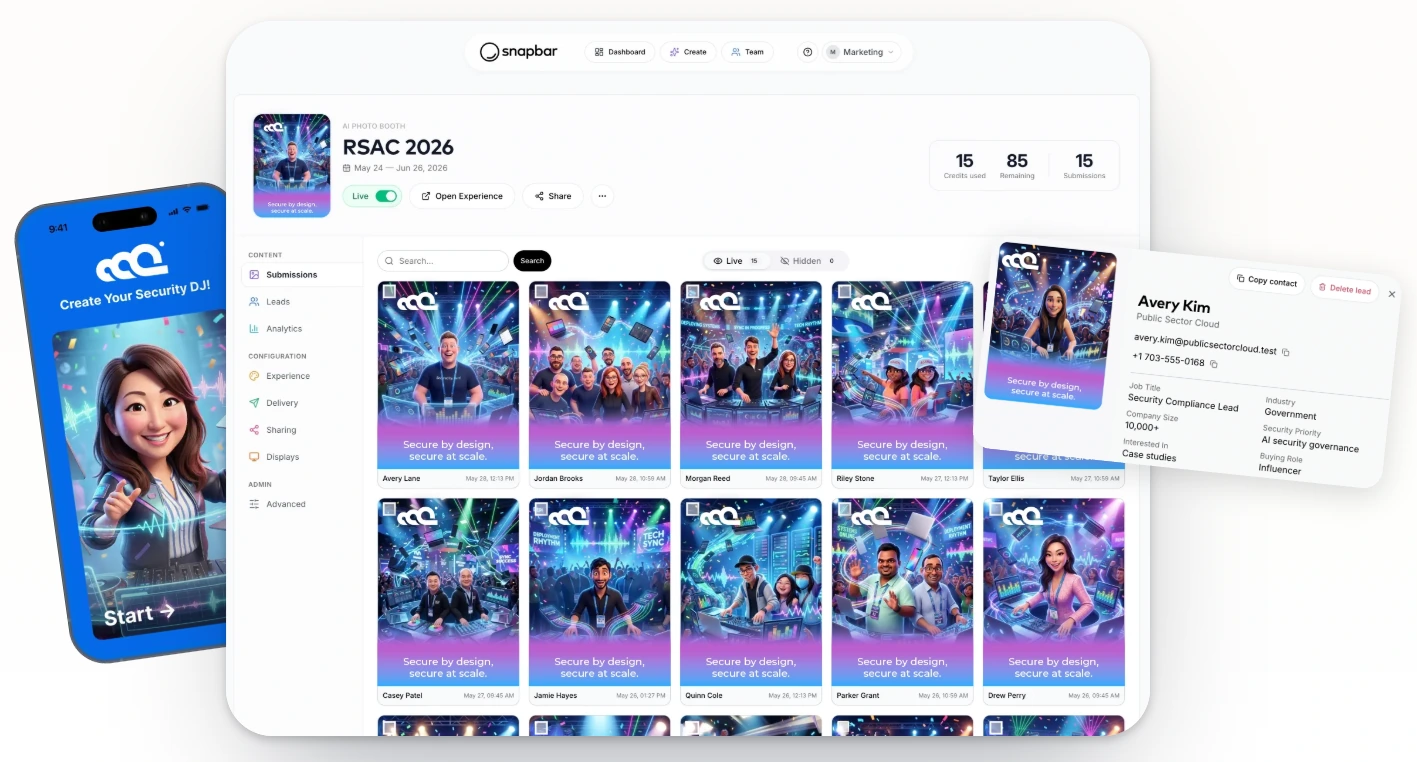
The Experiential Marketing Platform, scheduled for general availability in summer 2026, is Snapbar’s umbrella for all of this. It centralizes experience design, deployment, lead capture, and post-event reporting in one dashboard. Features include AI-enriched company matching for audience segmentation, branded stakeholder reports exportable as PDFs, and real-time content moderation. The platform lets brands justify event spend with participation and lead data rather than foot traffic estimates.
Source: Snapbar
Where Snapbar Falls Short
Snapbar’s enterprise focus produces polished activations, but several limitations surface for certain buyers.
No Published Pricing. Every engagement requires a custom quote. Snapbar’s pricing page lists products but shows no dollar figures. The company acknowledges that “our starting cost is higher, meaning our platform is not the most budget-friendly option for smaller events or organizations.” For teams that need to evaluate cost before engaging sales, this creates friction.
Limited Self-Service Capability. Snapbar rates its own DIY capability at 3/10 in its competitive comparison. Gallery-level settings require a Customer Success Manager to enable. The product turnaround schedule requires quotes signed 8 business days out and design forms submitted 6 business days before the event. This works for planned enterprise activations but doesn’t accommodate last-minute events.
No Native CRM Push. Lead data is exportable as CSV for import into Salesforce, HubSpot, or Marketo, but there’s no documented real-time push connector, webhook, or Zapier integration for the event marketing platform. Teams that want leads flowing automatically into their CRM after each activation will need to handle that manually.
No Printing Integration. Snapbar documents that no direct printing integration exists on the current platform, noting plans to address it later. For events where physical photo prints are part of the guest experience, this is a gap.
Enterprise Setup Timeline. The 2 to 3 week concept-to-launch window, while reasonable for planned activations, means Snapbar can’t serve the operator who gets a booking next weekend. The platform is built for event marketing programs, not ad-hoc rentals.
These limitations reflect Snapbar’s focus on managed enterprise activations. But they leave a clear opening for platforms built around operator independence, fast setup, and transparent pricing.
Top Snapbar Alternative: Simple Booth
Simple Booth takes the opposite approach to event photo experiences: instead of a managed service with custom quotes, it provides a self-service photo booth platform that pairs dedicated hardware with a subscription iPad app, letting operators set up in under a minute, run events without an attendant, and manage everything remotely.
Founded in 2013 by Mark Hennings and Jeremy Cox, Simple Booth has grown to 30,000+ customers with a 4.7-star App Store rating from 2,400+ ratings and 40 million+ moments captured. The company ranked #414 on the Inc. 5000 with 1,210% three-year growth. Clients include Live Nation, Sports Illustrated Tickets, and Gibson Brands.
Integrated Hardware: Simple Booth’s HALO kit packages studio-grade lighting, iPad mounting, and built-in charging in a machined aluminum chassis.
The HALO is a ring-light photo booth engineered from a single billet of anodized aluminum with patented ring-light technology. Its 112 LEDs produce up to 2,100 lumens, rated for 50,000 hours of operation, and can light groups standing 6 to 8 feet from the camera.
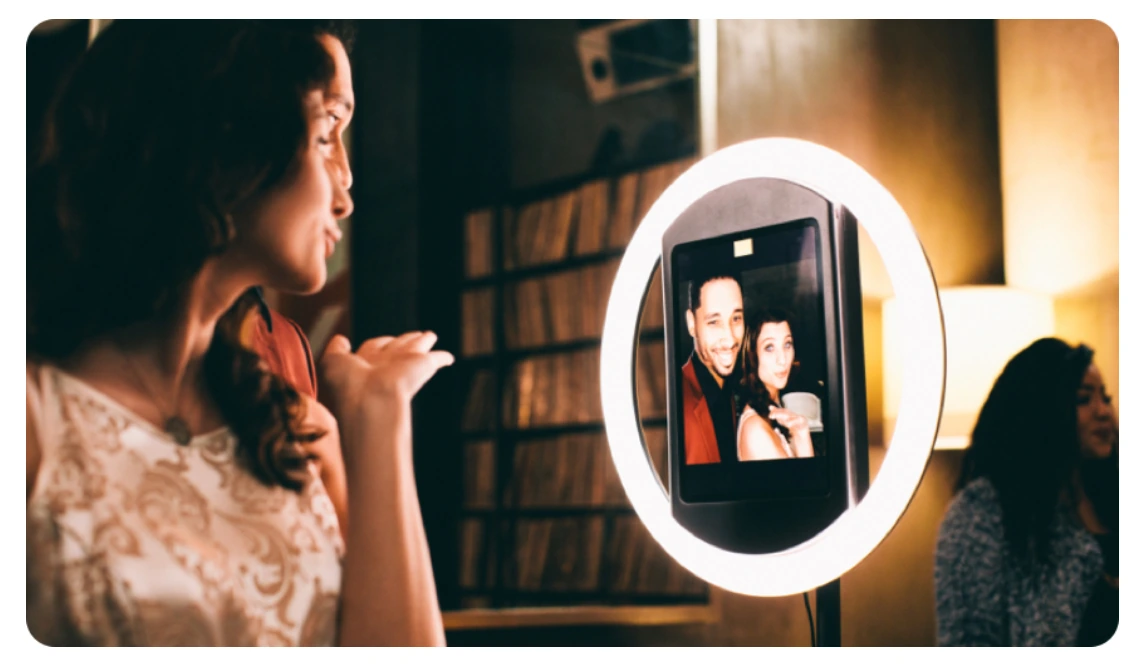
Setup requires no tools. The iPad snaps in via a tool-less faceplate, and a concealed USB-C cable keeps it charged throughout the event. The Event Kit includes an adjustable selfie stand and waterproof travel case (49 lbs with wheels and extendable handle); the Install Kit offers a heavy-duty steel wall mount for permanent venues. Simple Booth claims setup in under one minute, an operational advantage for companies running multiple events per week.
For events without wall power, compatible portable batteries provide 6+ hours of runtime. International operators get dual voltage support (110V–240V).
“It paid for itself pretty quickly. Now it’s just extra money coming in.” (Kurt Nielson Photography)
Full-Featured Photo Booth App: Simple Booth’s HALO app handles capture, branding, AI effects, photo delivery, and analytics from a single iPad interface.
The HALO app supports still photos, photo strips, custom layouts, GIFs, Rebound boomerang clips, and video (5 to 120 seconds). HALO 5.0 introduced a Layout Designer, a full in-app design tool with layers, fonts, gradients, QR code embedding, and multi-layout support, eliminating dependence on external graphic design software.
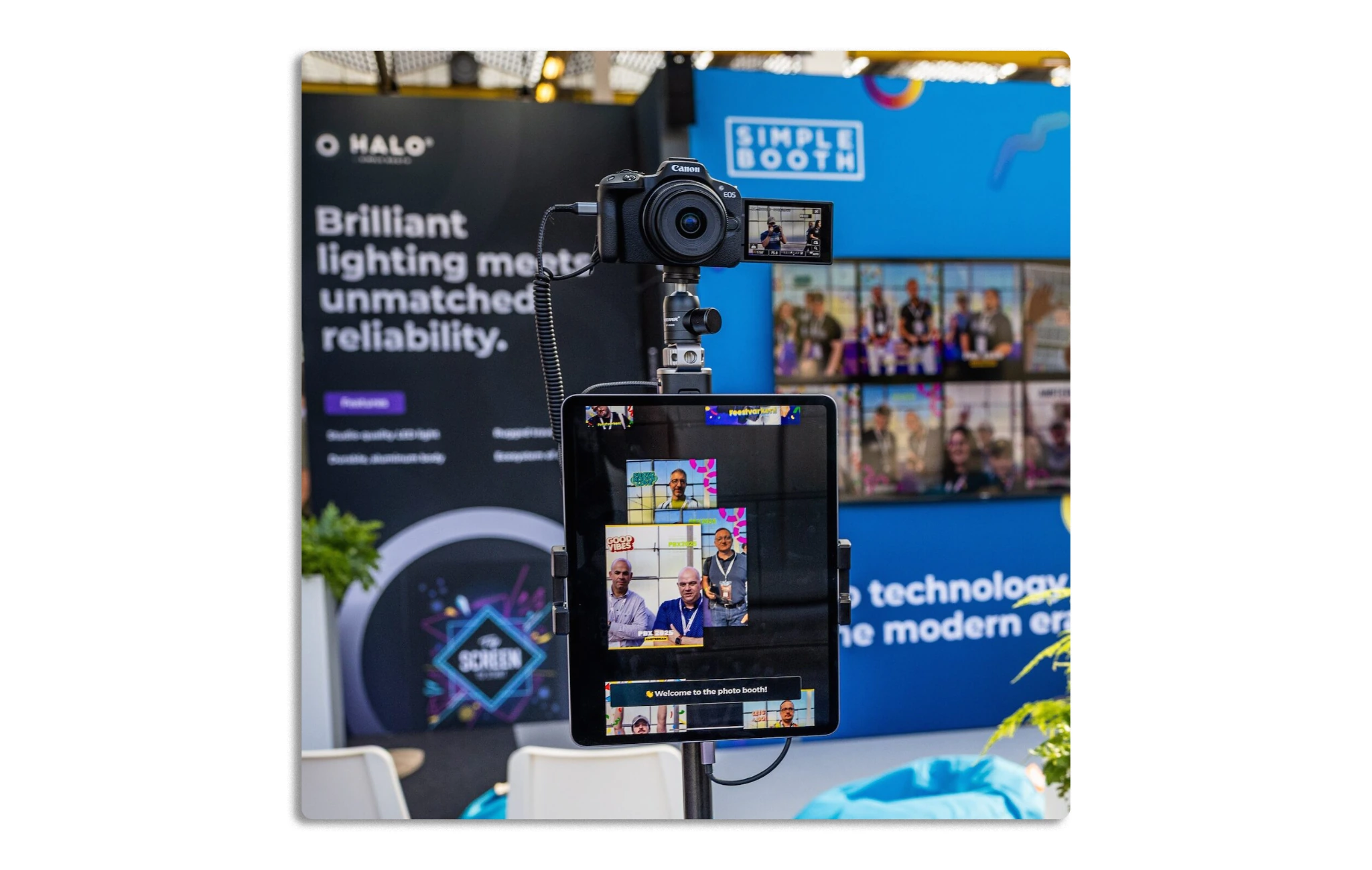
Camera options go beyond the iPad’s built-in sensor. Canon and Sony DSLR and mirrorless cameras connect on Core plans and above via USB or WiFi (a capability most competitors don’t offer) giving operators studio-grade image quality through the full HALO feature set.
AI capabilities include background replacement without a green screen, AI Effects powered by Nano Banana models that transform guest photos using text prompts, and AI-generated layout images at zero credit cost. Operators can test prompts outside of booth mode without consuming credits. Per-frame multi-prompt support lets operators assign a unique AI prompt to every frame in a multi-frame layout, creating narrative photo strips.
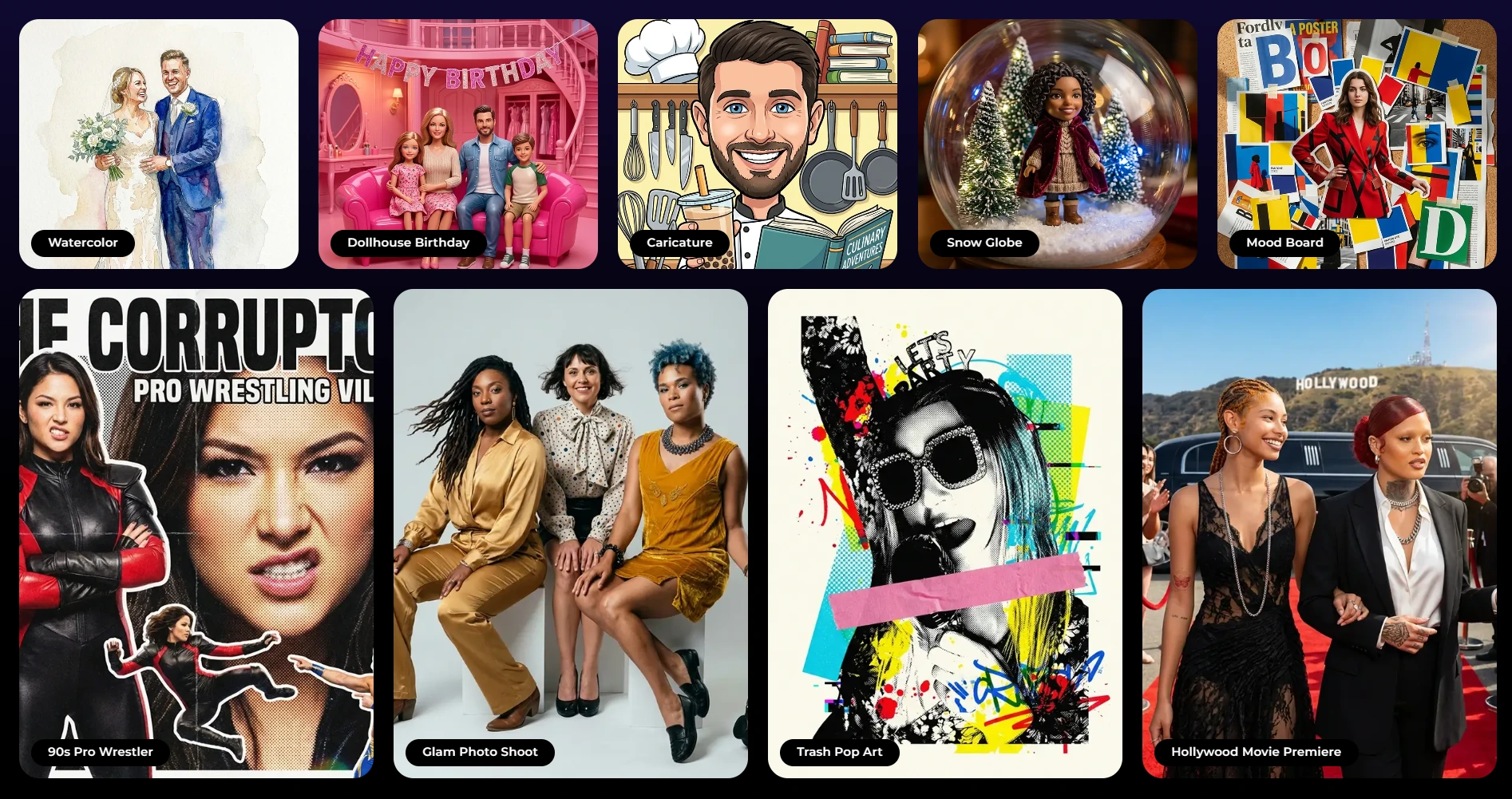
Photo delivery covers QR code, email, SMS, AirDrop, and WhatsApp. The app queues sessions in offline mode and delivers them when connectivity returns, which matters at venues with unreliable Wi-Fi. Mission Control, accessed via a two-finger pinch gesture, lets operators monitor device health and adjust camera settings during live events without disrupting the guest-facing interface.
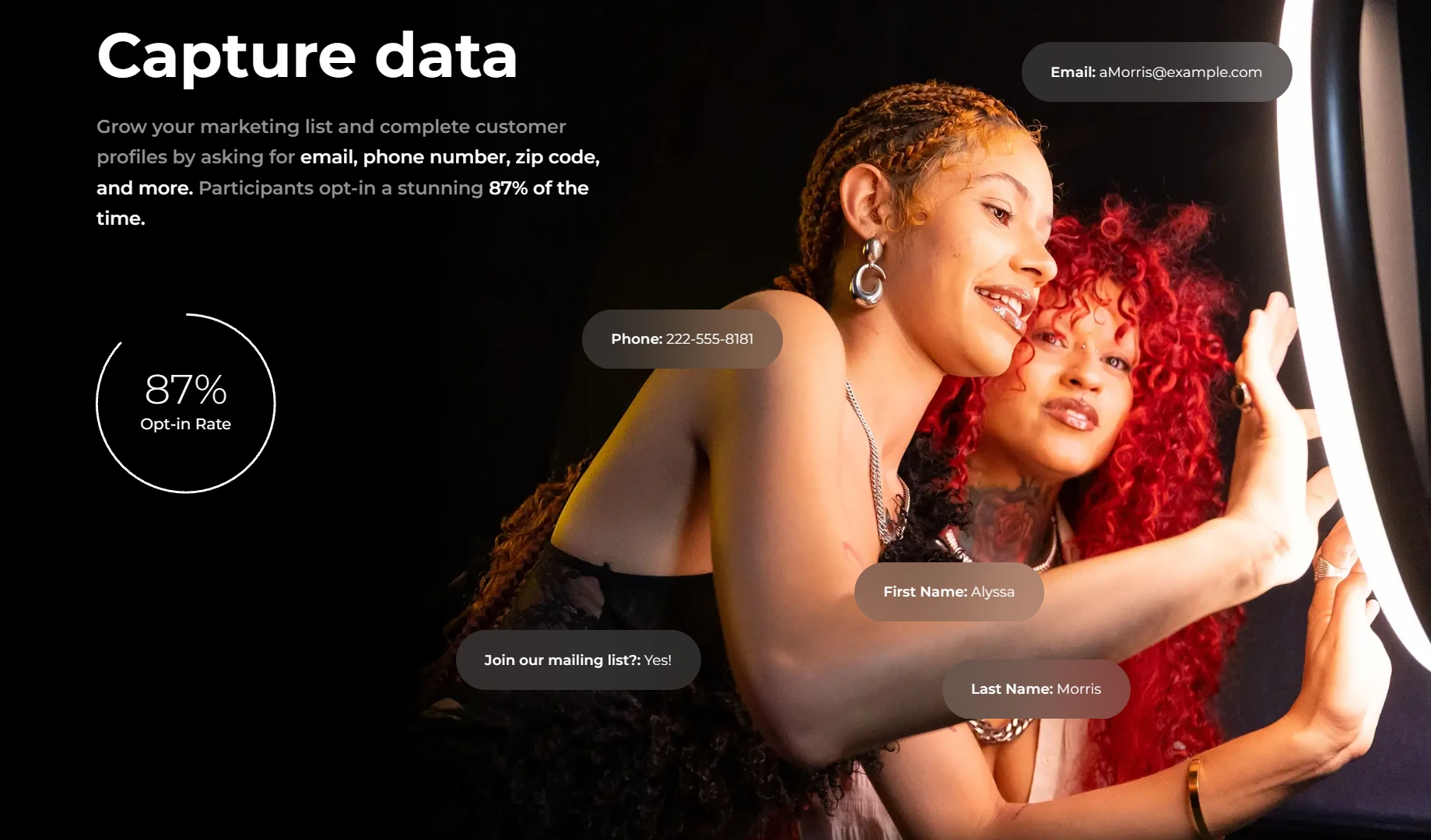
Lead Capture and Marketing Tools: Simple Booth captures first-party data with opt-in rates as high as 87 to 89% and feeds it into galleries, analytics, and social sharing.
Simple Booth’s data capture forms collect up to 6 standard fields on Pro (email, name, phone, postal code, date of birth) and up to 10 custom fields on Select, including checkboxes and required legal terms. The platform reports opt-in rates as high as 87 to 89% because data collection is built into the natural flow of receiving a photo rather than presented as a separate form.
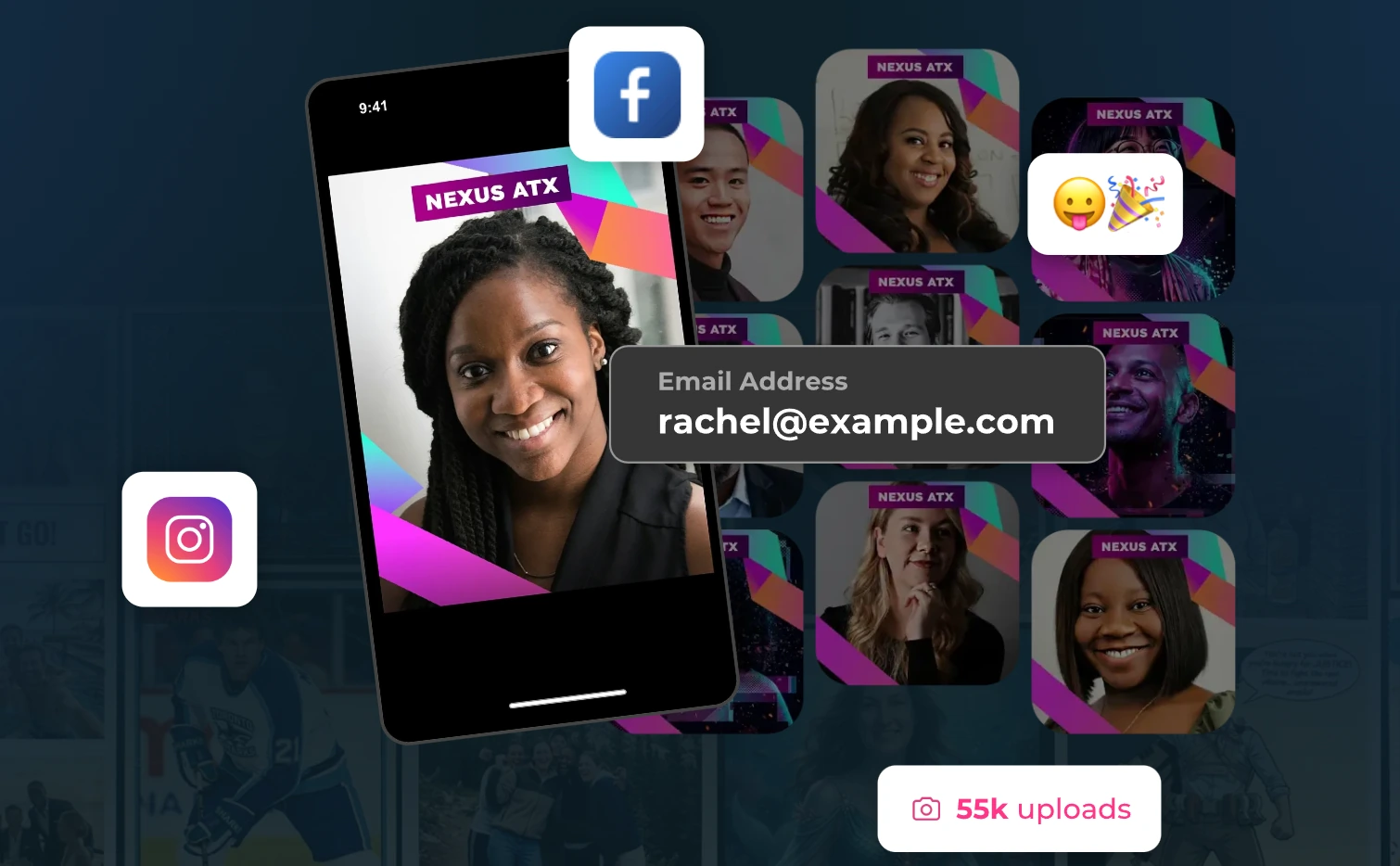
Every event generates an online gallery with configurable privacy levels. Any public gallery becomes a Live Feed display for TV or projector with a single tap. Social sharing pre-populates event hashtags on X/Twitter and Facebook, and the platform automatically reformats content into Instagram-compatible files.
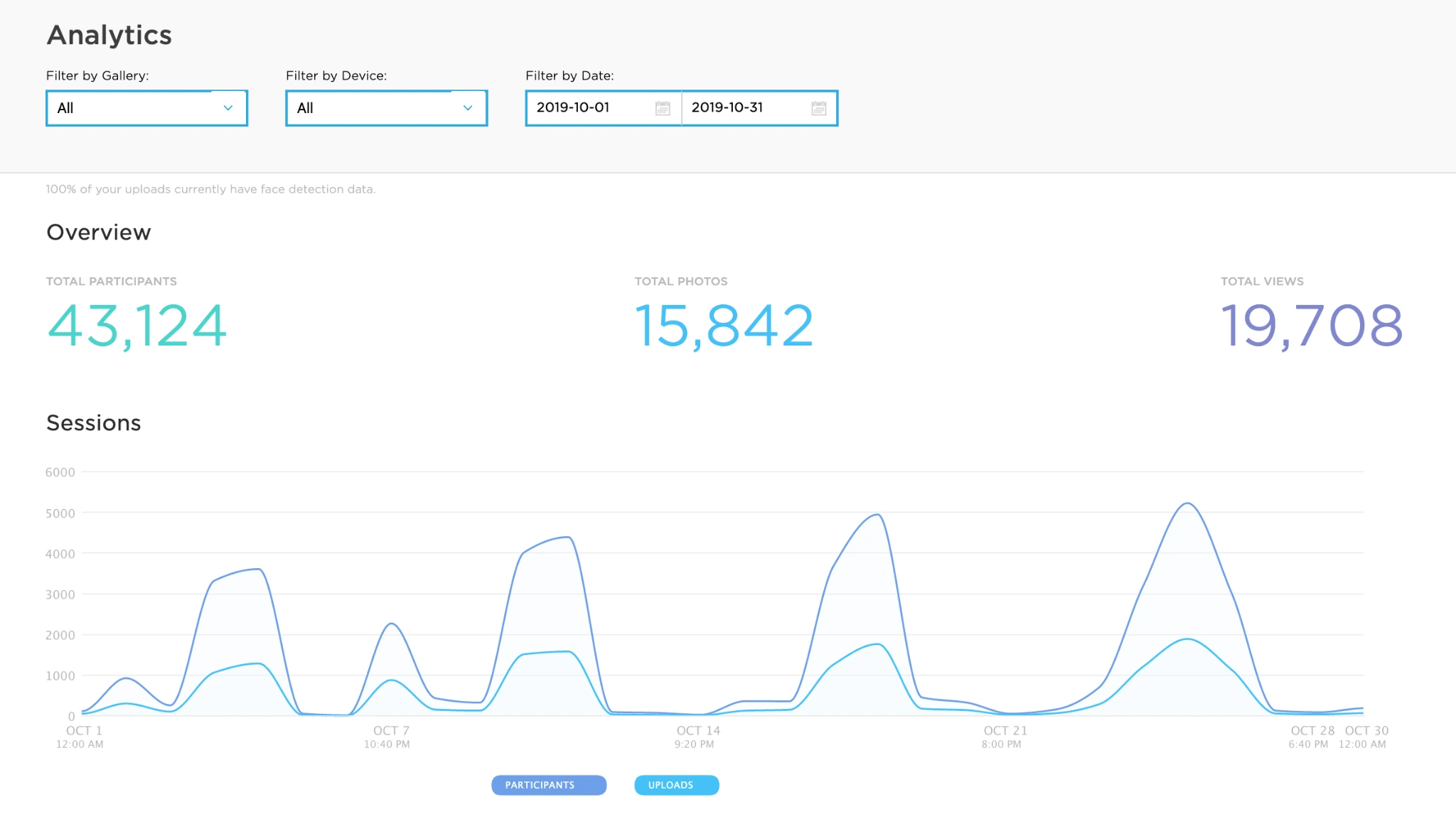
Data integrates with MailChimp natively and with custom CRMs via the Open API on Pro and Select plans. Analytics include session counts, gallery views, social share tracking, and demographic insights via face detection (age estimation, gender breakdown) on the Select tier.
“10+ years, we’re big Simple Booth believers.” (G7 Entertainment Marketing, 136,000+ fan interactions)
Virtual Booth and Flexible Pricing: Simple Booth extends beyond hardware with a browser-based product and transparent subscription plans.
Virtual Booth delivers the same branded photo experience in a browser without hardware. Participants join via QR code or link on any device. Features include background replacement, overlays, stickers, AI effects with guest input variable injection, and data capture. It supports multi-language localization (English, Spanish, French, German, Dutch, and more) and runs unlimited concurrent events under one account. Submissions feed into the same analytics and gallery infrastructure as HALO hardware sessions.
Pricing is published. Plans run on weekly, monthly, or annual billing cycles:
| Plan | Weekly | Monthly | Annual | Key additions |
|---|---|---|---|---|
| Lite | $14.99 | $29.99 | $289.99 | Basic capture, delivery, galleries, themes, props |
| Core | $24 | $49 | $490 | Ads removed, DSLR support, video, background features, Virtual Booth, AI effects |
| Plus | $49 | $99 | $990 | Custom branding, analytics, guest-editable text, custom AI effects |
| Pro | — | $149 | $1,490 | Lead capture, API, phone support, moderation, age gate |
| Select | — | $249 | $2,490 | Custom legal terms, security questionnaires, demographic analytics |
A 7-day free trial is available with 25 AI credits included. AI effect credits cost $0.10 each and do not expire. Additional device licenses are available at discounted add-on rates for multi-booth operations.
“I knew nothing about photo booths when we started.” (Amore Entertainment)
Snapbar or Simple Booth: Comparison Summary
| Snapbar | Simple Booth | |
|---|---|---|
| Primary focus | AI-powered experiential marketing platform | Self-service photo booth hardware + software |
| Target buyer | Enterprise event marketers and agencies | Photo booth operators, venues, and brand marketers |
| Setup model | Managed service (3/10 self-rated DIY) | Self-service (under 1 minute setup) |
| Hardware | iPad kiosks and Selfie Stations (shipped) | HALO ring-light kit (machined aluminum, patented) |
| AI capabilities | Custom AI styles per activation, AI Video, AI Stories, Persona Quiz, Trading Cards | AI Effects (Nano Banana models), AI backgrounds, AI-generated layouts |
| Experience types | 8 experience formats | Photo, video, GIF, Rebound, custom layouts, Virtual Booth |
| Lead capture | Custom fields, CRM-ready CSV export | Up to 10 fields, MailChimp native, Open API |
| Photo delivery | Branded email | QR code, email, SMS, AirDrop, WhatsApp |
| Live displays | Slideshow, Social Wall (Walls.io), Mosaics, Gallery | Live Feed, online galleries |
| Offline capability | Requires internet for all activations | Offline queue with automatic upload on reconnect |
| Printing | No integration currently | Wireless printer support (AirCast Pro, DNP WCM) |
| Scalability | 50 to 50,000+ attendees | Multiple devices via add-on licenses |
| Setup timeline | 2 to 3 weeks concept to launch | Same day |
| App Store rating | N/A (browser-based) | 4.7 stars from 2,400+ ratings |
| Pricing model | Custom quotes only | Published weekly, monthly, and annual plans |
| Starting price | Not disclosed | $14.99/week (Lite) |
| Free trial | Not available | 7-day free trial |
| Best for | Enterprise activations with managed support | Independent operators who want full control |
Final Verdict
The choice between Snapbar and Simple Booth depends on how you run events and what support you need.
Choose Snapbar if you’re an enterprise event marketer or agency running large brand activations where custom AI experiences, structured lead capture, and post-event reporting need to justify event spend to stakeholders. The variety of experience types (AI photos, video, stories, quizzes, trading cards) keeps activations fresh across an annual event calendar, and the managed-service model means Snapbar’s team handles design and configuration. It’s the right choice when the activation’s quality and measurement matter more than speed of setup or cost transparency.
Choose Simple Booth if you want to own and operate your photo booth experiences independently, whether you’re a rental company building a business, a venue adding a permanent guest engagement station, or a brand marketer who needs to deploy activations on short notice without a 2 to 3 week lead time. The HALO hardware, a full-featured iPad app with AI capabilities, and transparent pricing from $24/week on the Core plan give you a system that sets up in under a minute and runs without an attendant. Simple Booth shows you don’t need a managed service to deliver professional branded photo experiences with lead capture.
Start your free trial of Simple Booth here.
The two platforms serve different philosophies. Snapbar is for event marketing teams that want a partner to design and run activations at scale. Simple Booth is for operators who want a self-service system they control from setup to data export. Your choice depends on whether you’re buying an activation service or building a photo booth capability.
Snapbar FAQ
What is Snapbar used for?
Snapbar is an experiential marketing platform used at corporate events, trade shows, conferences, and brand activations. It offers eight experience types: AI Photo Booth, AI Video, AI Stories, Persona Quiz, Trading Cards, Event Headshots, Digital Photo Booth, and Selfie Stations. Brands use it to generate qualified leads, create shareable content, and measure event marketing ROI through a centralized dashboard.
How much does Snapbar cost?
Snapbar does not publish pricing. All engagements require a custom quote based on the experience type, timeline, and expected participation. The company acknowledges that its starting cost is higher than competitors, positioning itself for mid-to-enterprise budgets. Simple Booth, by contrast, publishes plans from $14.99/week for personal use or $24/week on the Core plan for professional operators, with a 7-day free trial.
Does Snapbar require special hardware?
No. Snapbar’s experiences run in a web browser; attendees access them via QR code or URL on any camera-equipped device. For in-person events, an iPad on a stand with a ring light is recommended but not proprietary. Snapbar also sells Selfie Stations (iPad-based kiosks designed for global shipping) for events that want a dedicated physical setup.
Can you set up Snapbar yourself without vendor support?
Snapbar rates its own DIY capability at 3 out of 10 in its competitive comparison. The depth of customization creates corresponding complexity: most clients work with a Customer Success Manager for onboarding, design, and configuration. The standard timeline is 2 to 3 weeks from concept to launch. Simple Booth is designed for independent setup in under one minute, with published plans and no vendor involvement required.
Does Snapbar integrate with CRM systems like Salesforce or HubSpot?
Snapbar’s event marketing platform exports lead data as CSV files formatted for Salesforce, HubSpot, and Marketo import. However, there is no documented native real-time push connector, webhook, or Zapier integration for the event platform. The Scale Headshots product (a separate brand) has a REST API with webhook support, but this is distinct from the experiential marketing platform.
What is the difference between Snapbar and Simple Booth?
Snapbar is a managed-service experiential marketing platform for enterprise event activations with custom AI experiences, custom pricing, and a collaborative setup model. Simple Booth is a self-service photo booth system that combines HALO hardware with an iPad app, offering transparent subscription pricing, sub-one-minute setup, and independent operation. Snapbar targets enterprise event marketers running large activations; Simple Booth targets photo booth operators, venue owners, and marketers who want full control over their events.
Does Snapbar offer a free trial?
No free trial or free plan is publicly documented on Snapbar’s website. Demos are available through the sales team. Simple Booth offers a 7-day free trial with 25 AI credits included. Paid plans start at $14.99/week for personal use or $24/week on Core for professional operators.
What AI capabilities does Snapbar offer?
Snapbar offers custom AI photo transformations (from realistic headshots to themed illustrations), AI video generation (image-to-video animation producing 5-second MP4 clips), AI Stories (narrative-driven portrait generation based on fill-in-the-blank inputs), and AI-enhanced event headshots with five output methods ranging from real photos with branded backgrounds to fully stylized AI portraits. AI styles are built per client activation rather than selected from a preset library.
Keep reading
 Showdowns
Simple Booth vs Snapbar: Which Photo Booth Platform Fits Your Events in 2026?
Self-serve hardware vs managed enterprise experiences. Simple Booth or Snapbar?
 Alternatives
7 Snapbar Alternatives: Photo Booth & Event Engagement Solutions for Every Budget (2026)
Priced out of Snapbar's custom quotes? These alternatives fit every budget.
 Pricing
Snapbar Pricing: Worth It or Consider Simple Booth? August 2026
Custom quotes and hidden costs. Snapbar pricing, dragged into the light.