LumaBooth vs Snappic (vs Simple Booth): Which Photo Booth Software Fits Your Business in 2026?
Choosing between LumaBooth and Snappic for your photo booth business comes down to five questions:
- Do you need software that runs on both Windows PCs and iPads, or is iOS-only acceptable?
- Are you running multiple booth formats (360, mirror, glambot), or do standard photo and video sessions cover your events?
- How central are AI-generated photo effects to your event pricing and client pitch?
- Do you want software that pairs with hardware you already own, or a complete system with dedicated booth hardware included?
- Is capturing guest data and measuring marketing ROI a selling point for your clients?
Here’s what we recommend:
LumaBooth is the cross-platform option for operators who want one subscription covering both Windows PCs and Apple devices. With over 14 years in the market and support for Canon, Nikon, Sony, GoPro, and webcams on Windows, it offers the broadest camera compatibility at the lowest entry price: $17/month on annual billing.
The LumaBooth Dashboard lets operators configure events in a browser and sync settings to any connected device before arriving at the venue. The trade-offs: cashless payments, webhooks, and the local API are Windows-only, the interface shows its Windows desktop roots, and there’s no dedicated booth hardware or virtual booth product.
Snappic targets operators growing from a single iPad booth into a multi-format business. It’s the only platform here that supports iPad, 360, glambot/robot arm, mirror, and roaming setups from one app, and its AI suite runs three distinct engines for different transformation styles. The Scale plan adds agency tools including sub-account management and a fully unbranded app.
The trade-offs: iOS-only, a steep learning curve with dense settings menus, subscriptions start at $69/month, AI and background removal credits add to the bill, and a smaller review base (4.5 stars from 93 App Store ratings) means less independent quality data than longer-established competitors.
Both platforms deliver capable photo booth software for operators who bring their own hardware. But neither includes dedicated booth hardware designed for the software, and neither treats guest data capture as a central part of the product. For operators who want a complete system and marketers who need measurable returns from every photo interaction, there’s a third option.
Simple Booth pairs a subscription iPad app with the HALO, a patented ring-light booth chassis machined from a single billet of aluminum with 112 LEDs producing up to 2,100 lumens.
The hardware snaps together in under a minute with no tools. The software captures photos, GIFs, boomerangs, and video, applies AI effects and branded overlays, and delivers the final output to guests while collecting contact information at opt-in rates of 87 to 89%.
In development since 2013, the platform’s visual preset editor shows the entire booth flow upfront, image previews render up to 12x faster than previous versions, and guests can use booth mode without an attendant. For remote and always-on activations, Virtual Booth runs in a browser with no hardware or app install.
With 30,000+ customers, a 4.7-star rating from 2,400+ App Store reviews, and 40 million+ moments captured, Simple Booth has the largest verified user base and highest-rated app in this comparison.
If you want dedicated hardware, reliable software, and built-in marketing tools from one vendor, start a free trial of Simple Booth.
LumaBooth vs Snappic vs Simple Booth at a glance
| LumaBooth | Snappic | Simple Booth | |
|---|---|---|---|
| Platform | Windows + iPad/iPhone/Mac | iPad/iPhone/Mac only | iPad only |
| Camera support | Canon, Nikon, Sony, GoPro, webcam | iPad, Canon, Sony, Nikon, GoPro | iPad camera + Canon & Sony DSLR/mirrorless (wired + wireless) |
| Booth types | Photo, 360, Mirror, Glam, Video Guestbook, Green Screen | Photo, 360, Glambot/Robot Arm, Mirror, Roaming | Photo, GIF, Rebound, Video, Green Screen |
| AI effects | 170+ AI Portrait presets + custom prompts | AI-FX, PersonaFX, BananaFX (3 engines) | AI Effects (Nano Banana) + custom prompts |
| Templates | 820+ included | 60+ event templates + Template Designer | 60+ themes + Layout Designer |
| Virtual/remote booth | No | Yes (web-based, add-on) | Yes (browser-based, included on Core+) |
| Dedicated hardware | No (bring your own) | No (bring your own) | HALO ring-light booth kits |
| Data capture | Surveys with CSV export | Surveys, webhooks, AVA demographics | Up to 10 fields, MailChimp, Open API |
| Support | Ticket-based + community forums | 24/7/365 live support | Tiered: email/chat to phone |
| Free trial | Unlimited (watermarked output) | 14-day, no credit card | 7-day |
| Starting price | $17/month (annual) | $69/month or $29/event | $14.99/week (Lite) |
| Best for | Operators who need cross-platform flexibility and broad camera support | Multi-format operators scaling toward agency-level business | Operators and marketers who want an integrated system with built-in data capture |
Platform flexibility: one runs everywhere, two run on iPad
LumaBooth works for operators who run Windows-based booth setups alongside iPads.
A Windows PC connected to a DSLR via USB delivers the highest image quality and unlocks Windows-exclusive features: cashless payments via Stripe, the Booth CoPilot remote monitoring app, and a local API with webhooks for integrating with custom hardware. The LumaBooth Dashboard syncs settings to both Windows and iOS devices, which the company describes as a first in the category.
The trade-off: covering both platforms creates feature gaps. Cashless payments, Booth CoPilot, and Hot-Folder importing are Windows-only, and event settings sync works between Windows computers only, not Mac-to-Windows. The interface still looks like a Windows desktop app, so navigating settings feels less natural than on iPad-native apps.
Snappic runs on iPad, iPhone, and Mac.
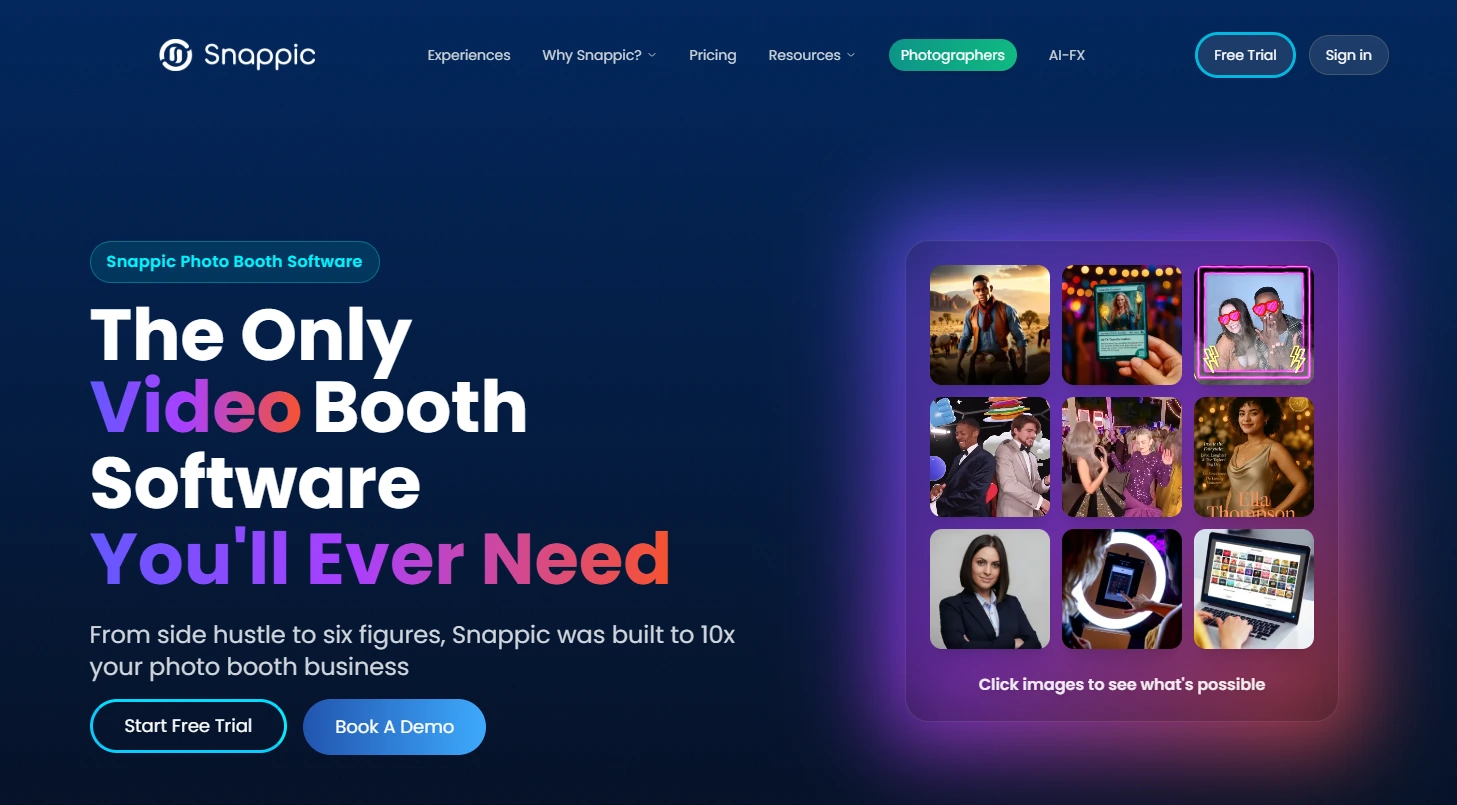
There is no Windows or Android app. For operators who already standardize on Apple hardware, this is fine. For those running mixed hardware or who prefer the processing power of a dedicated PC for DSLR tethering, it’s a constraint. Snappic packs many settings into its interface, and new operators report a steep learning curve before they can configure events confidently.
Simple Booth is also iPad-only, but the constraint is deliberate.
The entire product is designed around the iPad as the booth’s brain: the HALO chassis holds the iPad, a concealed USB-C cable keeps it charged, and the ring light provides consistent illumination. Because everything comes from one vendor, there’s no compatibility guesswork. Filters, background blur, and effects all work with video, DSLR integration, and offline mode at the same time.
HALO 5.0 added Canon and Sony DSLR/mirrorless camera support on Core plans and above, with both wired USB and wireless Wi-Fi connections. Most competitors don’t offer wireless DSLR connection, which lets operators position the camera away from the booth itself.
“It paid for itself pretty quickly. Now it’s just extra money coming in.” (Kurt Nielson Photography)
Booth types: who covers the most ground
LumaBooth covers the widest variety from a single subscription: photo, GIF, boomerang, video, 360/slow-motion, mirror booth, glam booth, green screen, AI portraits, and video guestbook.
The 360 booth captures up to 120 fps on Windows and 240 fps on recent iPads, with speed ramps, animated overlays, and motion-activated recording built in. The mirror booth uses a Virtual Attendant with video and audio prompts to guide guests through the session on a large touch display.
Roaming photography mode on iPad turns the app into a mobile event photography tool that brands and uploads each shot to a live gallery automatically.
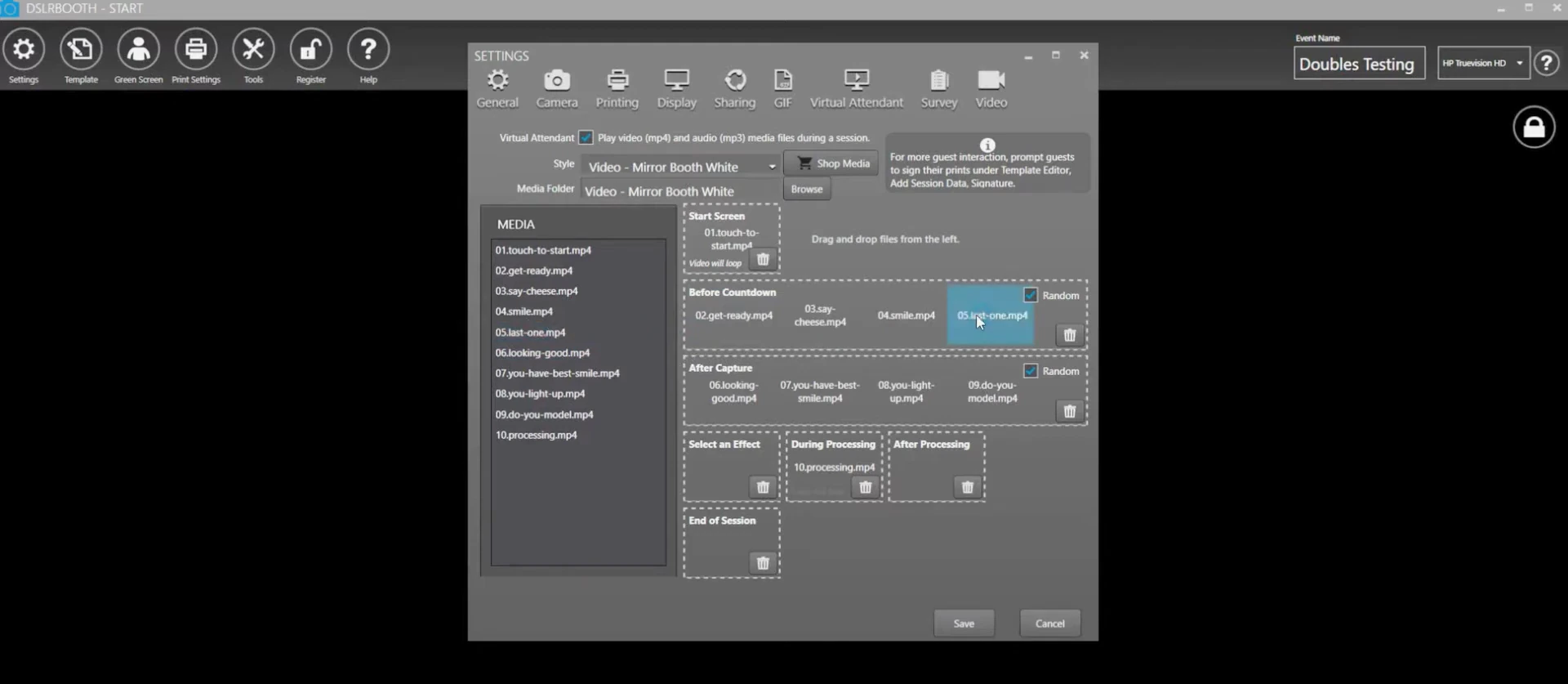
Source: LumaBooth
Snappic matches LumaBooth’s breadth and adds a format neither competitor supports: the glambot/robot arm, which produces sweeping slow-motion shots.
Its VideoFX engine handles 360 booths, robot arm captures, mirror booths, and roaming photography through a single template builder. Pre-built glambot templates achieve 8x slow motion from just 2 to 3 seconds of capture. For operators building a business around cinematic video, Snappic’s VideoFX tools are the most developed here.
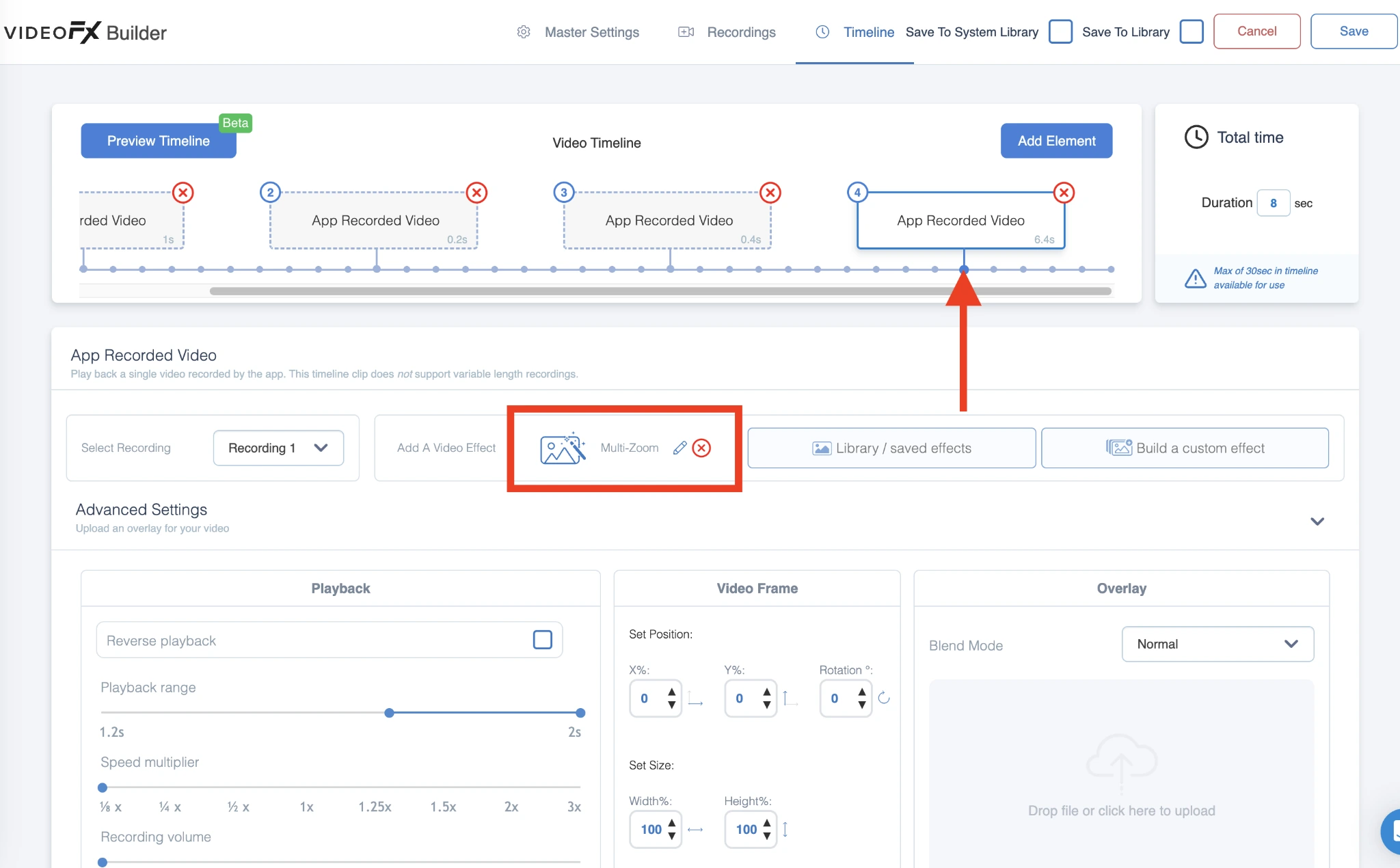
Source: Snappic
Simple Booth focuses on fewer formats and polishes each one.
Capture modes include still photos, animated GIFs, Live GIFs, Rebound boomerang clips, and video up to 120 seconds. There is no 360 booth, mirror booth, or glambot mode. Photos and GIFs with filters, frames, and effects process quickly, with image previews rendering up to 12x faster than previous versions.
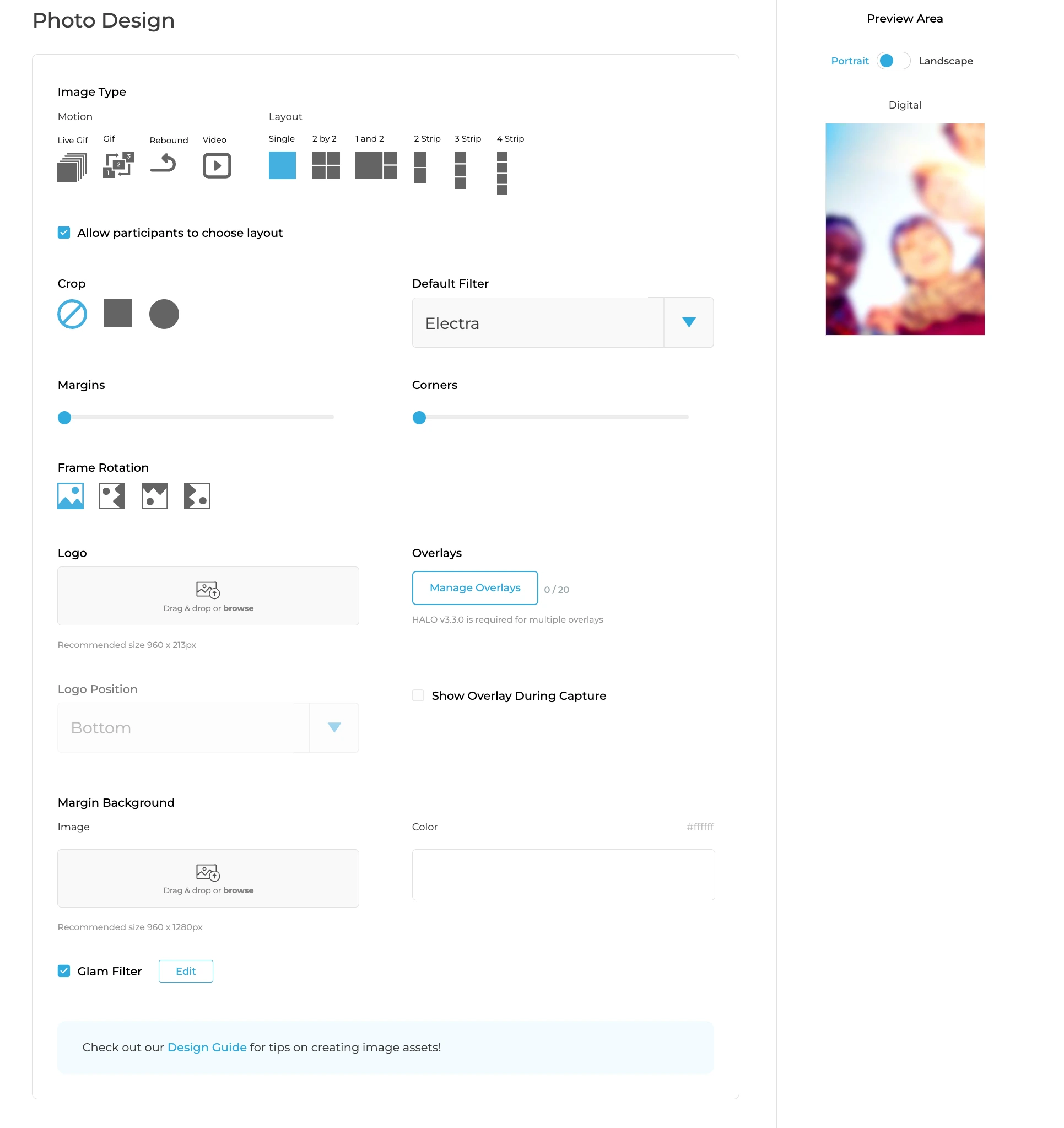
Source: Simple Booth
Simple Booth offers two things neither competitor matches: the HALO (a dedicated booth with integrated lighting) and Virtual Booth (a browser-based photo experience requiring no hardware). Virtual Booth lets marketers run branded activations through a link or QR code, with background replacement, AI effects, and data capture working in-browser on any device.
If 360 and glambot revenue are central to your business, LumaBooth or Snappic is the better fit. If your events center on photo and video booths with occasional remote activations, Simple Booth covers that ground with less complexity.
AI effects: three approaches to the same goal
LumaBooth offers over 170 AI Portrait presets spanning superheroes, historical eras, art styles, sports themes, and more.
Each generation takes approximately 10 seconds and processes in the cloud. The newest addition is Custom AI Prompts, launched in mid-2026, which lets operators write free-text prompts, upload reference images, and inject per-guest personalization (name, jersey number, team colors) into the generated artwork.
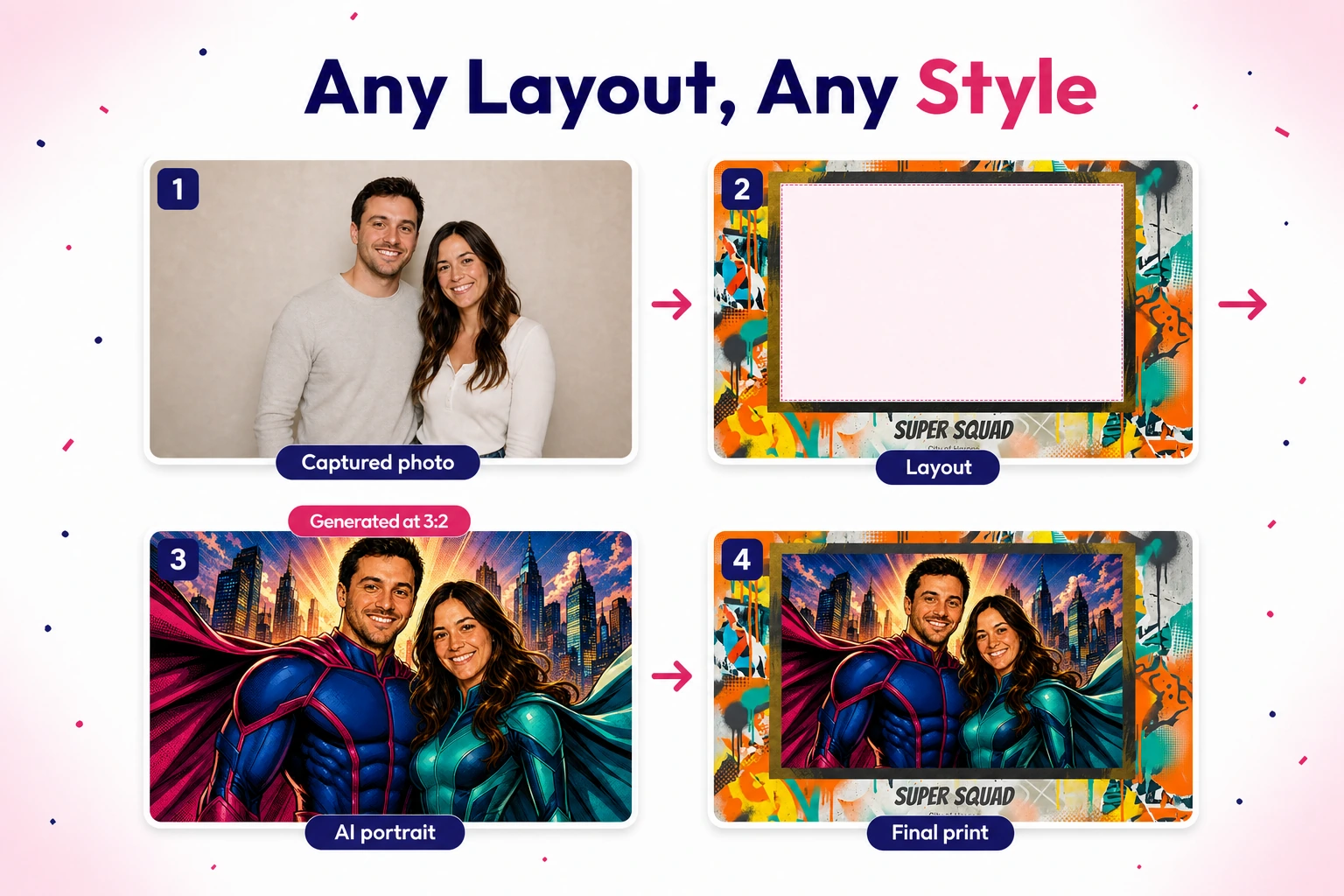
Source: LumaBooth
Operators purchase AI credits separately: monthly plans from $14.99 for 150 credits to $199.99 for 2,000 credits, or pay-as-you-go packs that never expire.
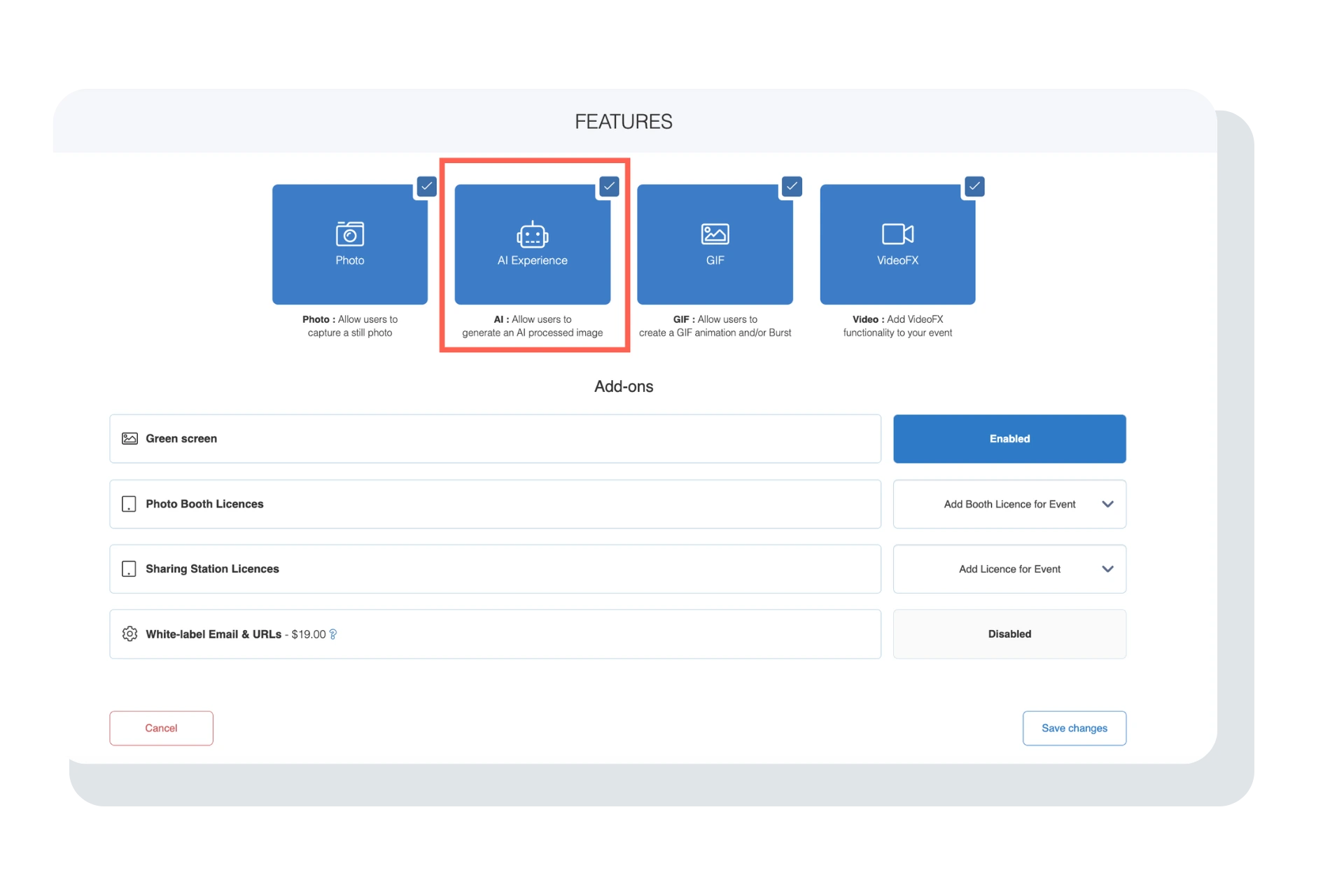
Snappic has the most AI engines, with three distinct options.
AI-FX handles style transfers and branded transformations (magazine covers, trading cards, avatars). PersonaFX generates photorealistic or stylized avatars with survey-driven personalization, supporting up to three people.
Source: Snappic
BananaFX produces full image regeneration from custom prompts, with faster render times than the core AI-FX pipeline. AI-FX processing takes 2 to 5 minutes on average depending on server load, slower than LumaBooth’s 10-second turnaround. Credits cost $20 per 200, with test images at 0.25 credits each.
Simple Booth uses Nano Banana AI models in three tiers: Nano Banana 1 (fastest, individuals, 1x credit), Nano Banana 2 (balanced, groups up to 5, 2x credits), and Nano Banana Pro (highest quality, groups up to 5, 3x credits).
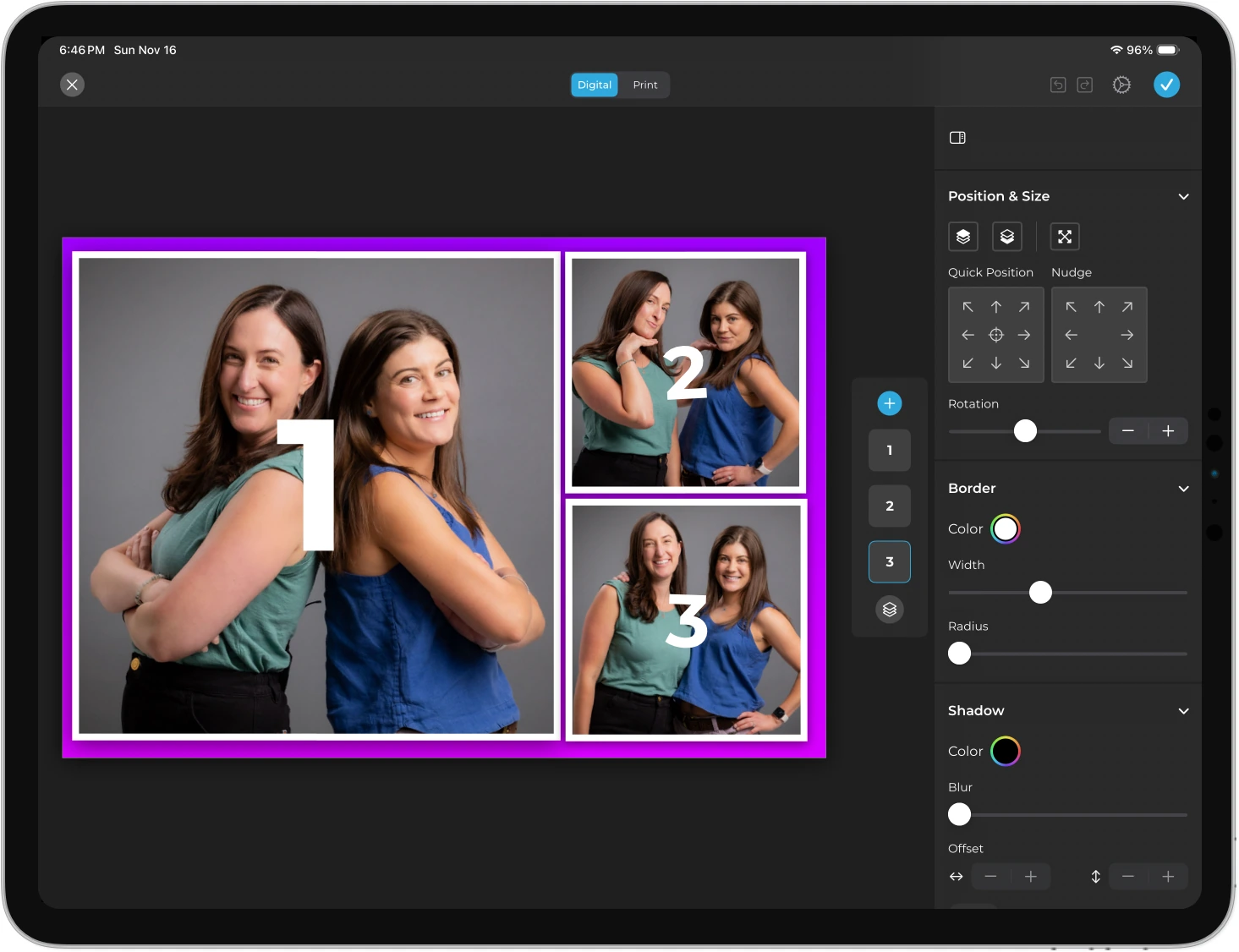
Credits cost $0.10 each and never expire. What sets Simple Booth apart is how AI effects fit into the broader workflow. AI effects composite directly with the Layout Designer, so brand overlays, logos, and graphic frames layer on top of the AI-generated photo in one step.
Source: Simple Booth
Operators can assign unique prompts to each frame in a multi-frame layout, creating sequential narrative strips. Testing prompts outside of booth mode costs zero credits, so operators iterate freely before the event.
All three platforms also offer non-AI background removal. LumaBooth runs AI background removal on-device on Windows with no internet or per-use fee. Snappic offers four background removal methods including an offline AI option and a credit-based online option. Simple Booth includes AI background replacement and background blur on Core plans and above.
Sharing and guest delivery
LumaBooth provides email, SMS, WhatsApp, AirDrop, Instagram, and QR code sharing built into the booth app.
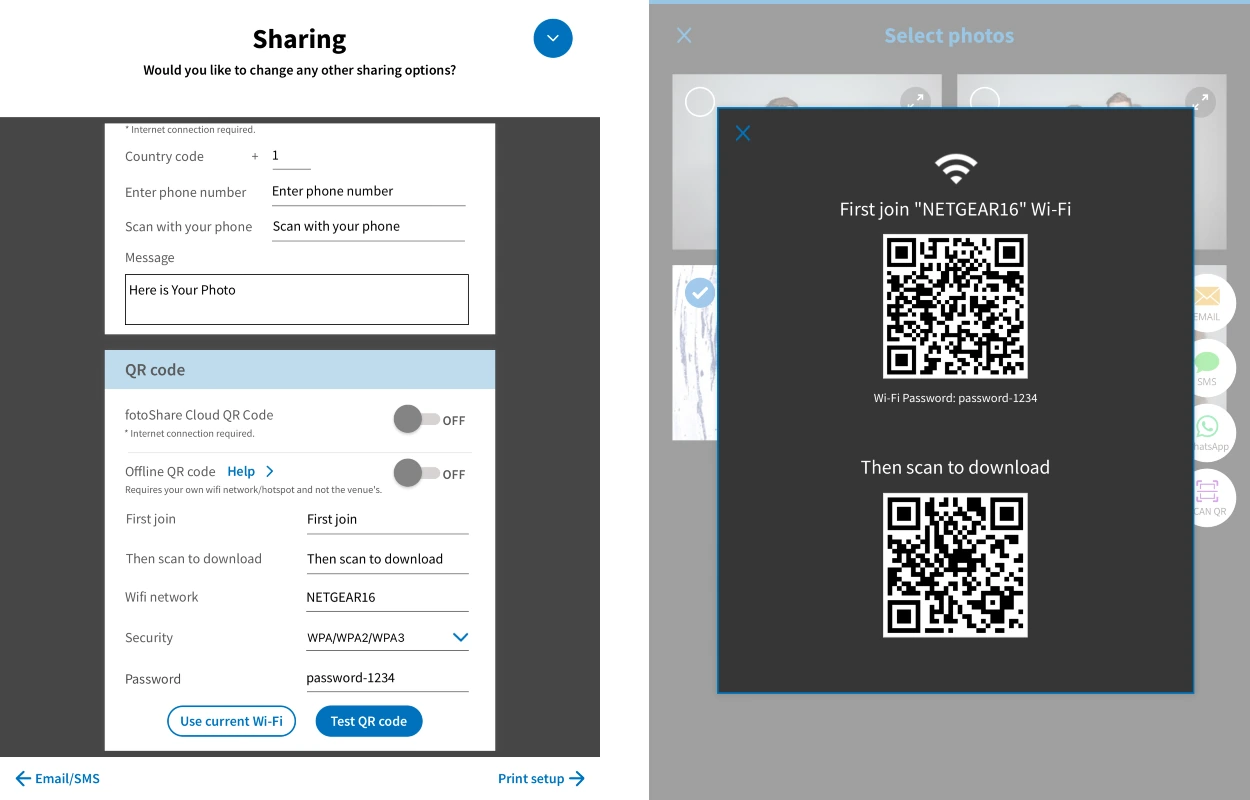
The LumaShare companion app runs on a second iPad, iPhone, Mac, or Android device as a dedicated sharing and slideshow station, separating the share step from the capture step.
LumaShare also supports offline QR code sharing: guests scan one QR code to join a local Wi-Fi network, then a second to receive their media on their phone, with no internet connection required. Each event gets a branded gallery on fotoShare Cloud, included free with every subscription.
Source: LumaBooth
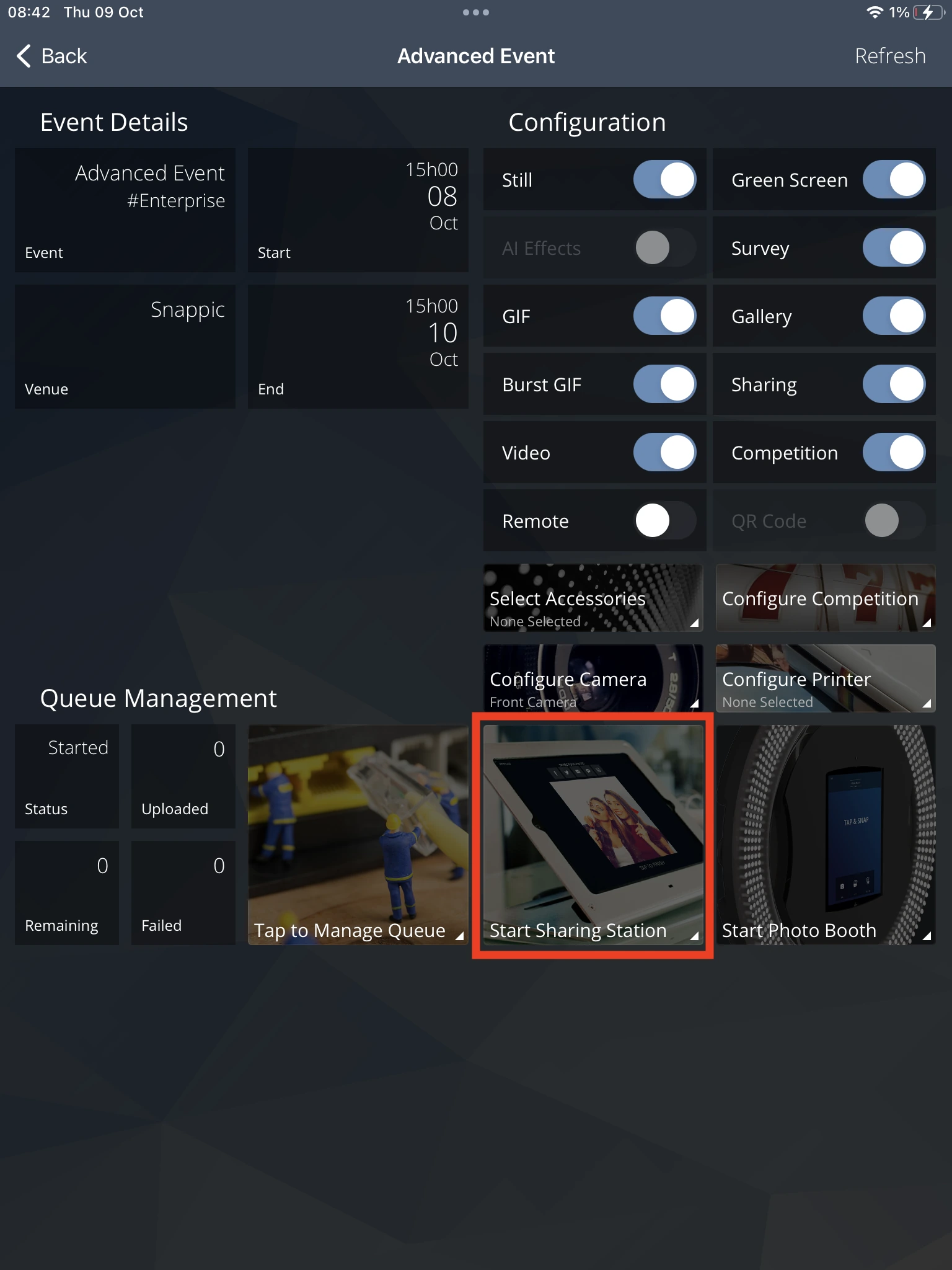
Snappic goes further with SmartShare, which uses AI facial recognition or a personal QR card to link a guest’s identity to their contact information once.
Every subsequent capture at the same event dispatches automatically, with no re-entry required. The Sharing Station serves the same function as LumaShare: a second iPad syncs captured media in real time so guests share while the booth keeps shooting.
Source: Snappic
SMS is unlimited for USA and Canada on all plans, and each event can generate a branded microsite gallery (included on Business+, $19/event on Starter).
Simple Booth offers QR code, email, SMS, AirDrop, and WhatsApp delivery on all plans.
AirDrop lets guests receive photos instantly without typing emails, phone numbers, or filling out forms (and it works offline). HALO 5.0 added WhatsApp delivery, expanding reach in international markets where WhatsApp is more common than SMS.
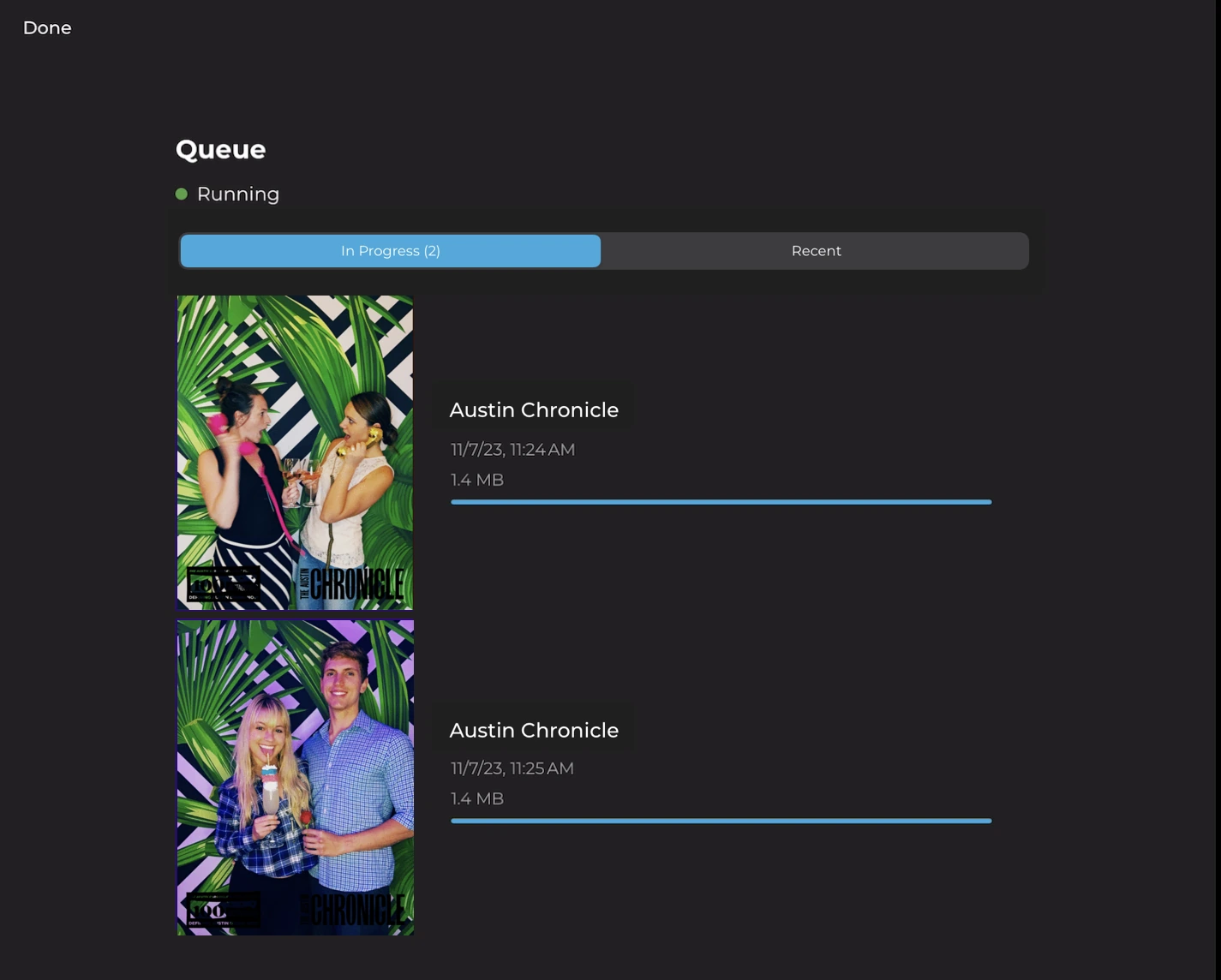
An offline upload queue stores sessions locally and delivers automatically when connectivity returns. Every event generates a branded online gallery with customizable themes, header images, and hashtags, and any public gallery becomes a Live Feed for display on a TV or projector with a single tap.
Source: Simple Booth
G7 Entertainment Marketing has captured 136,000+ fan interactions over 10+ years using Simple Booth across professional sports and entertainment brand activations.
Data capture and marketing ROI.
LumaBooth offers in-session surveys with short answer, long answer, and multiple choice questions.
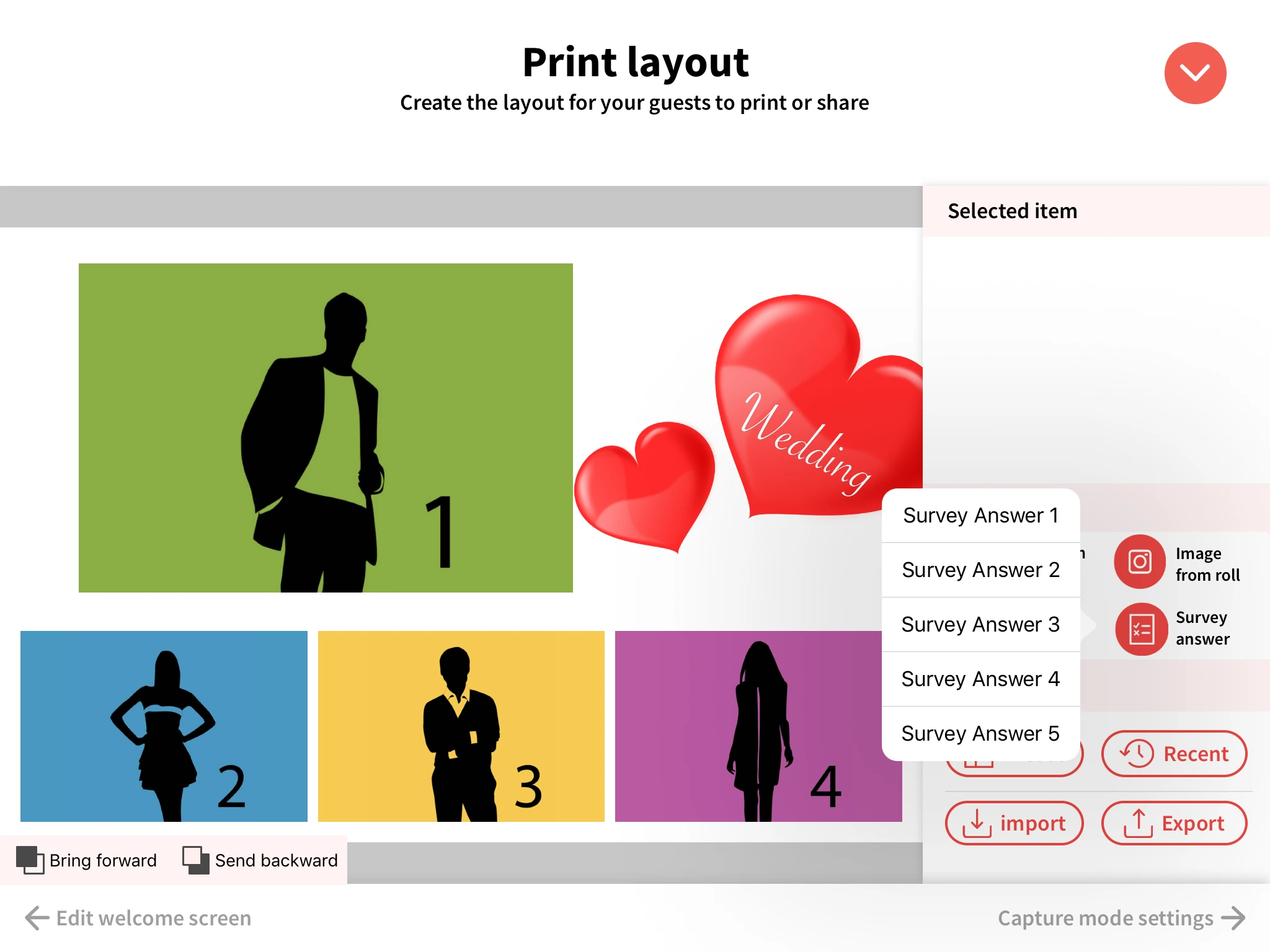
Operators can add survey responses as dynamic text on print layouts, so a guest’s name or answer appears on their physical or digital keepsake. Responses export to CSV. There is no native CRM integration and no marketing analytics dashboard.
Source: LumaBooth
Snappic goes further.
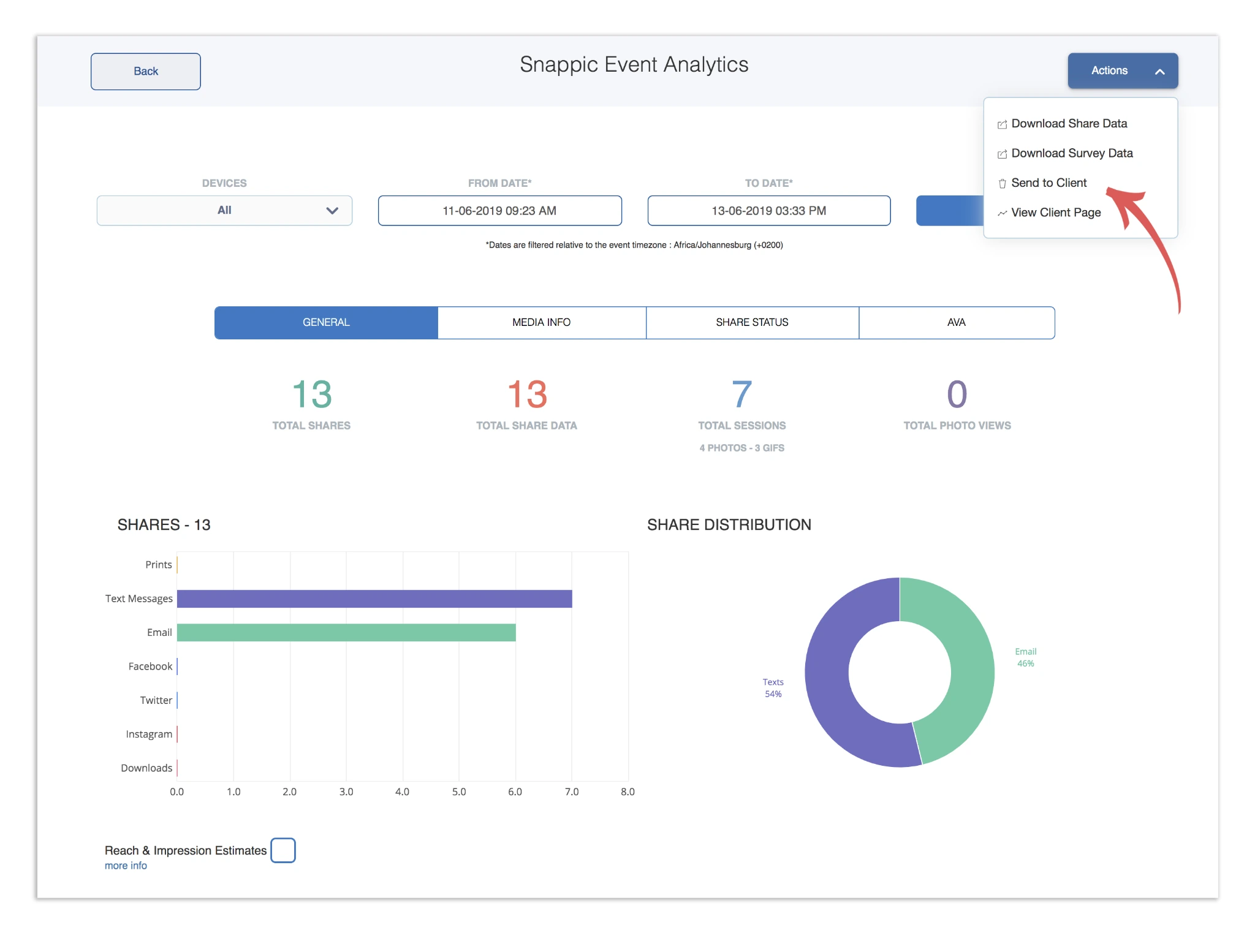
Custom surveys support text, number, email, rating, checkbox, and dropdown fields (Business+). AVA (Automated Vision Analytics) uses facial recognition to generate anonymized demographic insights: gender distribution, age ranges, and average faces per photo.
Webhooks push event data to CRMs and Google Sheets in real time (Premium+, or $19/month add-on on Business). Operators can forward a live analytics page directly to clients showing engagement metrics, gallery access, and downloadable guest data. For agencies pitching repeat bookings, this post-event report is a closing tool.
Source: Snappic
Simple Booth puts data capture inside the booth interaction.
Lead capture forms appear during the photo session rather than after it, which is why the platform reports opt-in rates of 87 to 89%. On the Pro plan, operators configure 6 standard fields (email, name, phone, postal code, date of birth). On Select, up to 10 custom fields including checkboxes and required legal terms. Data syncs with MailChimp and routes to any CRM via the Open API on Pro and Select.
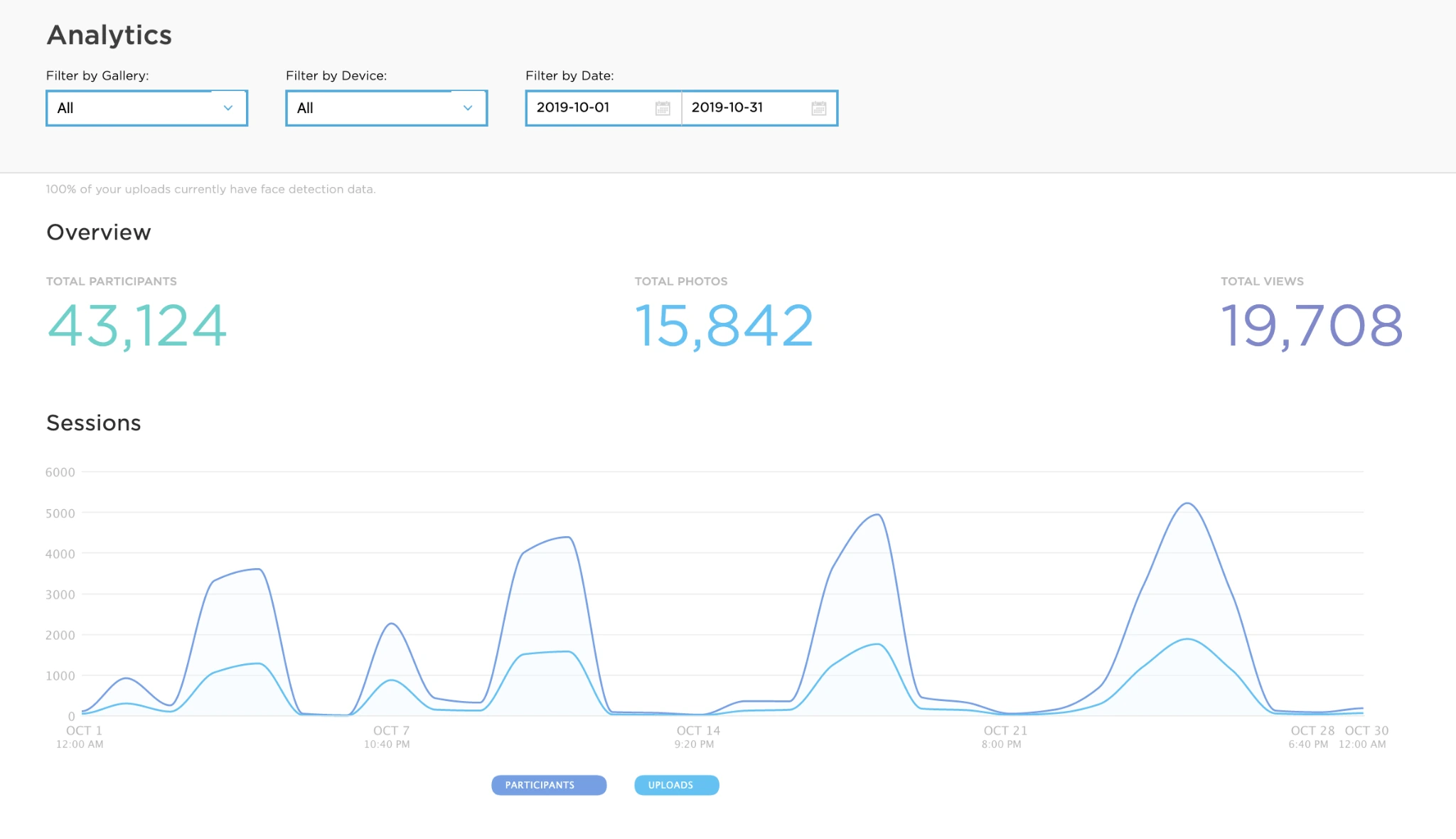
The analytics dashboard tracks total participants, gallery views, social share clicks, and referred views by platform, with demographic insights via face detection (estimated age, gender breakdown, average group size) on Select.
Source: Simple Booth
For marketers and venue operators, data collection is the reason to choose a photo booth platform, not an afterthought.
Treetop Golf built 150,000 unique email addresses across its locations using Simple Booth’s data capture workflow.
Pricing: how the costs actually stack up
LumaBooth costs the least.
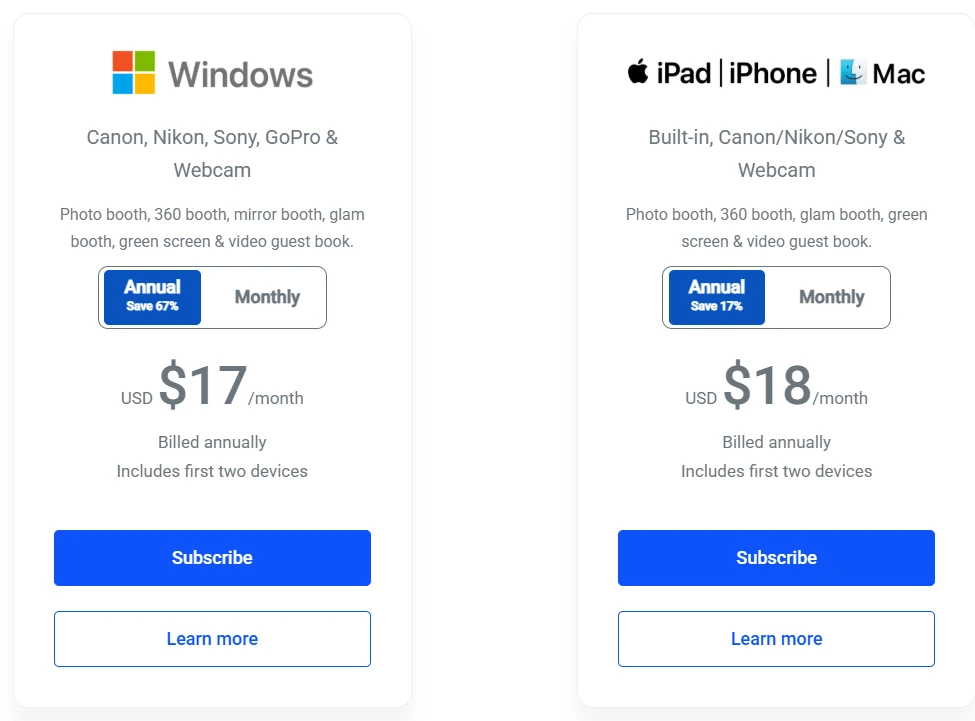
LumaBooth for Windows costs $17/month billed annually; LumaBooth for Apple costs $18/month annually. Monthly billing runs $49.99 (Windows) or $19.99 (Apple). Both plans include two devices. The free trial has no time limit, just a permanent watermark on output until you subscribe.
Costs grow with optional services: fotoShare Cloud Plus at $19.99/month, LumaShare at $7.99/month, SMS at $10/month, and AI credits starting at $14.99/month for 150 credits. Even fully loaded, LumaBooth’s monthly bill stays well below either competitor.
Snappic prices by booth license count.
Starter is $69/month ($499/year), covering one iPad with core photo booth features but excluding VideoFX, AI-FX, and client analytics. Business at $189/month ($1,799/year) adds 360/glambot/video support, AI effects, and branded microsites. Premium at $279/month bundles white-label branding, webhooks, and SmartShare.
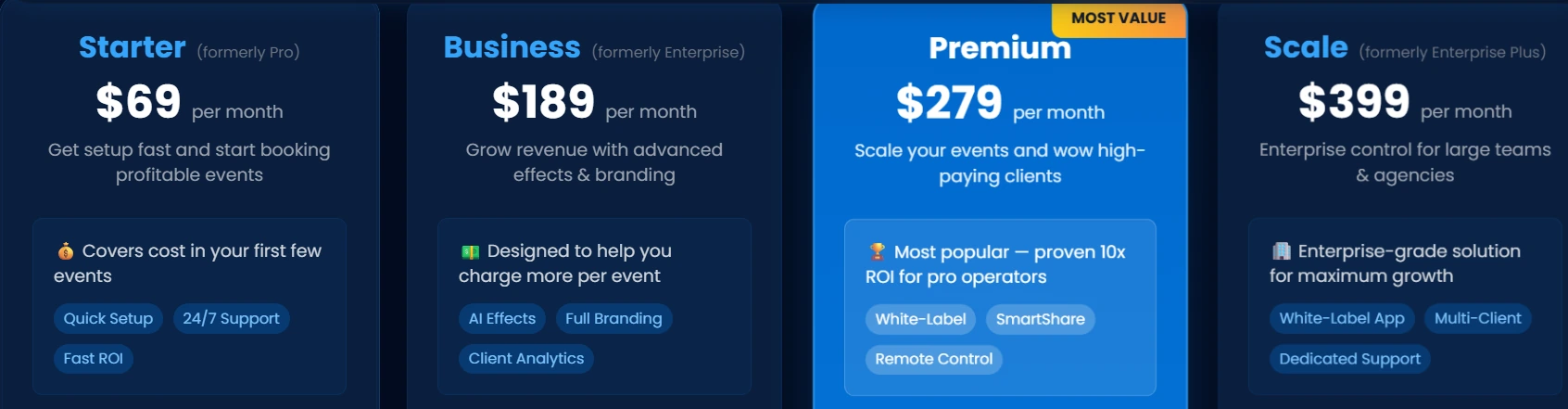
Scale at $399/month ($3,999/year) adds agency management and a dedicated success manager. Per-event licenses ($29 for Starter-level, $79 for Business-level) offer a lower commitment for occasional use. On top of subscription costs, background removal credits ($15/100), AI-FX credits ($20/200), and international SMS credits ($39/1,000) are billed separately.
Simple Booth uses tiered weekly, monthly, and annual billing.
Lite at $29.99/month covers basic photo booth functionality but includes ads and excludes custom branding, DSLR support, and data capture (it’s designed for personal events, not rental businesses).
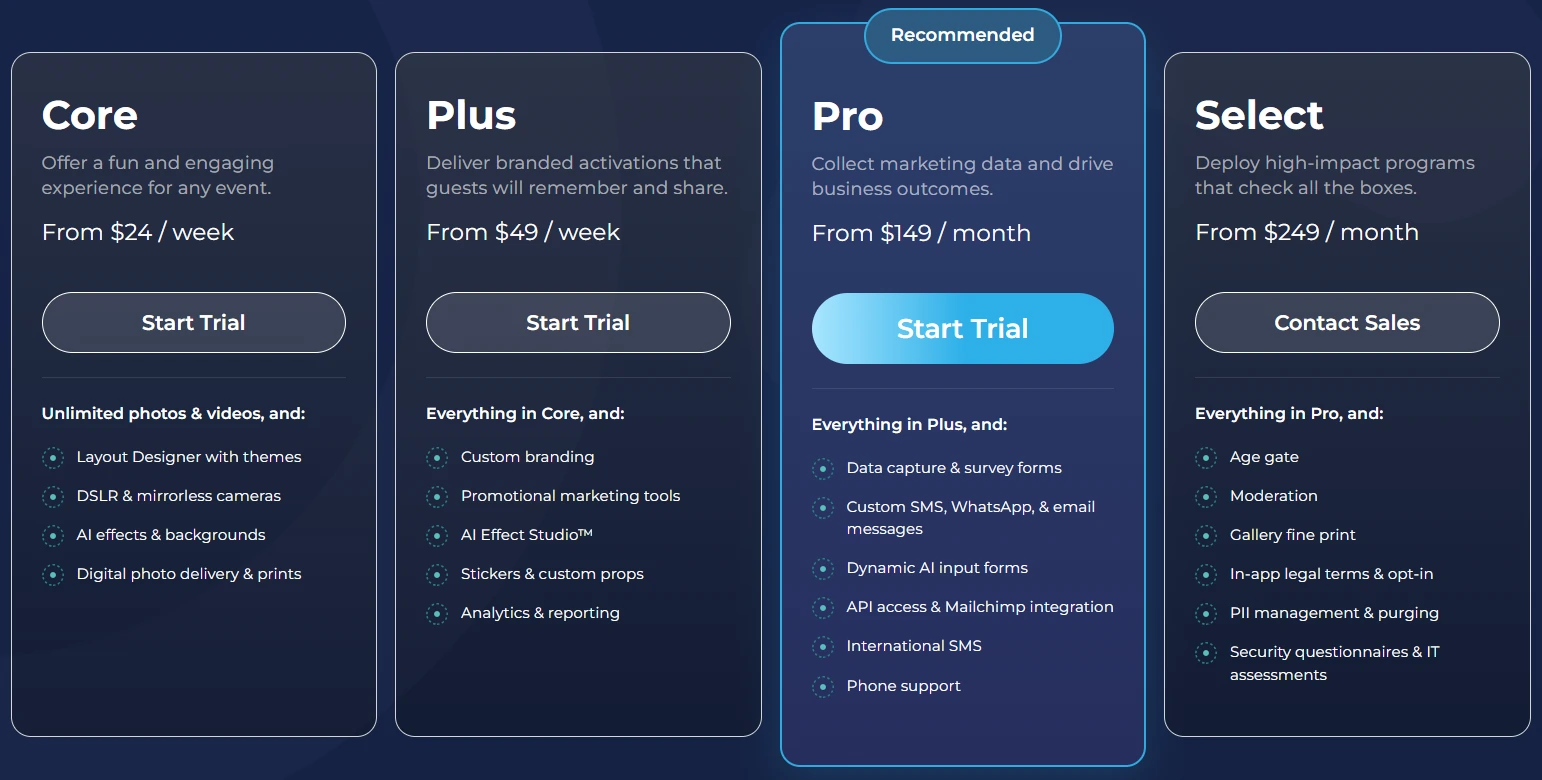
For operators, Core at $24/week or $49/month ($490/year) is the realistic entry point, removing ads and adding DSLR connection, the Layout Designer, background replacement, Virtual Booth, and AI effects. Plus at $99/month ($990/year) adds custom branding, analytics, and custom AI prompts.
Pro at $149/month ($1,490/year) adds lead capture, API access, phone support, and moderation. Select at $249/month ($2,490/year) adds compliance tools and demographic analytics. AI credits are $0.10 each with no expiration. HALO hardware kits sell separately, starting at approximately $2,090 with 0% financing available.
A freelance operator running 3 to 4 events per month on a basic setup will spend the least with LumaBooth. An operator building a multi-format business across 360, photo, and glambot booths will find Snappic’s higher-tier plans efficient since Business and above bundle most features.
An operator who values dedicated hardware, marketing data, and a complete integrated system will justify Simple Booth’s investment through higher per-event pricing, repeat client bookings, and lower training costs; the interface makes onboarding new staff fast, which matters for rental companies adding team members.
Support when Saturday night goes wrong
LumaBooth offers support through a ticket system and active Facebook community groups for Windows and Apple users.
The help center is thorough, with step-by-step articles and embedded video links. Customers describe support as “awesome, fast to respond.” There is no published SLA, no live chat during events, and no phone support tier.
Snappic offers 24/7/365 live support on every plan, including during live events.
App Store reviews consistently describe responses that arrive “in a matter of seconds.” Priority support is available on Business and above, and the Scale plan includes a dedicated success manager. For events where downtime means lost revenue, this always-on availability is a real advantage.
Simple Booth tiers its support by plan.
Lite gets 7-day email/chat support. Core and Plus get standard email and chat. Pro adds phone support. Select adds a dedicated account manager during events. With over a decade of development since 2013, the platform’s stability means operators typically need less support. The app handles connectivity loss, camera disconnection, and other on-site problems automatically.
For operators on Pro or Select, the phone access and dedicated account management during events approaches Snappic’s coverage. For operators on lower tiers, weekend emergencies route through email and chat.
LumaBooth vs Snappic vs Simple Booth: which should you choose?
The best platform depends on how your business works today and where you want it to go.
Choose LumaBooth if:
- You run booths on both Windows PCs and iPads and need one platform for both
- You own Canon, Nikon, or Sony cameras and want the broadest hardware compatibility
- Price sensitivity is high and you need professional booth software under $20/month
- You want an unlimited free trial to evaluate the software at actual events
- You need 360, mirror, glam, and video guestbook modes under one subscription
Try LumaBooth free with no time limit.
Choose Snappic if:
- You operate or plan to operate 360, glambot/robot arm, and mirror booths from one platform
- AI-powered photo transformations are central to your client pitch and pricing strategy
- You need 24/7/365 support with guaranteed availability during live events
- You’re scaling toward an agency model with multiple clients, sub-accounts, and white-label branding
- Cinematic video production (slow-motion, speed ramps, branded intros) is part of your offering
Start Snappic’s 14-day free trial.
Choose Simple Booth if:
- You want a complete booth system (hardware, software, and cloud) from one vendor
- Capturing guest data and proving marketing ROI is part of how you sell to clients
- You run drop-off events or unattended installations and need software guests can operate without an attendant
- You need a virtual booth product for remote activations, always-on campaigns, or hybrid events
- Photo quality matters and you want the consistency of a dedicated ring-light system
- A 4.7-star App Store rating from 2,400+ reviews and a 30,000+ customer community give you confidence
See Simple Booth in action with a free trial.
Photo booth software is no longer just about taking pictures. The right platform supports the kind of business you’re building. LumaBooth wins on flexibility and affordability. Snappic wins on booth-type breadth and AI depth. Simple Booth wins on the complete package: dedicated hardware, built-in data capture, intuitive operation, and a system that runs itself so you can focus on growing the business.
LumaBooth vs Snappic vs Simple Booth FAQ
What is the key difference between LumaBooth, Snappic, and Simple Booth?
LumaBooth is cross-platform photo booth software running on both Windows and iOS, with support for the widest range of cameras (Canon, Nikon, Sony, GoPro, webcam) at the lowest price point.
Snappic is iOS-only software covering the most booth formats (including glambot/robot arm), with three AI engines and agency-level management tools.
Simple Booth is an iPad-based platform paired with the HALO ring-light hardware and Canon/Sony DSLR support (wired and wireless), focused on turnkey operation, data capture, and marketing ROI, plus a browser-based Virtual Booth product for remote activations.
Which platform is most affordable?
LumaBooth costs significantly less, starting at $17/month (annual) for Windows or $18/month for Apple, with both plans including two devices.
Simple Booth starts at $24/week or $49/month for Core, the first plan with the Layout Designer and DSLR support that rental operators need (Lite at $29.99/month is for personal use).
Snappic starts at $69/month or $29 per event for occasional use. All three have additional costs for AI credits, add-on features, and extra device licenses.
Which platform supports the most booth types?
Snappic and LumaBooth both support 360, mirror, and roaming modes. Snappic adds glambot/robot arm support that neither competitor offers. LumaBooth adds video guestbook and glam booth modes. Simple Booth focuses on photo, GIF, boomerang, and video capture, but includes a browser-based Virtual Booth for remote activations and a hardware system with integrated ring lighting that neither competitor offers.
Do any of these platforms include dedicated booth hardware?
Only Simple Booth sells integrated booth hardware. The HALO is a patented ring-light chassis machined from aluminum with 112 LEDs producing up to 2,100 lumens, rated for 50,000 hours. It includes a tool-less iPad mount, built-in USB-C charging, and a travel case for the Event Kit. LumaBooth and Snappic are software-only and require operators to source their own ring lights, stands, and enclosures.
Which platform is best for capturing guest data and leads?
Simple Booth is the strongest choice for data capture, reporting opt-in rates of 87 to 89% because its lead capture forms appear during the photo session itself. It integrates with MailChimp and offers an Open API for custom CRM delivery on Pro and Select plans.
Snappic adds demographic analytics via AVA and real-time webhooks to external tools on Premium and above. LumaBooth offers surveys with CSV export but has no native CRM integrations.
How does AI effect quality and speed compare?
LumaBooth generates AI portraits in approximately 10 seconds per image. Snappic’s core AI-FX pipeline takes 2 to 5 minutes on average, though its BananaFX engine is faster. Simple Booth uses Nano Banana models in three tiers balancing speed and quality.
All three charge credits for AI generation on top of the subscription price. LumaBooth and Simple Booth both offer pay-as-you-go credits that never expire. Snappic credits cost $20 per 200.
Which platform has the best support for live events?
Snappic offers 24/7/365 live support on every plan, with App Store reviews consistently praising fast response times. Simple Booth offers phone support on Pro and a dedicated account manager on Select, but lower tiers are limited to email and chat. LumaBooth uses a ticket system and community forums with no live chat or phone support tier.
Can I use any of these platforms without an iPad?
LumaBooth is the only platform that runs on Windows PCs, supporting Canon, Nikon, and Sony cameras via USB tethering. Snappic also runs on Mac for mirror booth setups. Simple Booth’s Virtual Booth runs in any web browser without any app or hardware, but the core HALO booth app requires an iPad (with Canon and Sony DSLR/mirrorless cameras supported via wired or wireless connection).
Keep reading
 Showdowns
Simple Booth vs LumaBooth: Which Photo Booth Software Fits Your Business in 2026?
Turnkey hardware vs budget cross-platform app. Simple Booth or LumaBooth?
 Showdowns
Simple Booth vs Snappic: Which Photo Booth Software Fits Your Business in 2026?
Integrated iPad system vs multi-format fleet. Simple Booth or Snappic?
 Showdowns
Snappic vs Touchpix (vs Simple Booth): Which Photo Booth Software Should You Choose in 2026?
Multi-format all-rounder vs 360 video specialist. Snappic or Touchpix?