Snappic vs Touchpix (vs Simple Booth): Which Photo Booth Software Should You Choose in 2026?
If you’re comparing Snappic vs Touchpix, you’re asking the right question. Both platforms have become serious contenders for professional photo booth operators, but they’ve made different bets on what matters most.
The questions that should guide your decision:
- Do you need one platform that covers every booth type you own (360, mirror, iPad, Glambot), or do you run a single format?
- Are you locked into Apple hardware, or do you need software that runs on Android, Windows, and Linux too?
- How important is offline reliability at venues with poor Wi-Fi?
- Do you want all features unlocked on every plan, or are you comfortable paying more as you need more?
- Is your priority scaling a multi-booth business, or delivering the best photo experience at each event?
Here’s what we recommend:
Snappic is built for operators who want to scale. It covers every major booth format (iPad, 360, Glambot, mirror, roaming) from a single iOS platform, and its AI-FX suite gives operators effects that justify higher per-event pricing.
With 24/7/365 live support, agency tools on the Scale plan, and all features unlocked on every tier, Snappic serves operators who want to grow from a side hustle to a six-figure business. The trade-off is cost: monthly subscriptions start at $69/month, AI and background removal credits add up, and the platform runs only on Apple devices.
Touchpix leads the 360-degree video booth market and gives operators something no competitor matches: cross-platform reach. The same subscription runs on iOS, Android, macOS, Windows, Linux, and Raspberry Pi with unlimited devices per account.
Its Scanpix 2 offline sharing lets guests receive media via QR code without any internet connection, and the Printpix hardware box removes the need for a laptop at print events.
However, Touchpix’s annual-only entry pricing ($439.90/year for the PhotoPass), active event caps per tier, and reports of app stability issues during live events give operators pause.
Both platforms solve the same problem: turning a photo booth into a profitable event business. But they treat the photo experience as a software problem. For operators who believe photo quality starts with lighting, not filters, there’s a different approach.
Simple Booth pairs subscription-based iPad software with dedicated hardware. The HALO ring light, machined from a single billet of aluminum with 112 LEDs producing up to 2,100 lumens, delivers illumination that no software filter can replicate.
The system sets up in under one minute with no tools, runs unattended with offline resilience, and captures first-party data at 87%+ opt-in rates.
For operators and marketers who want a self-operating photo experience that guests remember for the quality of the photos, Simple Booth makes every shot look professional before any AI touches it.
If that sounds like the right fit, start with a free trial.
Snappic vs Touchpix vs Simple Booth at a glance
| Snappic | Touchpix | Simple Booth | |
|---|---|---|---|
| Booth types supported | iPad, 360, Glambot, Mirror, Roaming | 360, Photo, Mirror, Video, AI | iPad photo booth (HALO hardware) |
| Platforms | iOS only (iPad, iPhone, Mac) | iOS, Android, macOS, Windows, Linux, Raspberry Pi | iPad only |
| AI effects | AI-FX, PersonaFX, BananaFX (multiple AI engines) | 80+ AI styles, custom prompts, offline face replacement | AI Effects (Nano Banana models), AI backgrounds |
| Offline sharing | Requires internet for most sharing | Scanpix 2 (fully offline QR sharing) | Offline queue with auto-delivery on reconnect |
| Printing | Wired, wireless Print Server, AirPrint | Printpix box, Windows/Mac print servers (3,000+ printers) | Compatible wireless printers |
| Hardware included | Software only (BYOD) | Software only (BYOD + optional Printpix box) | Integrated HALO ring-light hardware kits |
| Support | 24/7/365 live support | 24/7 live chat + weekly webinars | Tiered by plan (chat/email to phone/dedicated manager) |
| Starting price | $69/month (Starter) | $439.90/year (~$37/month, PhotoPass) | $24/week (Core, web billing) |
| Free trial | 14 days, no credit card | 14 days, no credit card | 7 days |
| Best for | Multi-format operators scaling a business | 360-booth operators who need cross-platform flexibility | Photo quality and turnkey operation |
Three different philosophies for the same industry
These three platforms reflect three distinct beliefs about what photo booth operators need most.
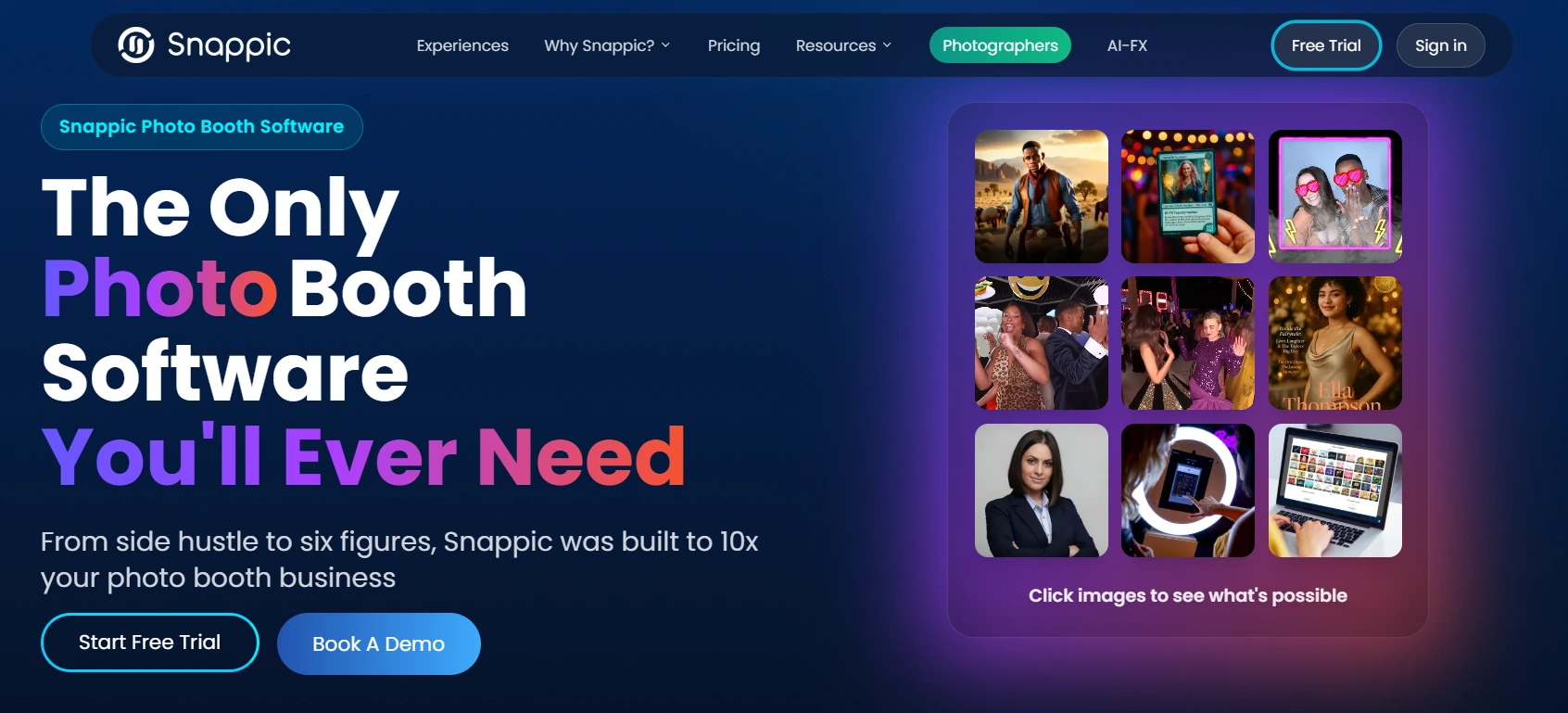
Snappic believes operators need breadth. One platform should handle every booth type an operator might run, from a simple iPad setup at a birthday party to a Glambot rig at a product launch.
Source: Snappic
The bet is that operators who start with one format will expand into others, and switching platforms mid-growth kills momentum. Snappic’s all-features-on-every-plan approach reinforces this: the $69/month Starter subscriber gets the same AI-FX capabilities as the $399/month Scale subscriber.
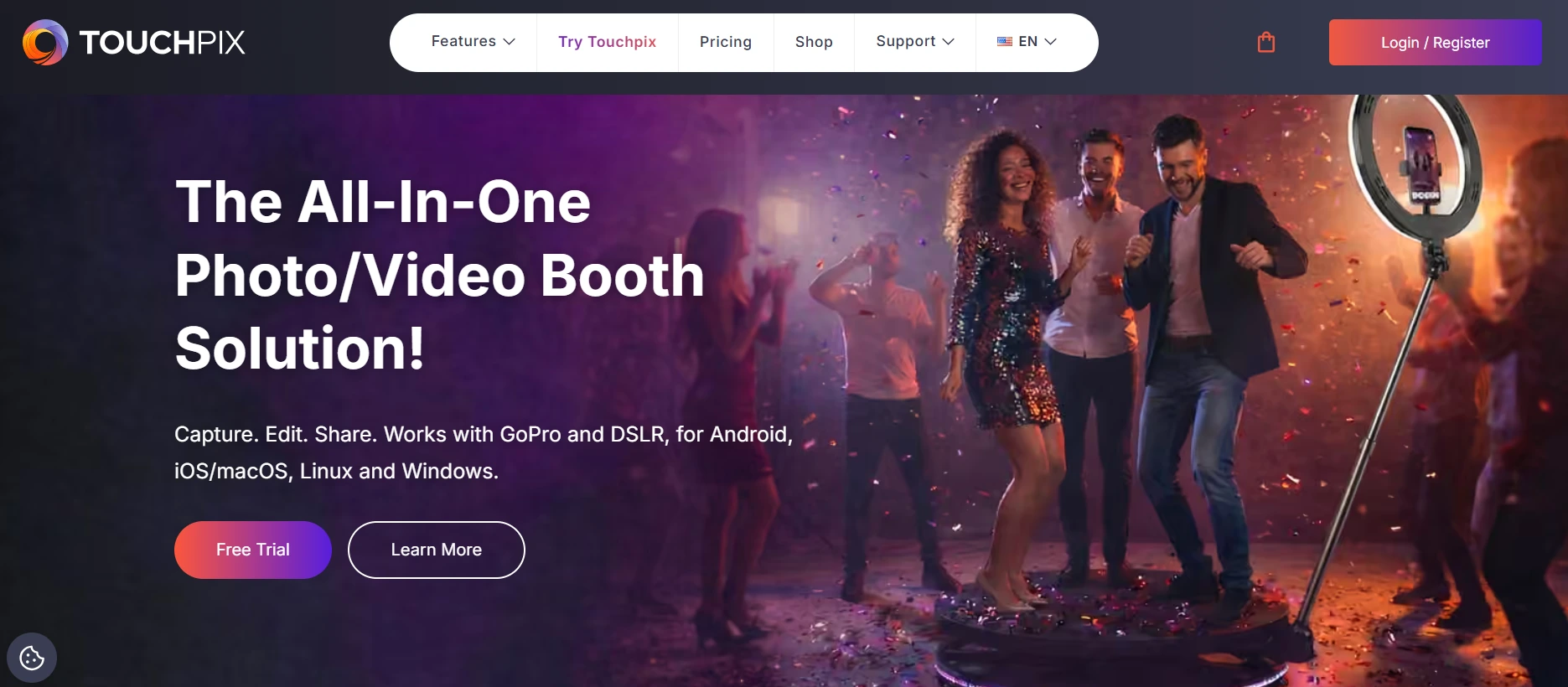
Touchpix believes operators need flexibility. The platform runs on virtually any hardware an operator already owns, across six operating systems, with unlimited devices per account.
 *Source: [Touchpix](https://touchpix.com/)*
 An operator with an Android tablet, a Windows laptop, and a GoPro can run all three without buying new hardware or paying per-device fees. The pricing model matches: tiers are based on simultaneous active events, not devices or features.
Simple Booth believes the photo itself is the product.
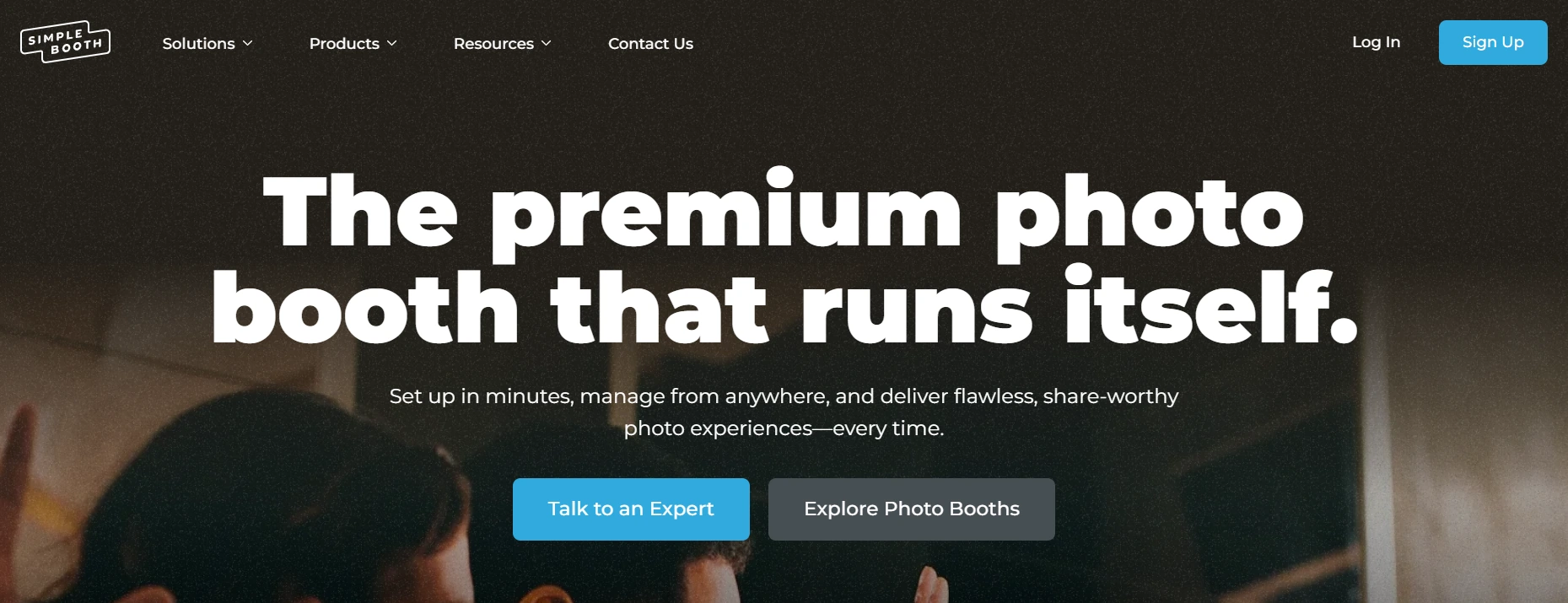
While competitors focus on software features, Simple Booth invested in patented ring-light hardware that produces flattering, consistent lighting regardless of venue conditions.
The HALO’s 112 LEDs and refined diffuser illuminate groups standing 6-8 feet from the camera, so guests get a good photo in a dim hotel ballroom or a bright outdoor tent. Software effects enhance what the hardware already captured well.
Booth type coverage: specialist vs generalist
The biggest structural difference between these platforms is how many booth formats they support.
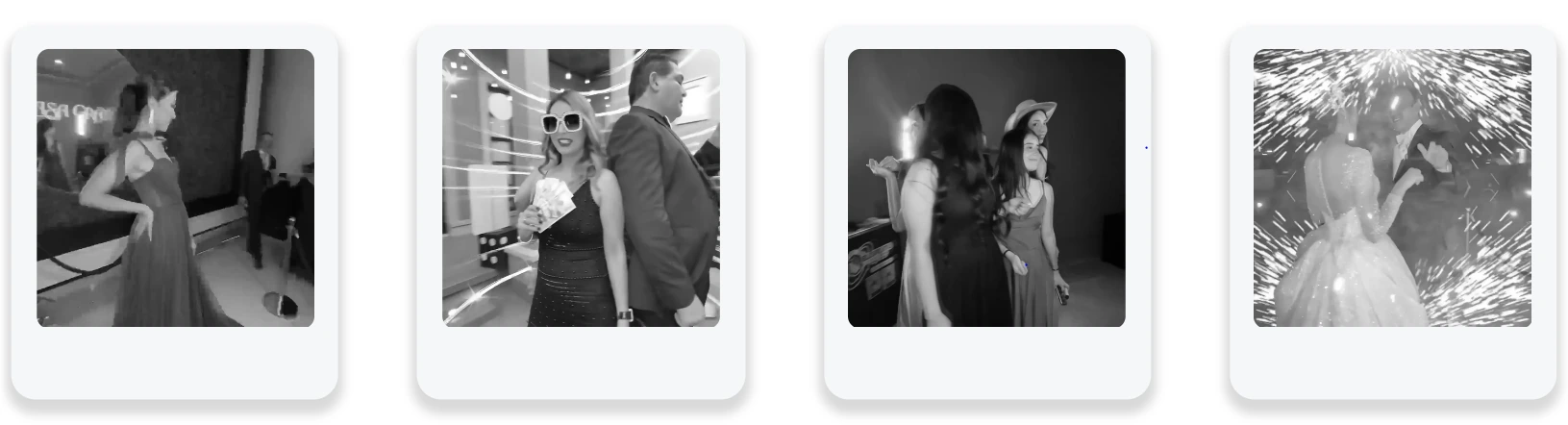
Snappic covers the widest range from a single app. iPad photo booths, 360-degree video booths, Robot Arm/Glambot, Mirror booths, and Roaming photography all run through the same software, templates, and sharing infrastructure.
Source: Snappic
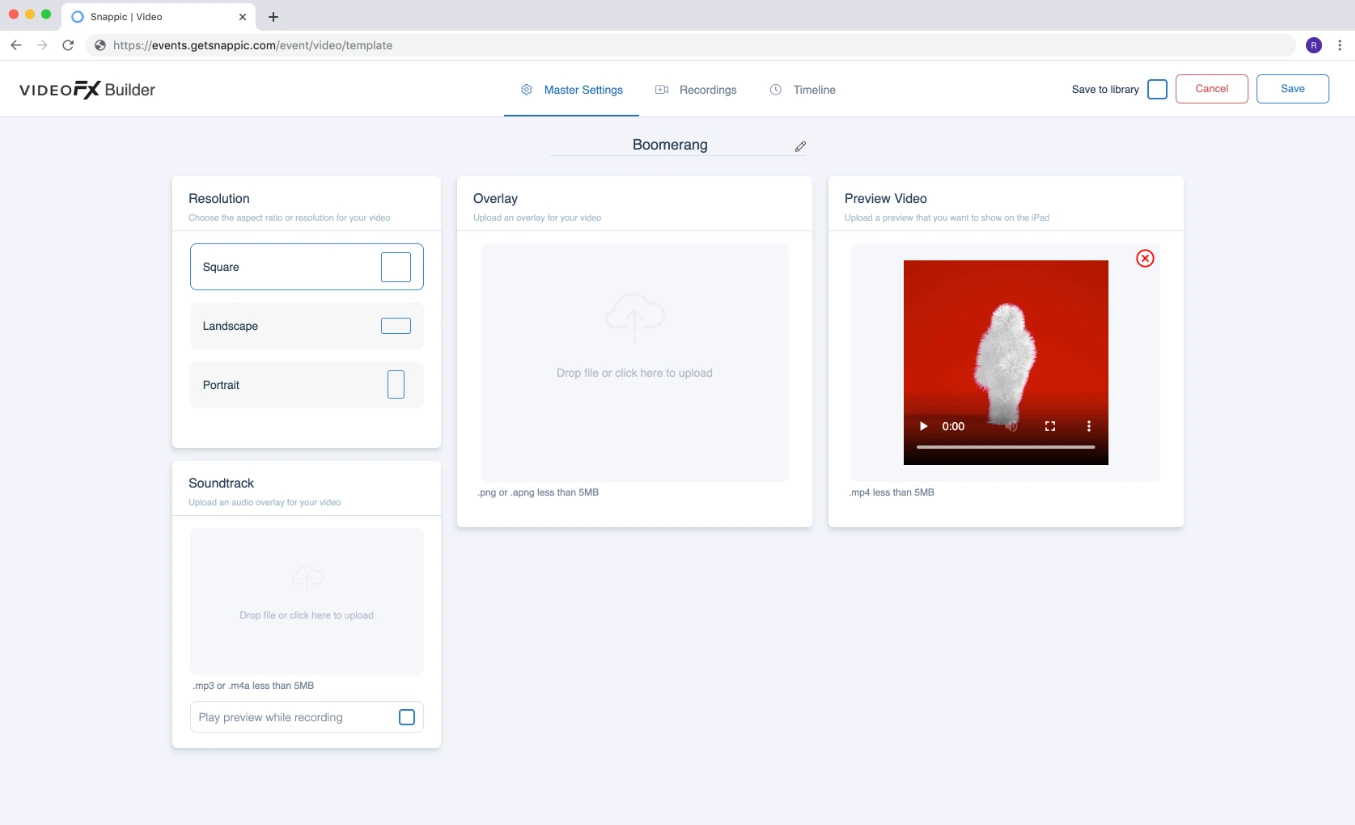
An operator who starts with iPad events and later adds a 360 rig doesn’t need to learn new software or migrate client data. The VideoFX Template Builder handles all video booth types with the same three-tab editor, and the GlamBot preset templates produce 8x slow-motion output from 2-3 seconds of capture.
Touchpix takes a similar generalist approach but leads in 360-degree booths. The platform is widely acknowledged as the standard for spinning-arm 360 setups, with native Bluetooth integration that triggers the spinning platform automatically.
Source: Touchpix
Its GoPro 7-14 support (wired and wireless) and high-frame-rate slow-motion controls run deep enough that 360 operators seek out Touchpix specifically for this workflow. The Mirror Booth module adds full-length mirror hardware support with offline AI face replacement.
Simple Booth focuses on one format and does it well: the open-air iPad photo booth powered by the HALO hardware kit. This is a design choice, not a limitation. By pairing dedicated hardware with tightly integrated software, Simple Booth delivers photo quality, setup speed, and operational reliability that generalist platforms struggle to match for this use case.
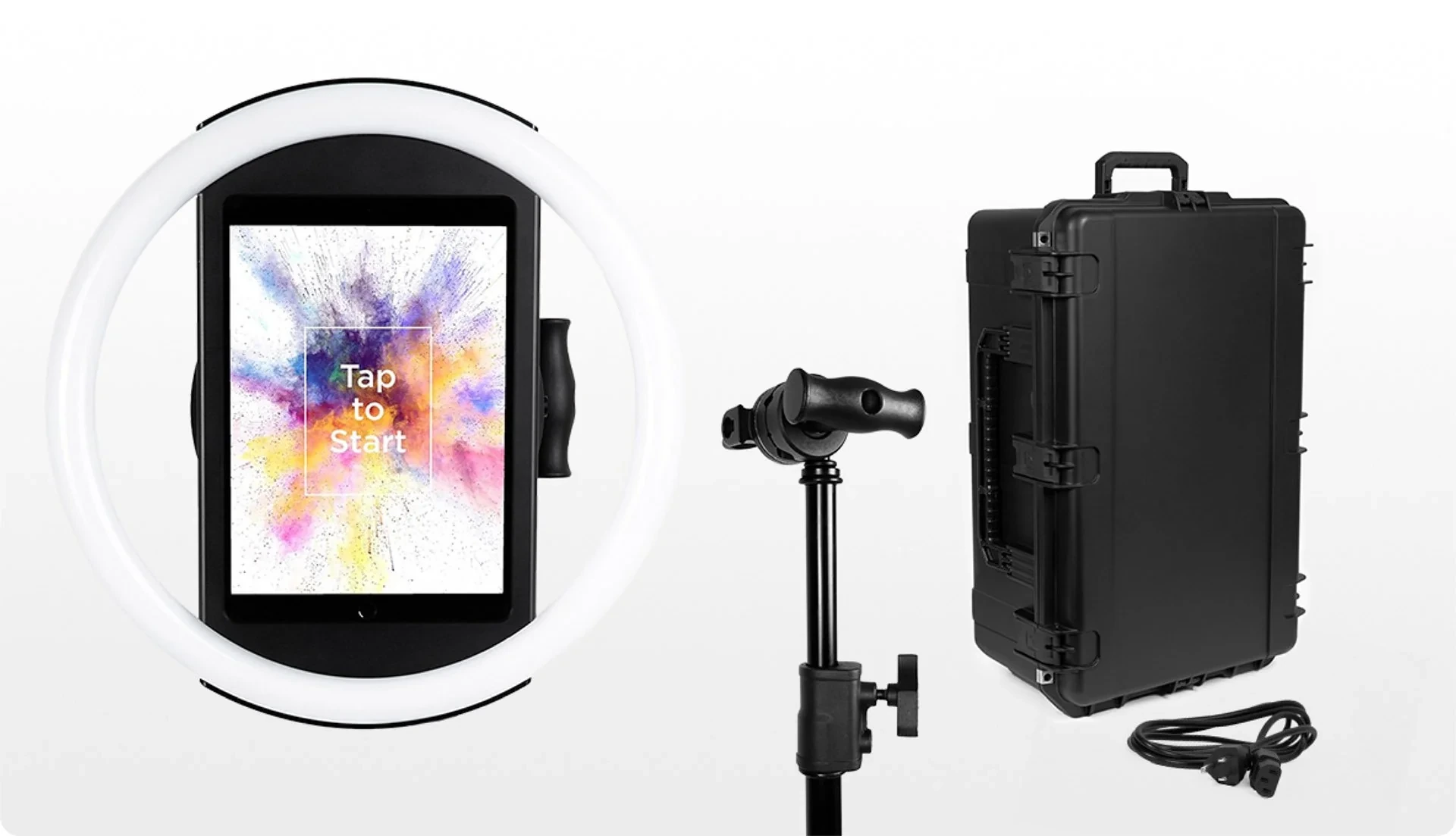
The sub-one-minute setup, the tool-less iPad faceplate, and the concealed USB-C charging cable are details that only emerge from designing hardware and software together.
For operators who also need a virtual option, the Virtual Booth runs in a browser with no hardware required, extending the same branded experience to remote and hybrid events.
“10+ years, we’re big Simple Booth believers. 136,000+ fan interactions.” (G7 Entertainment Marketing)
AI capabilities: multiple engines vs focused integration
All three platforms have invested in AI, but the implementations differ.
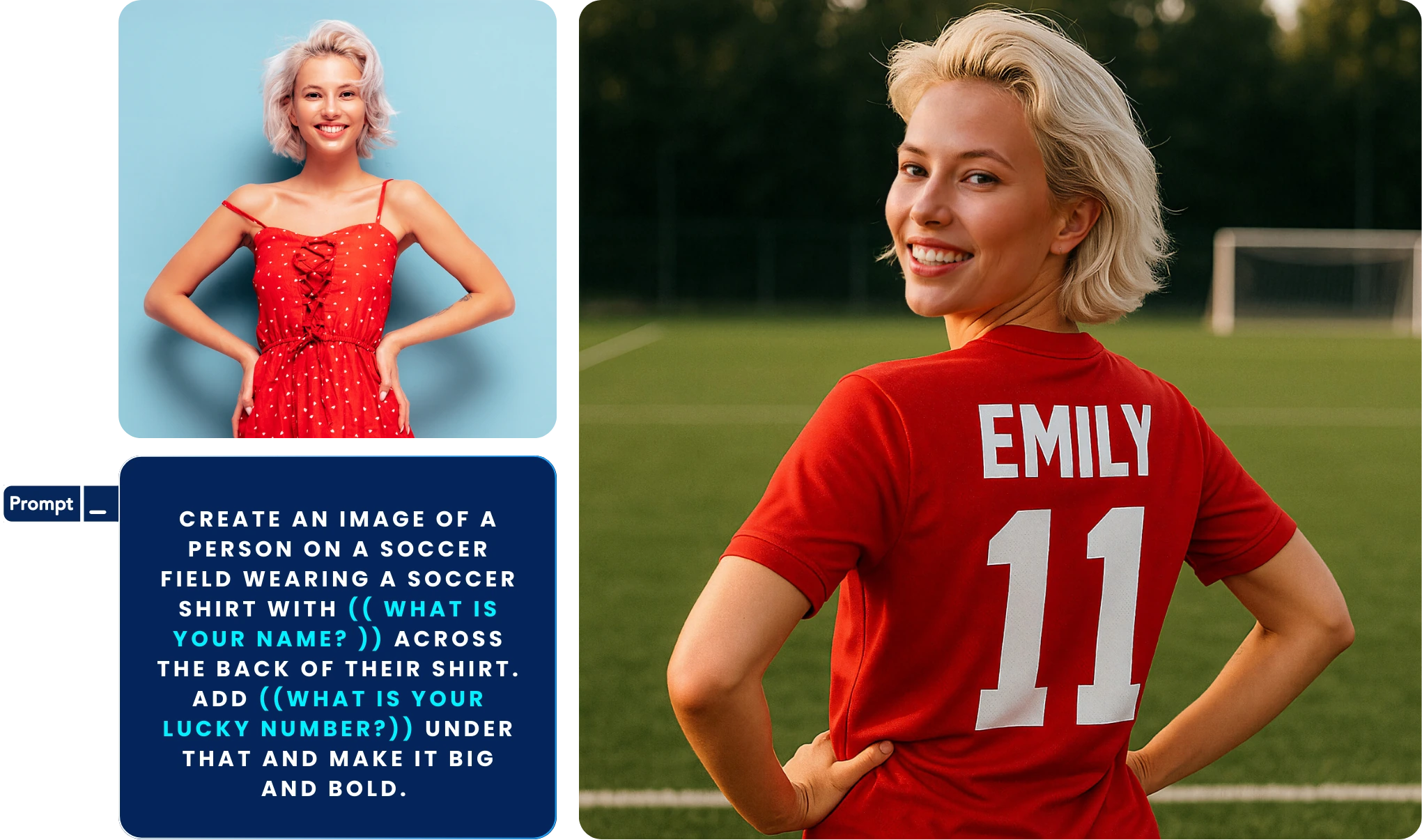
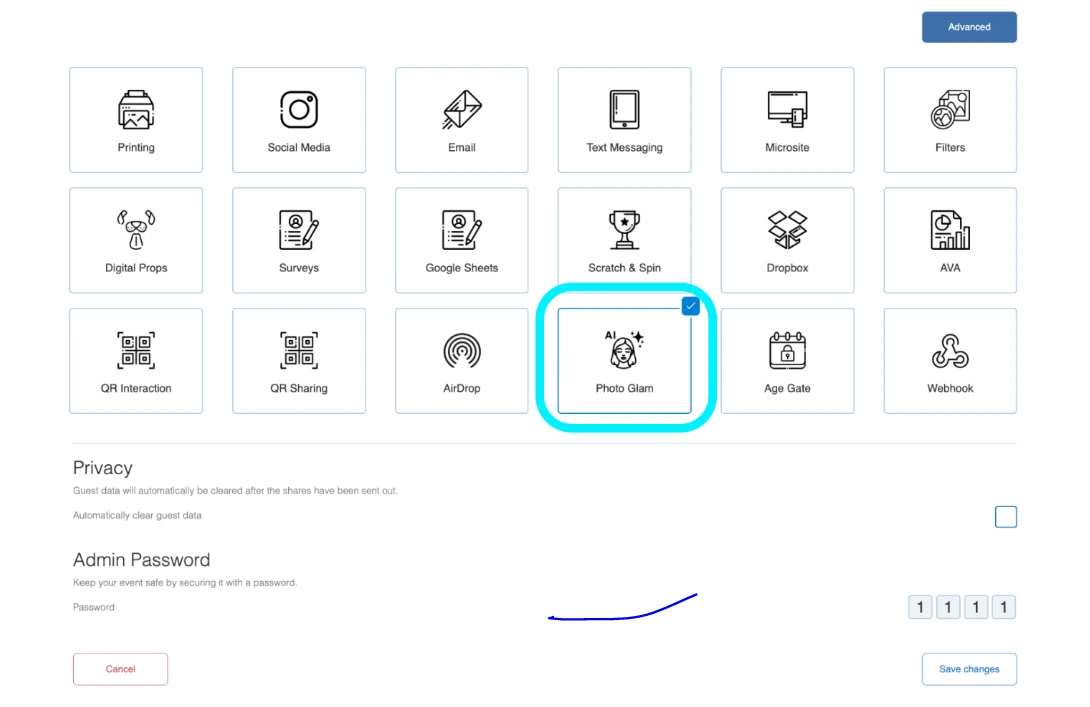
Snappic runs the most extensive AI stack. It operates three parallel subsystems: the core AI-FX pipeline for style transfers and branded transformations, PersonaFX for photorealistic avatar generation with survey-driven personalization, and BananaFX (powered by Google’s Gemini 2.5) for full image regeneration from custom prompts.
Source: Snappic
PersonaFX supports dynamic survey fields (like custom jersey numbers) injected into the AI prompt, enabling personalized branded outputs. Photo Glam runs offline for skin smoothing and teeth whitening, consuming no credits and requiring no internet.
Source: Snappic
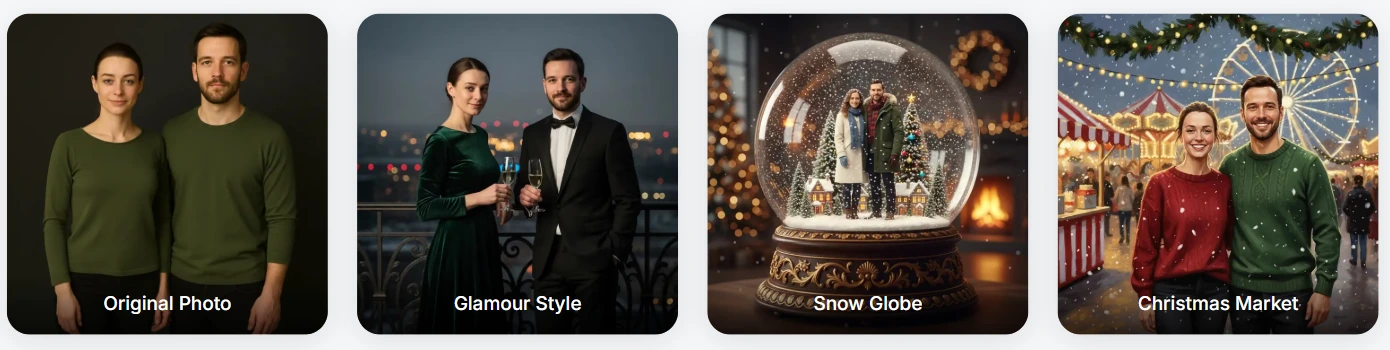
Touchpix offers 80+ AI transformation styles plus custom prompt support, with a distinct advantage in offline processing.
Source: Touchpix
Its AI Face Replacement runs on-device without internet, so operators can deliver face-swap effects at venues with no Wi-Fi. Cloud AI transformations use Google’s Gemini through a credit-based system. Touchpix also claims to have been the first to introduce AI in the photo booth space.
Simple Booth takes an integrated approach. Its AI Effects use Nano Banana models that transform captured photos using text prompts, with identity preservation handled automatically.
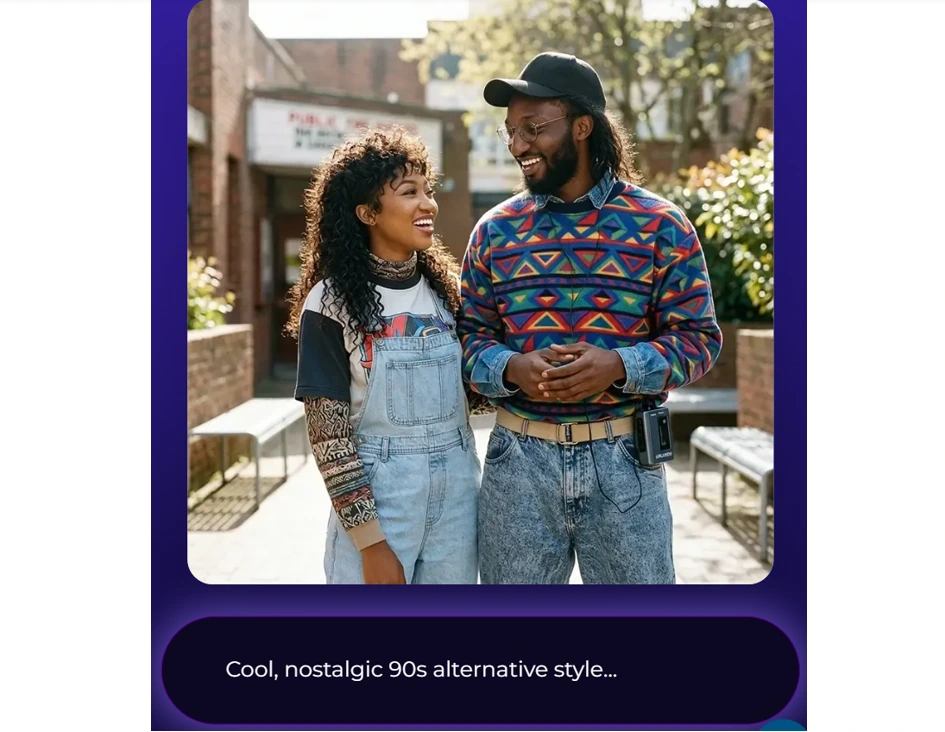
What sets Simple Booth apart is how AI fits into the workflow: AI transformations are composited with the Layout Designer’s brand overlays, so logos, frames, and text layers sit on top of AI-generated photos in a single pipeline. Operators can assign unique AI prompts to each frame in a multi-frame layout, creating comic-strip or narrative-style outputs.
The Guest Input system lets participants answer questions that feed into the AI prompt as template variables, producing personalized outputs without operator involvement. Simple Booth does not charge credits for testing prompts outside of booth mode, so operators can iterate freely before an event.
Hardware and photo quality: the lighting gap
This is where the conversation shifts from software features to the photos themselves.
Snappic and Touchpix are software-only platforms. They run on hardware the operator already owns or buys separately. Photo quality depends on the operator’s equipment: the iPad’s built-in camera, a GoPro, or a connected DSLR. Lighting comes from whatever the operator sets up, whether that’s a third-party ring light, venue ambient lighting, or a professional strobe kit. Results vary accordingly.
Simple Booth approaches this differently. The HALO chassis is machined from a single billet of anodized aluminum with a patented ring-light system.
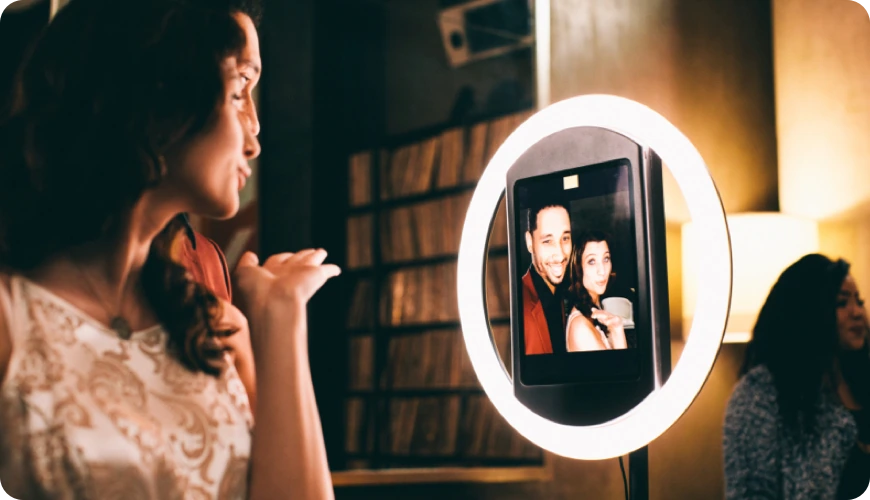
Those 112 LEDs produce up to 2,100 lumens through a refined diffuser, creating even illumination that makes every guest look good. The LEDs are rated for 50,000 hours, so there are no mid-event burnouts and minimal maintenance costs over years of commercial use.
The HALO also integrates DSLR-style background blur and bokeh (claimed as a first for iPad photo booths), AI background replacement without a physical green screen, and Glam skin smoothing. With HALO 5.0’s Canon and Sony DSLR/mirrorless camera support, operators who want higher image quality can connect their existing cameras through the full HALO workflow.
For operators who rent their booths, the hardware difference matters commercially. A booth with consistent, professional lighting commands higher rental prices than one that depends on venue lighting.
“It paid for itself pretty quickly. Now it’s just extra money coming in.” (Kurt Nielson Photography)
Sharing and delivery: three approaches to getting photos to guests
Getting the captured photo into a guest’s hands quickly is what separates a photo booth from a camera on a tripod.
Touchpix leads on offline delivery. Scanpix 2 creates a local Wi-Fi gallery on the capture device itself, letting guests scan a QR code and download their media without any internet connection. This works on both iOS and Android, and a GoPro can serve as the local network router.
For outdoor festivals, basement venues, and international events without cellular coverage, this is a real operational advantage.
Snappic emphasizes frictionless repeat sharing. SmartShare uses AI-based Face Linking to identify guests automatically after their first share: once a guest links their face to their contact information, every subsequent capture at the event goes to them without re-entering details.
For privacy-sensitive corporate events, a QR Code Linking alternative achieves the same result without biometric processing. The Sharing Station runs photo sharing on a separate iPad, so the main booth never sits idle while a guest types in an email address.
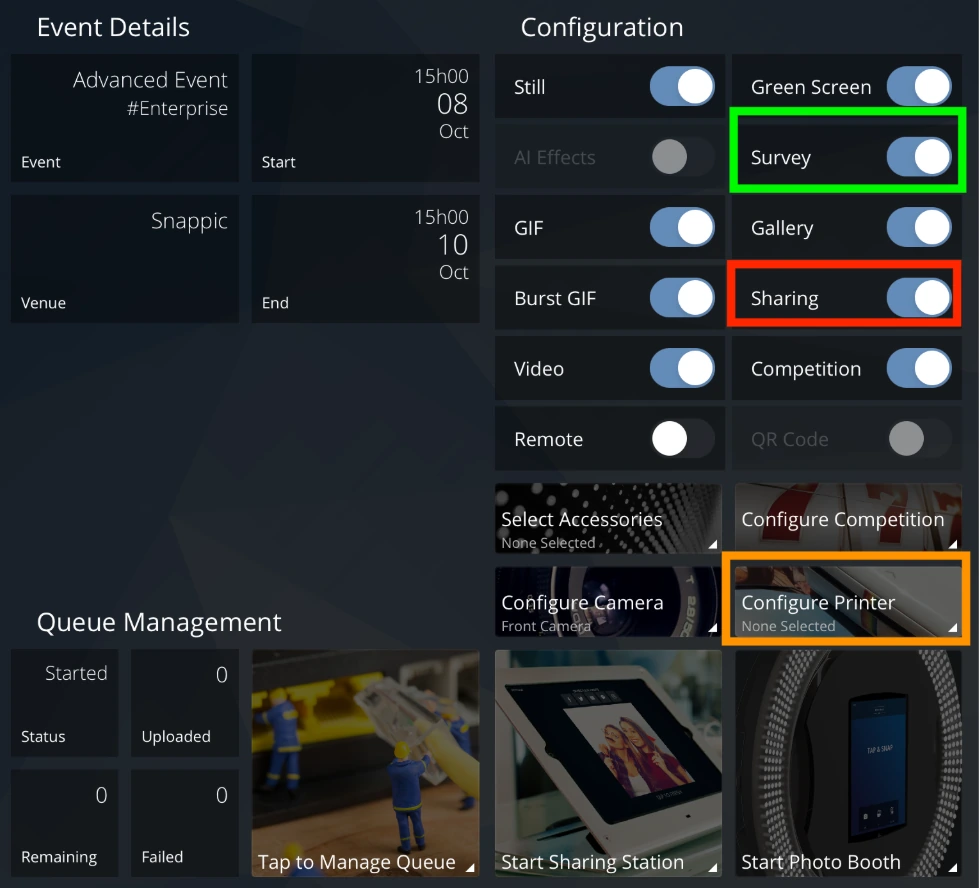
Source: Snappic
Simple Booth covers the widest range of delivery channels. QR code, email, SMS, AirDrop, and WhatsApp are available on all plans. WhatsApp delivery, added in HALO 5.0, opens international markets that SMS-only systems cannot serve.
An offline upload queue stores sessions and delivers them automatically when connectivity returns.
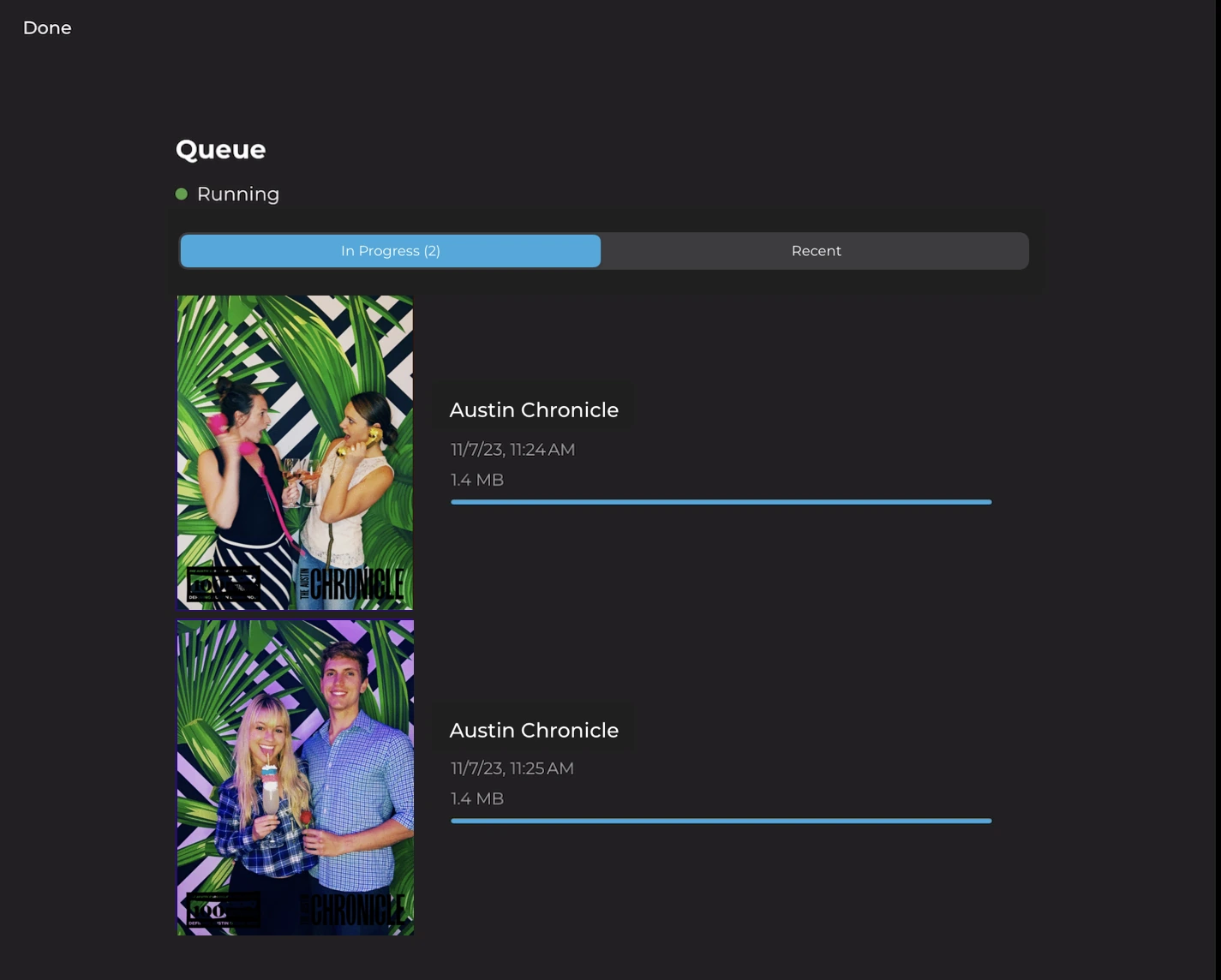
Each event generates an online gallery that can be converted into a Live Feed for real-time display on a TV or projector with a single tap.
Platform and device support
Touchpix wins this category outright. Running on iOS, Android, macOS, Windows, Linux, and Raspberry Pi with unlimited devices per account means operators never pay per-device fees and never need to buy specific hardware. An operator with mixed Android tablets, a Windows kiosk, and an iPad can run all three from the same subscription.
Snappic runs only on iPad, iPhone, and Mac. No Windows, no Android. For operators already invested in Apple hardware, this is fine. For operators with Windows-based DSLR setups or Android tablets, it’s a dealbreaker.
Simple Booth is iPad-only for the HALO app, the most constrained hardware requirement of the three. This is the cost of the integrated hardware approach: the HALO chassis, ring light, and software are designed as a single system around the iPad form factor.
The trade-off is that everything works together without compatibility issues, and the Virtual Booth fills the gap for deployments where no iPad is available, running in any browser on any device.
Design and branding tools
Operators running corporate activations and brand events need precise control over every guest-facing surface.
Simple Booth’s Layout Designer, introduced in HALO 5.0, is a full in-app design tool with layers, fonts, gradients, QR code embedding, border rounding, and multi-layout support.
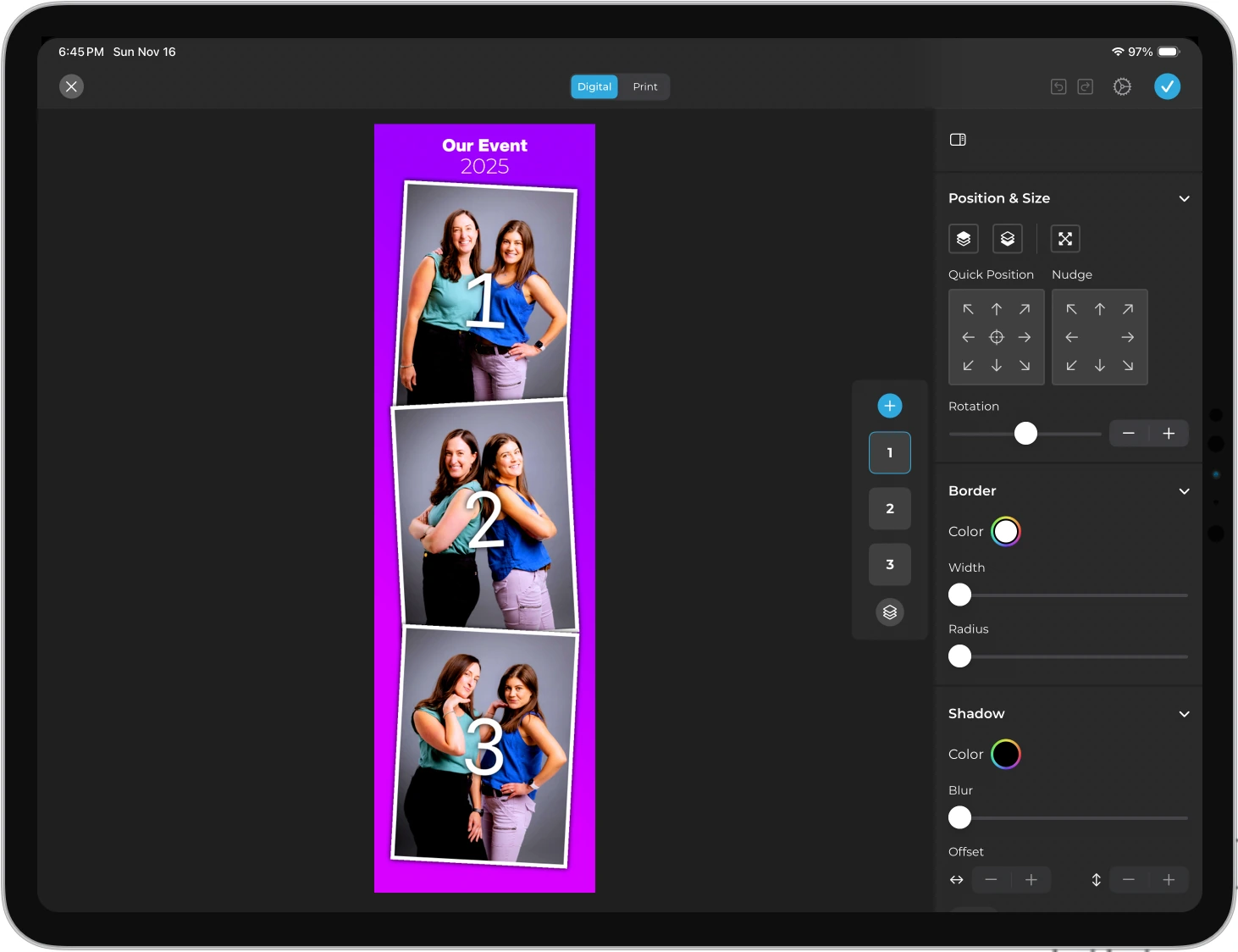
The designer works in both the iPad app and the web dashboard, and operators can create AI-generated layout images inside the designer at no credit cost. Guest-editable text layers let participants type names or captions onto their photo before sharing, with dynamic text sizing that keeps the design clean regardless of message length.
Snappic’s Template Designer is a canvas-based web editor with layered elements, blend modes, and text controls. It supports Magazine Cover templates, Trading Card templates with guest-entered text, and animated overlays up to 30 frames.
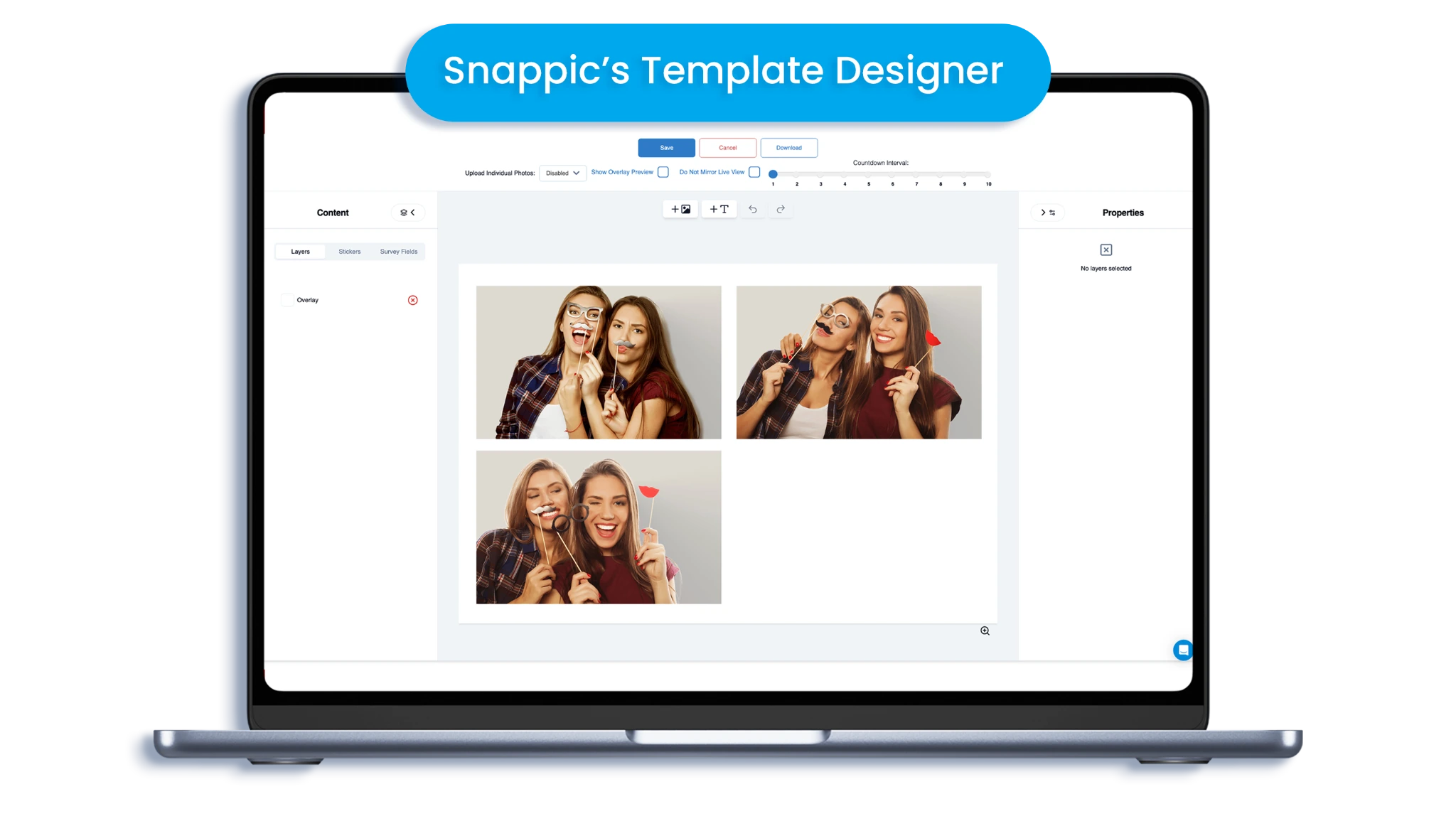
Source: Snappic
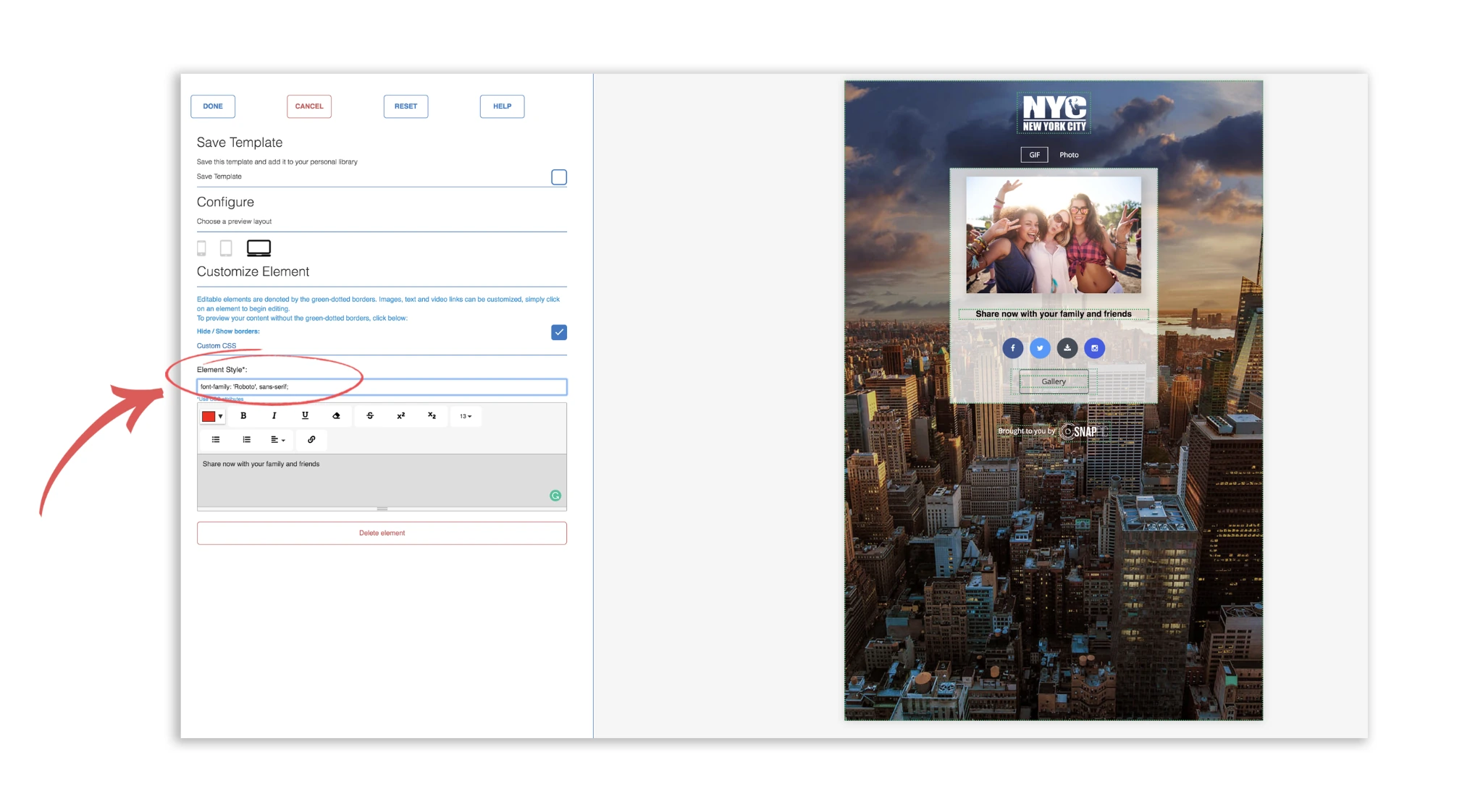
Its 60+ Event Templates library deploys fully configured events in seconds, and any configured event can be saved as a reusable template. CSS customization on microsites gives technically capable operators full visual control over the guest gallery.
Source: Snappic
Touchpix provides an Online Designer with a 300+ overlay design library and support for animated overlays and backgrounds.
The online dashboard handles all design configuration remotely. The design tools are adequate for most operators but lack some of the layering and in-app generation capabilities of Simple Booth’s Layout Designer or Snappic’s Template Designer.
Analytics and data capture
Brand clients increasingly expect post-event proof of value: how many guests engaged, how many shared, what demographics attended.
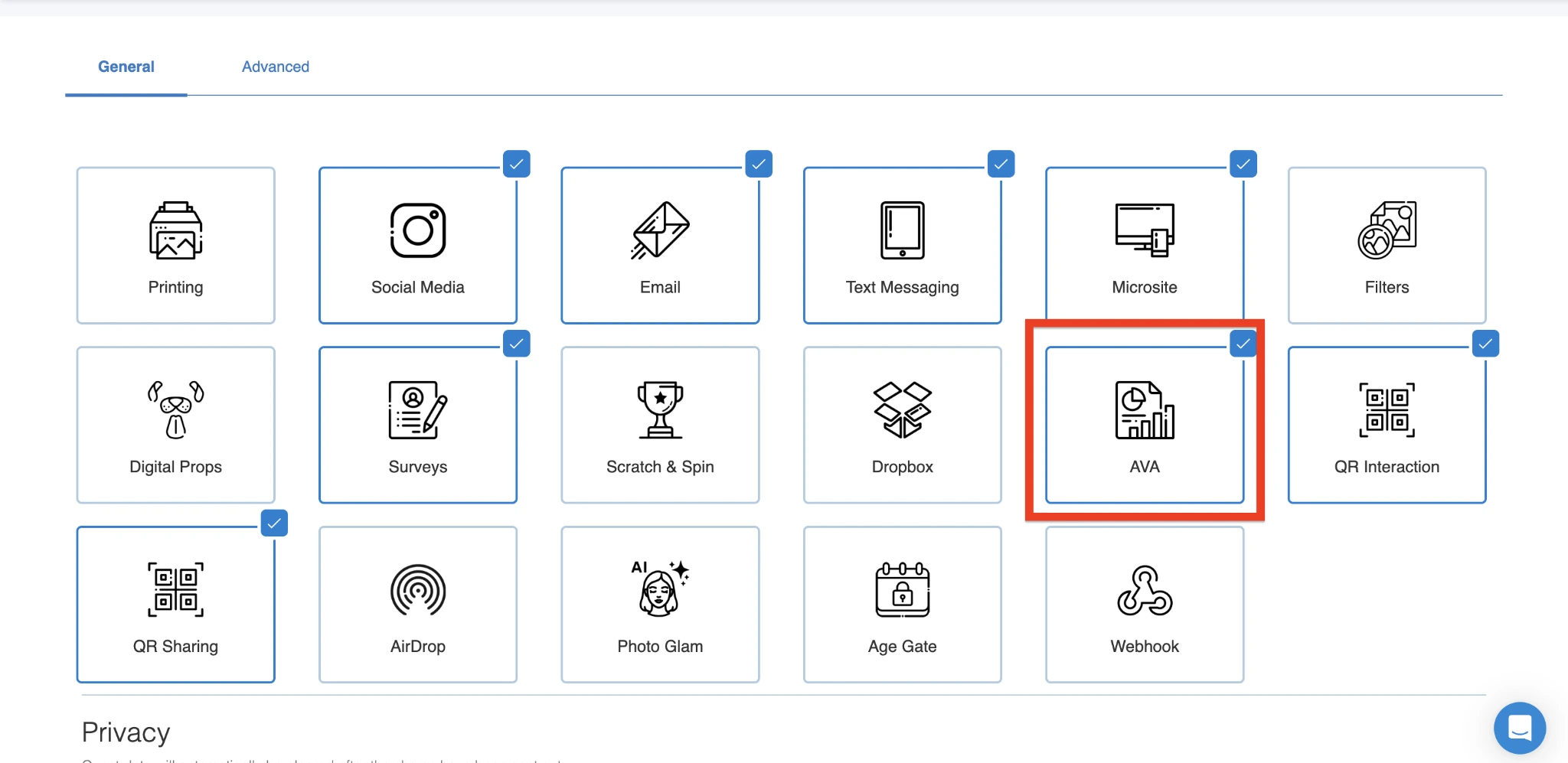
Snappic delivers the most developed analytics package. AVA (Advanced Vision Analytics) provides anonymized demographic insights (gender distribution, age ranges, face count) on all plans.
Source: Snappic
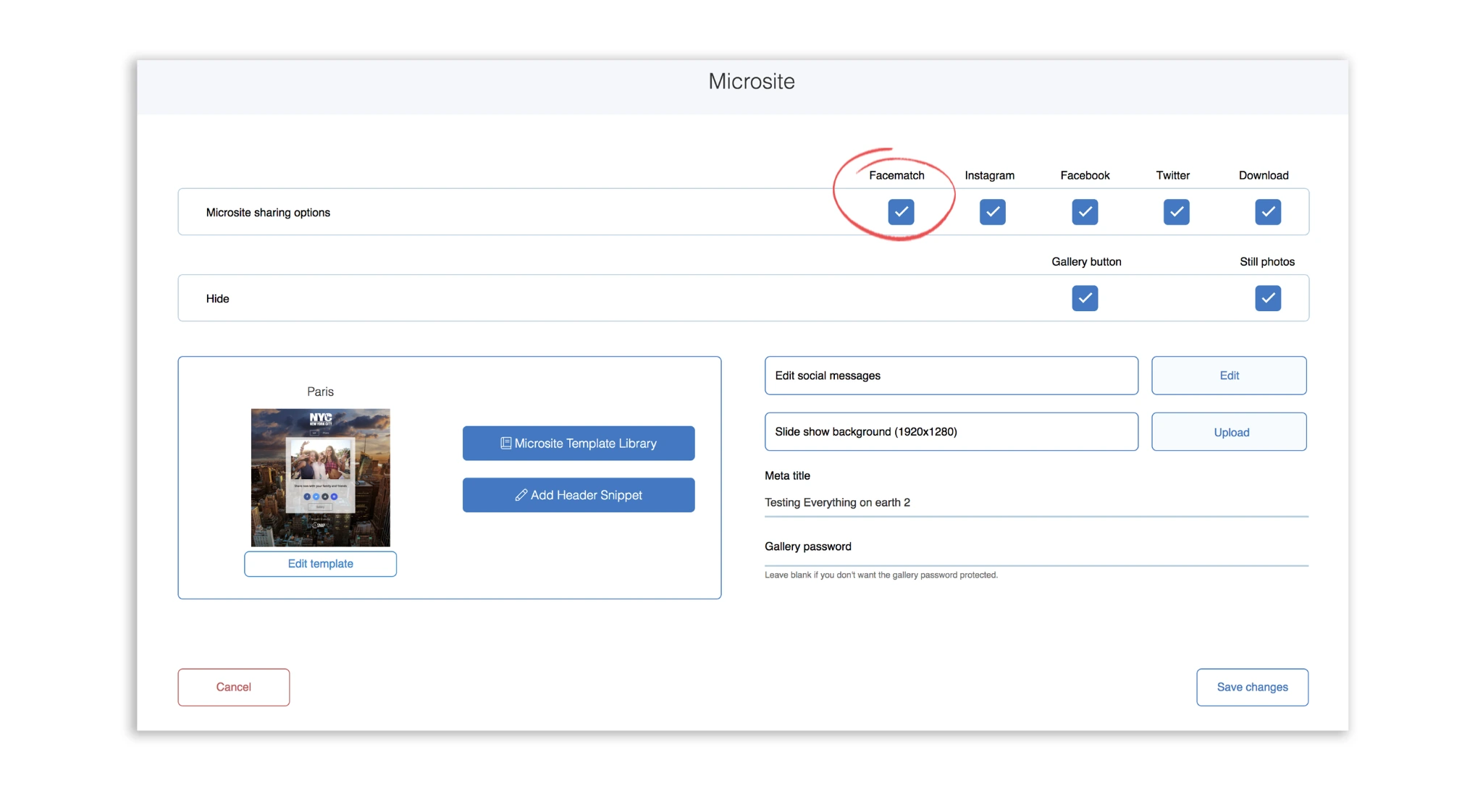
FaceMatch lets guests find their own photos on the event microsite by submitting a selfie.
Source: Snappic
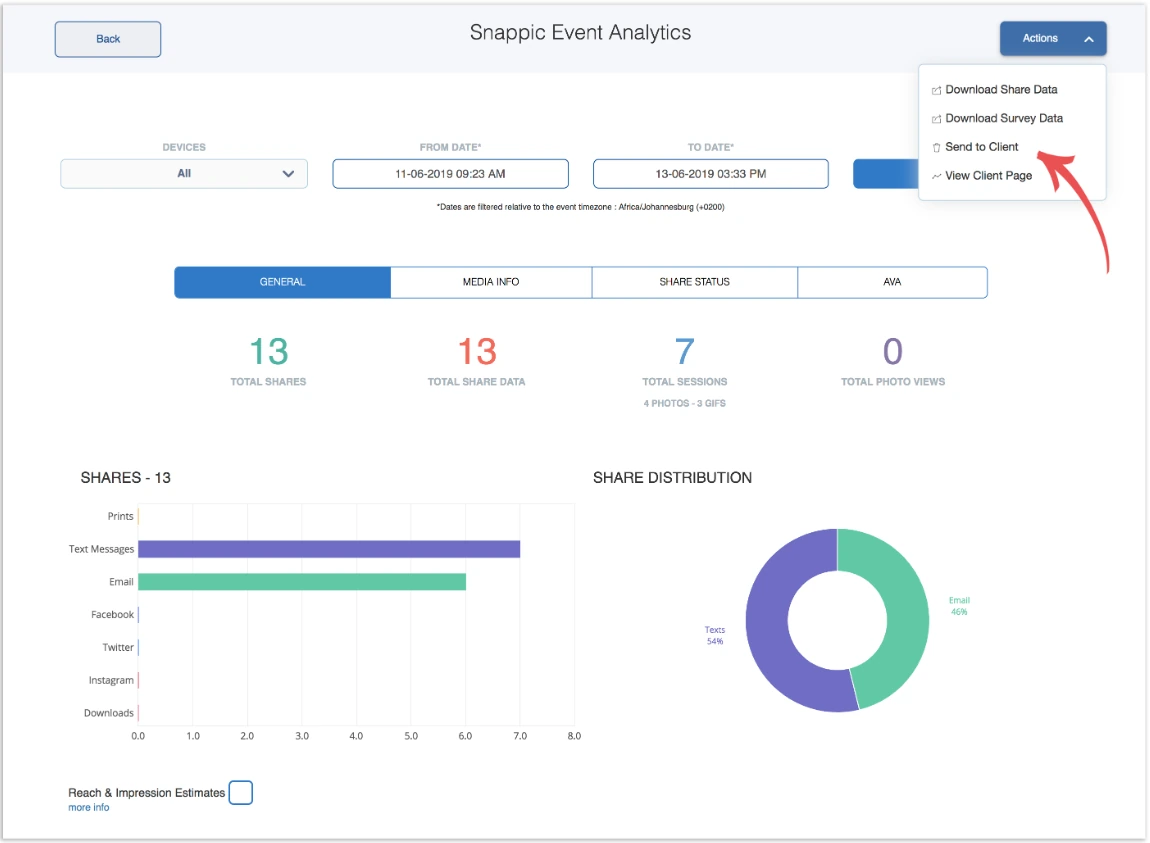
The Send to Client feature packages analytics, gallery access, and downloadable guest data into a branded webpage that operators forward to clients as a deliverable.
Source: Snappic
Webhooks push event data to CRMs and Google Sheets in real time (Premium plan and above).
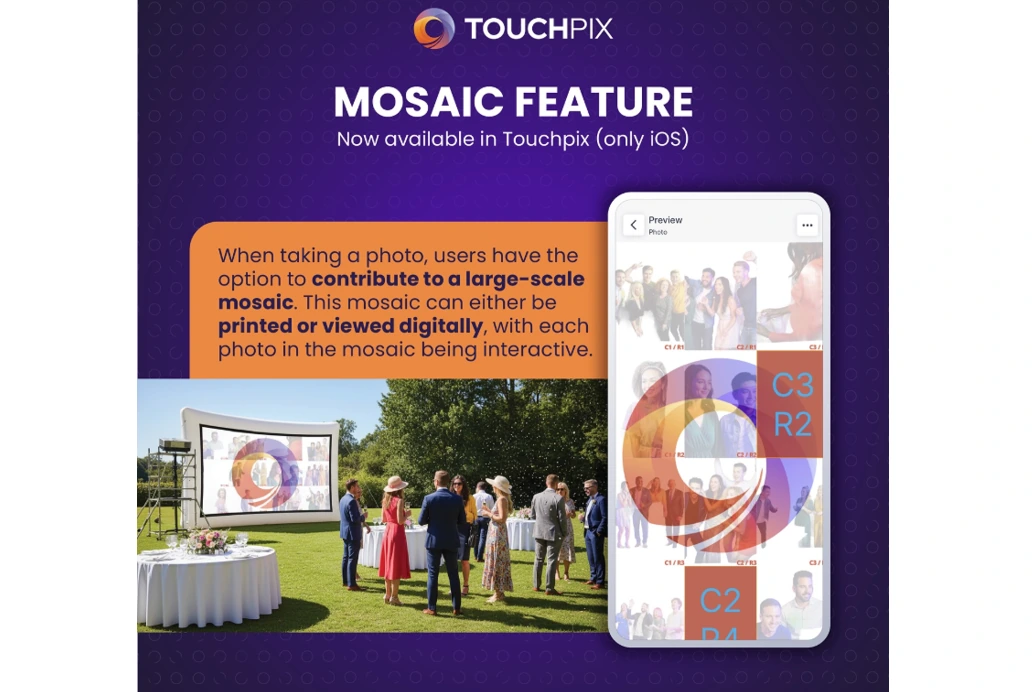
Touchpix includes surveys on the MultiPass Pro tier and above. A Mosaic feature on the Enterprise tier aggregates guest photos into a collaborative display for high-attendance events. Basic analytics are available across plans, but the depth doesn’t match Snappic’s AVA or Send to Client functionality.
Source: Instagram
Simple Booth captures lead data at 87-89% opt-in rates through forms embedded in the photo-taking flow itself. The analytics dashboard reports on participants, uploads, gallery views, social sharing metrics, and demographic insights via face detection (age estimation, gender breakdown) on the Select tier.
Data exports as CSV, syncs with MailChimp, and routes to custom CRMs via the Open API on Pro and Select plans.
“Arizona Opera grew its email list by 1,000 addresses in just a few events using Simple Booth’s lead capture.” (Simple Booth)
Pricing model comparison
The three platforms use different pricing structures, which makes direct comparison tricky.
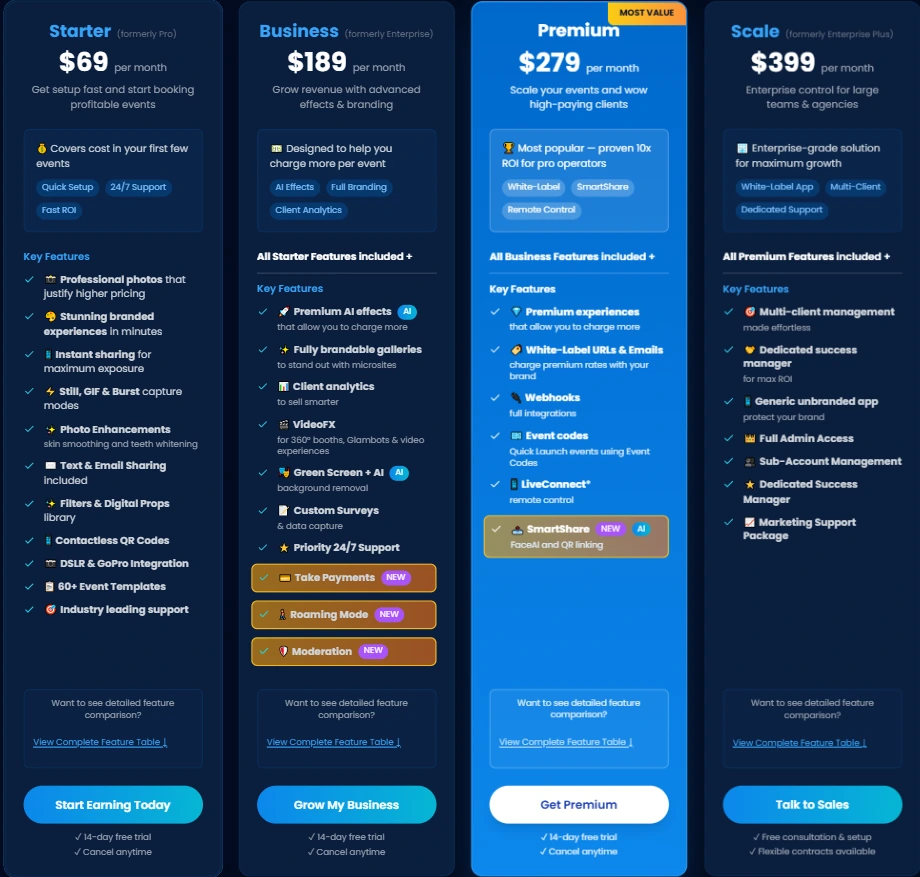
Snappic charges per booth license on a monthly or annual basis. The Starter plan at $69/month includes one Photo Booth License with core functionality but excludes VideoFX, AI-FX, client analytics, and white-label branding.
Source: Snappic
The Business plan at $189/month unlocks 360 booths, AI effects, microsites, and analytics. Premium at $279/month adds white-label, webhooks, and SmartShare. Scale at $399/month adds sub-account management, a grey-label app, and a dedicated success manager.
Additional booth licenses cost $39-$119/month depending on tier. On top of subscriptions, operators pay separately for AI-FX credits ($20/200), background removal credits ($15/100), and international SMS credits ($39/1,000). Annual billing saves 20%.
Touchpix prices by active event slots with unlimited devices. PhotoPass at $439.90/year allows 2 simultaneous events but covers only photos, GIFs, and AI photos, excluding video, slow-motion, and boomerang.
MultiPass at $879.99/year adds video and allows 4 events. MultiPass Pro at $1,407.99/year adds surveys and allows 8 events. Enterprise at $2,199.99/year allows 12 events with Mosaic and RAW backups. AI Pro credits for cloud transformations cost $12 for 100 credits up to $375 for 5,000. There is no monthly billing at the entry tier.
Simple Booth uses a per-license subscription across weekly, monthly, and annual billing. Core at $24/week or $49/month or $490/year includes ads-free operation, DSLR support, video, background replacement, and Virtual Booth.
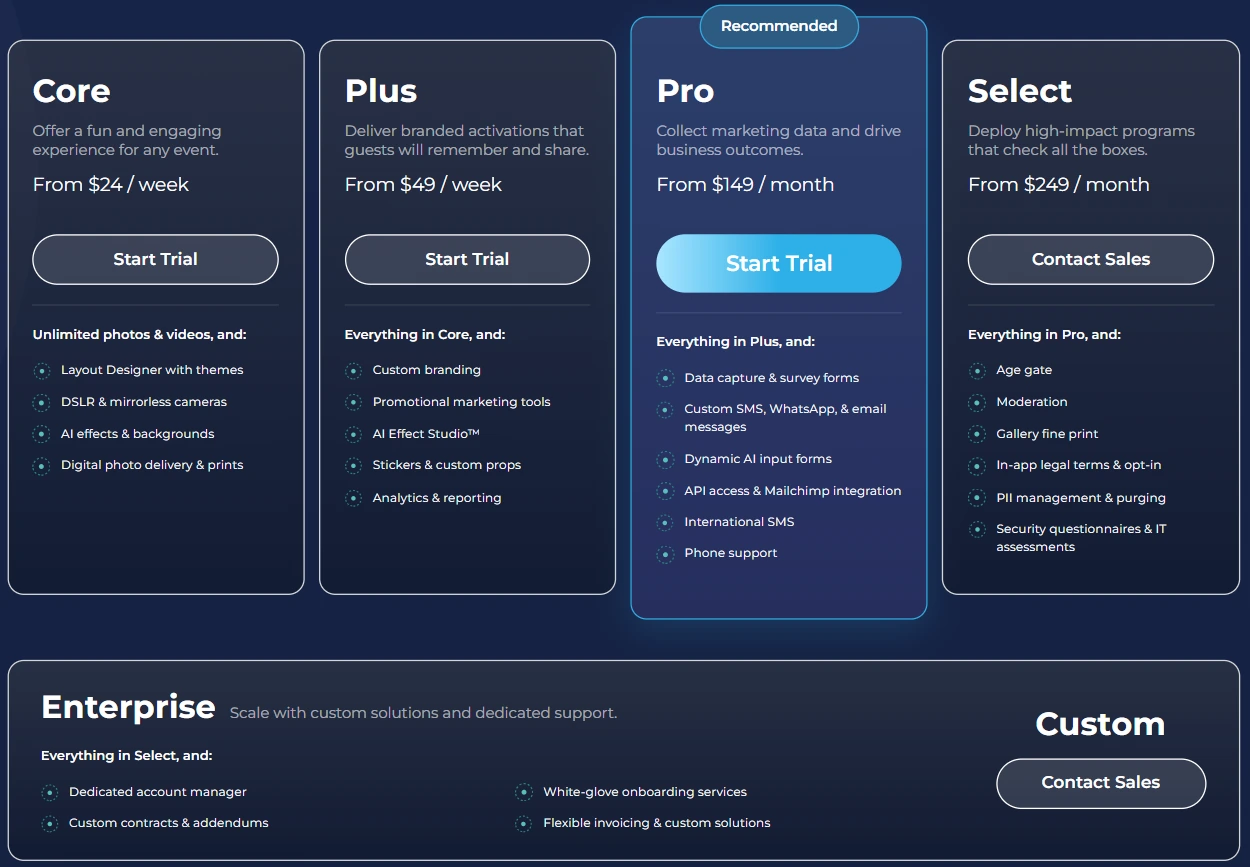
Plus at $49/week or $99/month or $990/year adds custom branding, analytics, and custom AI effects. Pro at $149/month or $1,490/year adds lead capture, API integration, moderation, and phone support. Select at $249/month or $2,490/year adds compliance tools and demographic analytics.
AI credits cost $0.10 each, with bonus credits on new subscriptions and no expiry on purchased credits. HALO hardware kits start at approximately $2,090 and are a one-time purchase with 0% financing available.
The right price point depends on volume. For a solo operator running 2-3 events per month on a single iPad, Touchpix’s MultiPass ($73/month effective) or Snappic’s Starter ($69/month) offers the lowest recurring cost. Simple Booth’s Core plan ($49/month on monthly billing) falls in the same range for software, though the upfront HALO hardware investment changes the total cost picture.
The hardware pays for itself through the higher rental rates that consistent lighting quality enables.
Support and reliability when it matters most
Photo booth software fails at the worst possible time: during a paid event, in front of 200 guests, on a Saturday night.
Snappic offers 24/7/365 live support on all plans, with Priority Support on Business and above and a Dedicated Customer Success Manager on Scale. App Store reviews consistently praise response speed, with users reporting that support “answers in a matter of seconds.”
Touchpix provides 24/7 live chat in English, Spanish, and Portuguese, plus schedulable 1-on-1 Zoom calls Monday through Thursday. A weekly Masterclass webinar series covers new and advanced features. However, App Store reviews document recurring stability issues, including app freezes mid-edit and force-closes with video data loss during live events.
Simple Booth tiers support by plan: email and chat on Core/Plus, phone support on Pro, and a dedicated account manager during events on Select. The Help Center includes 148+ articles, and a 5.0 Transition Guide with an AI assistant for natural language documentation queries.
App Store reviews flag occasional post-update bugs, though Simple Booth actively responds to negative reviews with troubleshooting guidance. The app’s Preflight Check screen catches configuration issues before each event launch, a proactive approach to preventing live-event failures.
Snappic vs Touchpix vs Simple Booth: Which should you choose?
The best platform depends on your booth types, hardware, and business model.
Choose Snappic if:
- You run multiple booth formats (360, Glambot, mirror, iPad, roaming) and need one platform for all of them
- AI effects are central to your corporate event pitch
- You want all features available on every plan, with no feature gating
- 24/7/365 live support is non-negotiable
- You’re building toward an agency model with sub-accounts and white-label branding
Choose Touchpix if:
- 360-degree video booths are your primary or planned format
- You need software that runs on Android, Windows, or Linux devices you already own
- Offline sharing at venues without Wi-Fi is a regular requirement
- You want unlimited devices under a single subscription
- Annual billing works for your cash flow
Choose Simple Booth if:
- Photo quality and lighting consistency matter more than booth-type variety
- You want a system that sets up in under a minute with no tools
- You serve brand activations or marketing teams that need measurable lead capture
- A better guest experience justifies higher rental rates
- You value an integrated hardware-software system over assembling components yourself
Start your free trial with Simple Booth.
Snappic and Touchpix have built software platforms that give operators flexibility across booth types and devices. For operators who need that breadth, either platform delivers.
But Simple Booth’s integrated approach, where hardware and software are designed as a single system, produces photo quality and operational simplicity that software alone doesn’t achieve. In an industry where the guest’s photo is the product, the quality of that photo is the business.
Ready to see what that looks like? Try Simple Booth free for 7 days.
Snappic vs Touchpix vs Simple Booth FAQ
What is the main difference between Snappic, Touchpix, and Simple Booth?
Snappic is an iOS-based photo booth platform that covers every major booth format (iPad, 360, Glambot, mirror, roaming) with a deep AI effects suite and agency-level business tools. Touchpix is a cross-platform solution running on iOS, Android, Windows, Linux, macOS, and Raspberry Pi, with strong 360-booth support and offline QR sharing.
Simple Booth pairs subscription iPad software with dedicated HALO ring-light hardware for high photo quality and sub-one-minute setup.
Which platform is cheapest for a solo operator?
Touchpix’s PhotoPass plan costs $439.90/year (about $37/month effective) for 2 active events with unlimited devices. Snappic’s Starter plan is $69/month or $499/year. Simple Booth’s Core plan runs $49/month or $490/year for software alone, though the HALO hardware kit adds an upfront cost starting around $2,090. All three platforms also charge separately for AI credits on top of their base subscriptions.
Which platform supports the most booth types?
Snappic supports the widest range: iPad photo booths, 360-degree video, Robot Arm/Glambot, Mirror, and Roaming photography. Touchpix covers 360, photo, mirror, video, and AI modes across six operating systems. Simple Booth focuses on iPad-based photo booths with the HALO hardware and a browser-based Virtual Booth for remote events.
Can any of these platforms work without internet?
All three offer some offline capability. Touchpix leads with Scanpix 2, which lets guests receive media via QR code with no internet at all, plus on-device AI face replacement and background removal. Snappic’s Photo Glam and offline AI background removal work without internet or credits, and the app queues shares for delivery when connectivity returns.
Simple Booth queues sessions in offline mode and delivers them when connectivity returns, but cloud-dependent features like AI Effects require an active connection.
Which platform has the best AI photo effects?
Snappic runs the most extensive AI stack with three parallel engines: AI-FX for style transfers, PersonaFX for avatar generation with survey-driven personalization, and BananaFX (powered by Google Gemini 2.5) for full image regeneration. Touchpix offers 80+ AI styles with custom prompts and offline face replacement.
Simple Booth’s AI Effects use Nano Banana models with native brand integration through the Layout Designer, automatic identity preservation, and zero-cost prompt testing outside booth mode.
Which platform is best for corporate brand activations?
All three serve corporate clients, but with different strengths. Snappic’s analytics package (AVA demographics, FaceMatch, Send to Client reporting, webhooks) gives operators the strongest post-event data deliverable. Simple Booth’s 87%+ lead capture opt-in rate, Layout Designer branding, and enterprise compliance features (Select plan) make it strong for regulated industries and Fortune 500 activations. Touchpix’s cross-platform flexibility and offline sharing are advantages for large-scale outdoor events.
Do any of these platforms support non-Apple devices?
Only Touchpix supports non-Apple devices natively, running on Android, Windows, Linux, and Raspberry Pi alongside iOS and macOS. Snappic is limited to iOS (iPad, iPhone, Mac). Simple Booth’s HALO app is iPad-only, though its Virtual Booth runs in any browser on any device.
How does printing work across the three platforms?
Touchpix offers the most printing options: a Printpix hardware box ($340) that removes the need for a laptop, plus Windows and Mac print server software, with compatibility across 3,000+ dye-sublimation printer models. Snappic supports wired printing, a wireless Print Server app (Mac and Windows), and AirPrint on all plans. Simple Booth supports compatible wireless printers with printing available across plans.
Keep reading
 Showdowns
Simple Booth vs Snappic: Which Photo Booth Software Fits Your Business in 2026?
Integrated iPad system vs multi-format fleet. Simple Booth or Snappic?
 Showdowns
LumaBooth vs Snappic (vs Simple Booth): Which Photo Booth Software Fits Your Business in 2026?
Budget multi-format app vs enterprise fleet platform. LumaBooth or Snappic?
 Showdowns
LumaBooth vs Touchpix (vs Simple Booth): Which Photo Booth Software Wins in 2026?
Cross-platform all-rounder vs 360 video specialist. LumaBooth or Touchpix?