Simple Booth vs Snappic: Which Photo Booth Software Fits Your Business in 2026?
Choosing between Simple Booth and Snappic for your photo booth business comes down to five questions:
- Do you want an integrated hardware-and-software system, or software that runs across every booth format you own?
- Is your priority a simple, self-operating booth with minimal setup, or a platform that handles 360 video, Glambot, and mirror booths alongside standard iPad capture?
- Are you building a rental business around one or two iPad booths, or scaling a multi-format operation with corporate brand activations?
- Do you need a built-in layout design tool and proprietary ring-light hardware, or multiple AI engines and video production tools?
- Is your focus on lead capture and marketing ROI, or on maximizing per-event revenue through AI experiences?
In short, here’s what we recommend:
Simple Booth is the integrated photo booth system that pairs proprietary HALO ring-light hardware with a cloud-connected iPad app and web dashboard. Its machined aluminum chassis sets up in under a minute with no tools, and the HALO 5.0 app update added a full Layout Designer, DSLR camera support, and WhatsApp delivery. With 30,000+ customers, a 4.7-star App Store rating from 2,400+ reviews, and documented lead capture opt-in rates as high as 87%, Simple Booth serves rental operators, permanent venue installs, and brand marketing teams who want a system that runs itself. Software plans start at $49/month for Core, with a browser-based Virtual Booth that requires no hardware at all.
Snappic is the multi-format photo booth platform for operators who need one piece of software across every rig they own. It supports iPad, 360-degree video, Robot Arm/Glambot, Mirror, and Roaming configurations from a single app, with three AI engines (AI-FX, PersonaFX, and BananaFX) and a VideoFX system for slow-motion and branded video production. Used at 100,000+ events by 8,000+ operators worldwide, Snappic gives every subscriber access to every feature regardless of plan tier, with pricing starting at $69/month for Starter. Its 24/7/365 live support and SmartShare face-recognition delivery address the demands of high-volume event businesses.
Both platforms are strong choices for professional photo booth operators, but they’re built around different philosophies: integrated hardware-software simplicity versus multi-format software versatility.
Simple Booth vs Snappic at a glance
| Simple Booth | Snappic | |
|---|---|---|
| Core Philosophy | Integrated hardware + software | Multi-format software platform |
| Booth Types Supported | iPad (with HALO hardware) + Virtual Booth | iPad, 360, Glambot, Mirror, Roaming |
| Proprietary Hardware | HALO ring-light chassis (machined aluminum) | None (software-only) |
| AI Engines | Nano Banana (1 model family, 3 tiers) | AI-FX, PersonaFX, BananaFX (3 distinct engines) |
| Video Production | Video capture (5 to 120 sec) | VideoFX with slow-motion, timeline editing, 60+ effects |
| Template Design | Built-in Layout Designer | Template Designer + VideoFX Template Builder |
| Photo Delivery | QR, SMS, email, AirDrop, WhatsApp | QR, SMS, email, AirDrop, SmartShare (face/QR linking) |
| Lead Capture | Up to 10 custom fields (Select); 87%+ opt-in rate | Custom surveys + AVA demographic analytics |
| App Store Rating | 4.7 stars (2,400+ ratings) | 4.5 stars (93 ratings) |
| Support | 7-day (Lite) to phone + dedicated manager (Select) | 24/7/365 live support on all plans |
| Starting Price | $49/month (Core) | $69/month (Starter) |
| Free Trial | 7 days | 14 days |
| Best For | Rental operators and venues wanting a turnkey system | Multi-format operators scaling across booth types |
The core difference: Integrated system versus multi-format platform
These platforms reflect two different answers to the same question: what does a professional photo booth operator need most?
Simple Booth answers with vertical integration. The company designs and manufactures its own HALO hardware, a machined aluminum ring light with 112 LEDs producing up to 2,100 lumens, rated for 50,000 hours of operation.
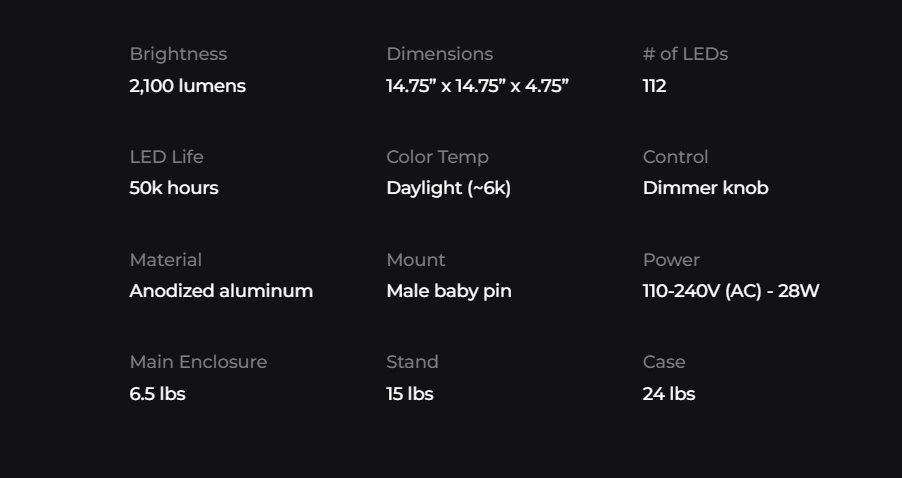
Source: Simple Booth
The iPad snaps in via a tool-less faceplate, a concealed USB-C cable keeps it charged, and the whole system deploys in under a minute on the included selfie stand or wall mount. Because one company controls the hardware, the software, and the cloud dashboard, every piece works together. The result is a self-operating booth that rental companies can drop at a venue and walk away from, and that marketing teams use to capture leads at opt-in rates of 87 to 89%.
Snappic answers with software versatility. Rather than building proprietary hardware, Snappic built one platform that runs across iPad, 360-degree video, Robot Arm/Glambot, Mirror, and Roaming configurations. An operator who starts with a single iPad booth and later adds a 360 rig and a Glambot doesn’t need to learn new software or migrate data.
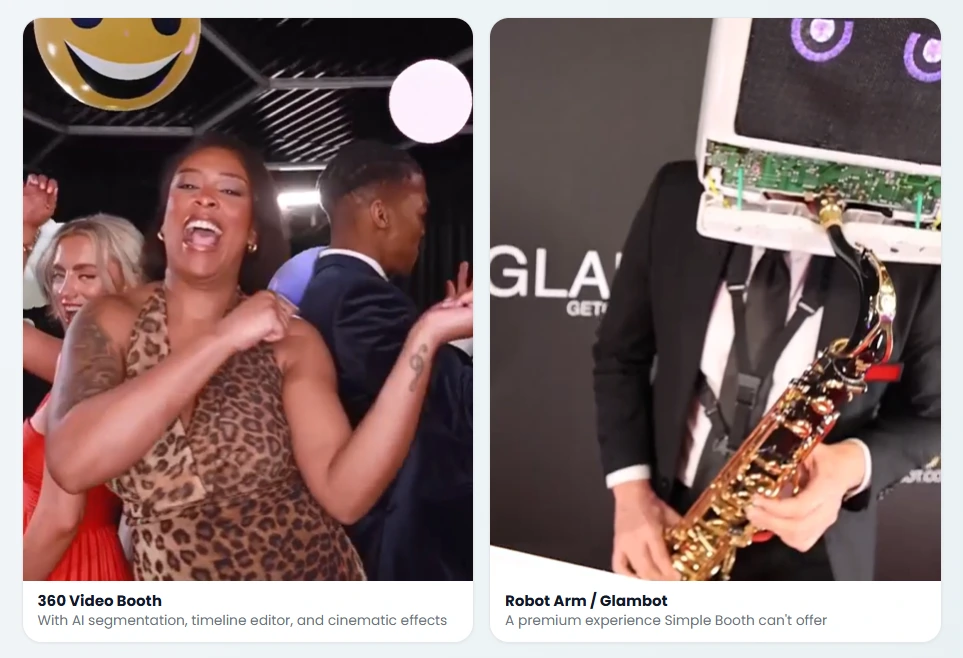
Source: Snappic
The same template system, the same AI effect library, and the same analytics dashboard serve every format. This breadth matters most for operators who offer multiple booth types to corporate clients, where one event contract might call for a 360 booth in one room and an iPad booth in the lobby.
The trade-off is clear: Simple Booth gives you a tighter, more polished experience within its hardware ecosystem, with organized settings and a visual workflow that shows the entire booth flow upfront. Snappic gives you broader coverage across booth formats at the cost of a steeper learning curve and more settings to navigate.
Simple Booth delivers a self-operating experience
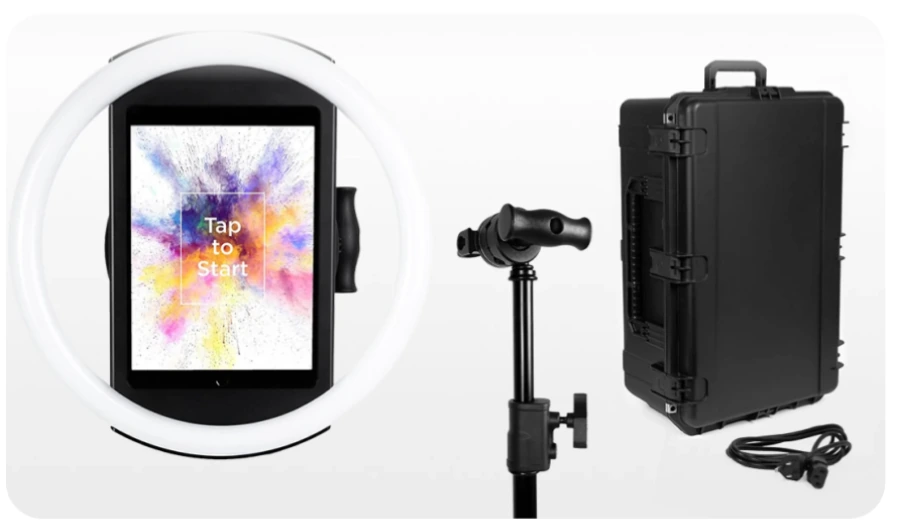
Simple Booth’s defining advantage is that the hardware and software were designed as a single product. The HALO chassis is built from a single billet of anodized aluminum with a patented ring-light system that produces even illumination for groups standing 6 to 8 feet from the camera.
Source: Simple Booth
This isn’t a consumer ring light bolted to a tablet stand. The physical brightness dial, the built-in charging cable, and the 49-pound rolling travel case are built for operators who run multiple events per week.
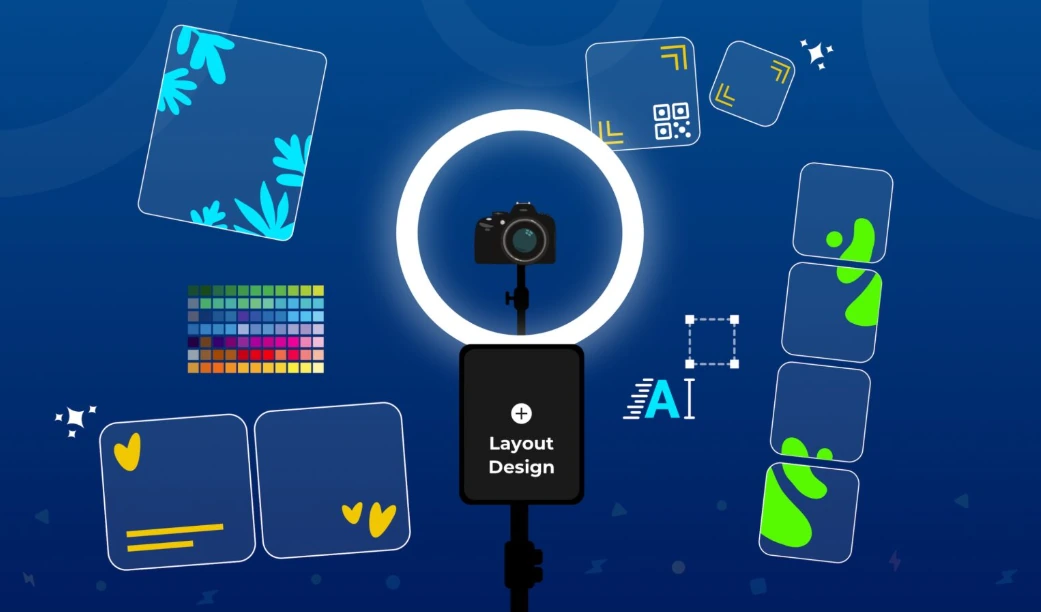
The HALO 5.0 software update (released November 2025) added capabilities that usually require separate design software. The Layout Designer is a full in-app design tool with layers, fonts, gradients, QR code embedding, and multi-layout support. Operators create branded templates directly in the app or web dashboard instead of toggling between Photoshop and their booth software. Simple Booth calls it “the most powerful design tool in the photo booth industry”.
Source: Simple Booth
The same update introduced DSLR and mirrorless camera support (Canon and Sony on Core plans and above, with Nikon coming soon), giving operators who already own professional cameras full image quality through the HALO workflow.
The integration supports both wired USB connections for long-event reliability and wireless WiFi connections for more creative setups, a feature most competitors (including Snappic) don’t offer. WhatsApp delivery opens international markets that SMS-only platforms can’t reach cost-effectively.
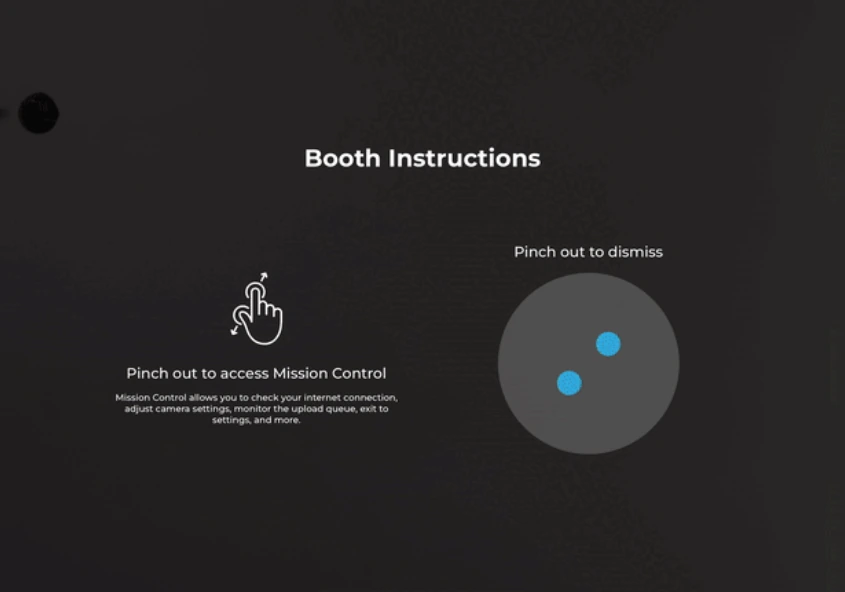
For day-of operations, the Mission Control overlay (triggered by a two-finger pinch) lets operators monitor device health, adjust camera settings, and sync dashboard changes during a live event without disrupting the guest-facing interface.
Source: Simple Booth
The web dashboard’s Devices page provides remote management across all iPads: operators can monitor battery levels, disk space, upload queues, and switch presets without being on-site. This matters for businesses running multiple events or permanent installations at the same time. A Preflight Check screen catches configuration issues before the event starts, and the app’s offline upload queue stores sessions when Wi-Fi drops and delivers them when connectivity returns.
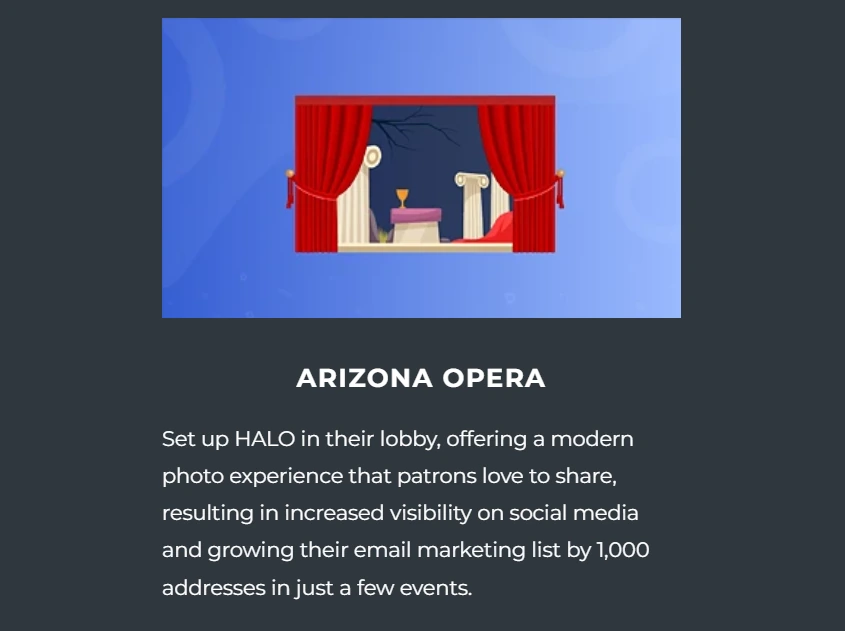
The marketing side of the platform turns photo booth sessions into measurable results. Lead capture forms collect up to 6 standard fields on Pro (10 custom fields on Select), with documented results: Arizona Opera grew its email list by 1,000 addresses in a few events, and Treetop Golf built 150,000 unique email addresses across permanent venue installations.
Source: Simple Booth
“10+ years, we’re big Simple Booth believers.” Simple Booth helped G7 Entertainment Marketing capture over 136,000 fan interactions across their events. (G7 Entertainment Marketing)
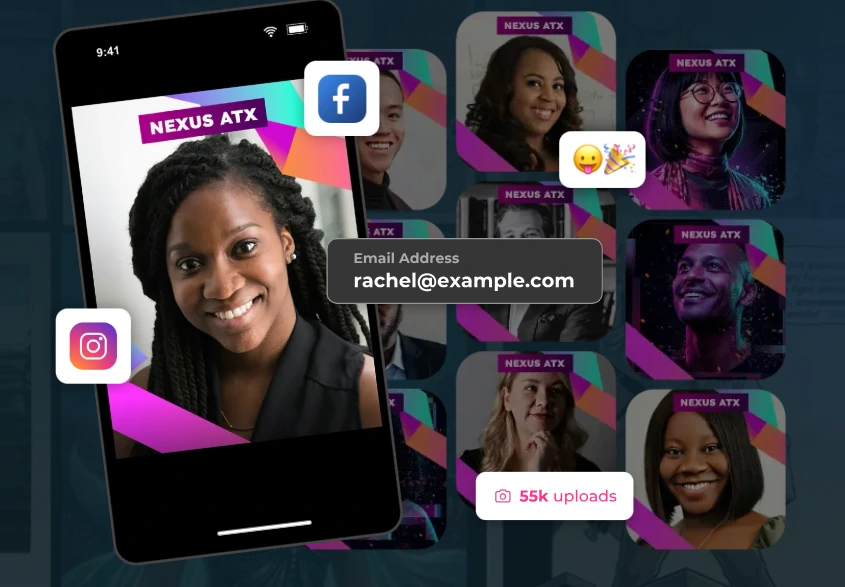
Simple Booth also offers Virtual Booth, a browser-based product that delivers branded photo experiences without physical hardware. Participants join via a link or QR code from their own device, apply background replacement and AI effects, and submit to a shared gallery. It supports nine languages and runs unlimited simultaneous events, making it useful for hybrid events, email campaigns, or always-on brand activations where a physical booth isn’t practical.
Source: Simple Booth
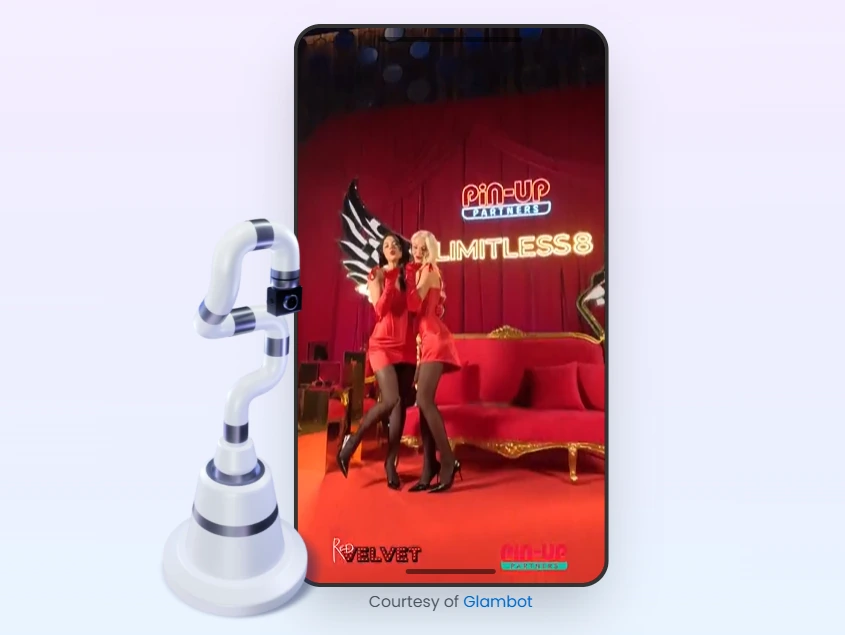
Snappic covers every booth format from one platform
Snappic’s structural advantage is breadth. Where Simple Booth runs exclusively on iPad with its HALO hardware, Snappic supports iPad, 360-degree video, Robot Arm/Glambot, Mirror, and Roaming configurations from one app. For an operator who runs a standard iPad booth at weddings and a 360 rig at corporate events, this means one set of templates, one analytics dashboard, one support relationship, and one monthly bill.
Source: Snappic
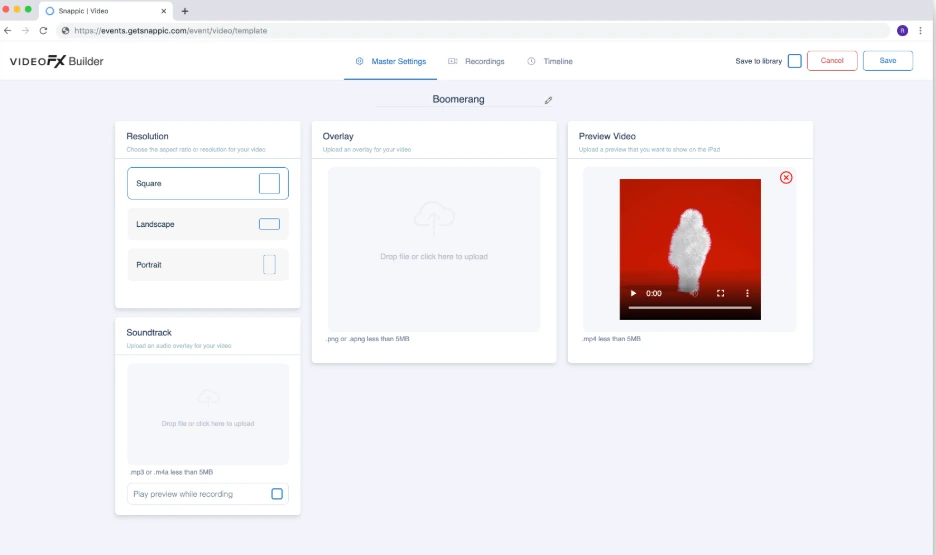
The VideoFX system is where this multi-format approach pays off most visibly. The VideoFX Template Builder is a three-tab editor that handles resolution, multi-clip timeline assembly, per-clip effects, animated overlays, and playback speed.
Operators producing Glambot content can configure up to 8x slow motion from a 2-second capture using pre-built templates like MultiZoom and DoubleSlowMo. The result is a branded, music-scored video ready to share after each guest, with no post-production step. Simple Booth captures video (5 to 120 seconds) but doesn’t offer this level of timeline editing and slow-motion control.
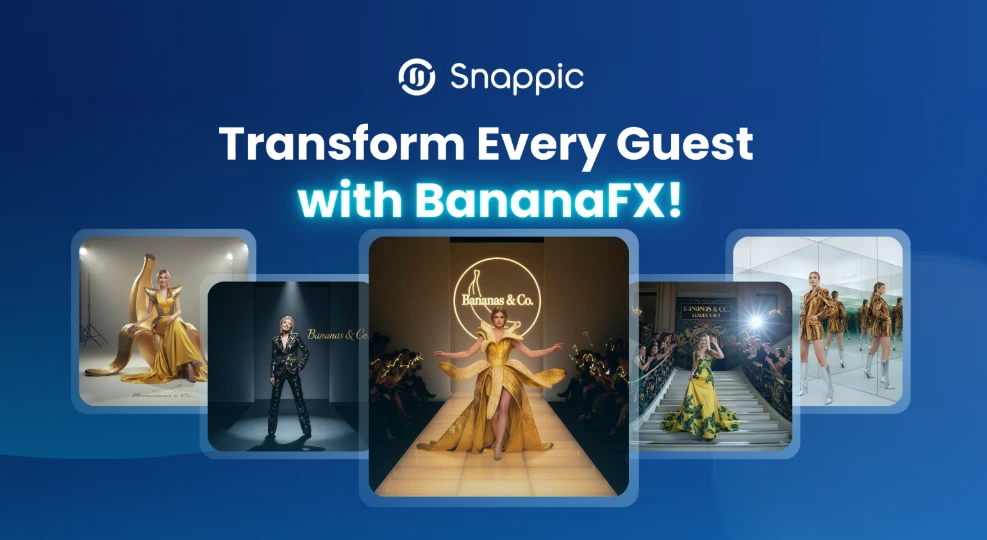
Snappic also runs three distinct AI engines rather than variations on one model. AI-FX handles style transfers and themed transformations from a preset library and custom prompts. PersonaFX generates photorealistic or stylized avatars with survey-driven personalization (guests can enter custom jersey numbers or text that feeds directly into the AI prompt).
BananaFX, powered by Google’s Gemini 2.5, produces full image regenerations from custom prompts with faster render times than the core AI-FX pipeline. Each engine suits different use cases, letting operators match the AI tool to the event.
Source: Snappic
Snappic’s sharing tools include a feature Simple Booth doesn’t match: SmartShare. When enabled, guests link their contact information to either their face (via facial recognition) or a personal QR card once, and every subsequent capture across the event goes to them automatically. This eliminates the repeated contact-entry step that slows booth lines at high-volume events. A separate Sharing Station feature lets operators run photo delivery on a second iPad while the main booth keeps shooting.
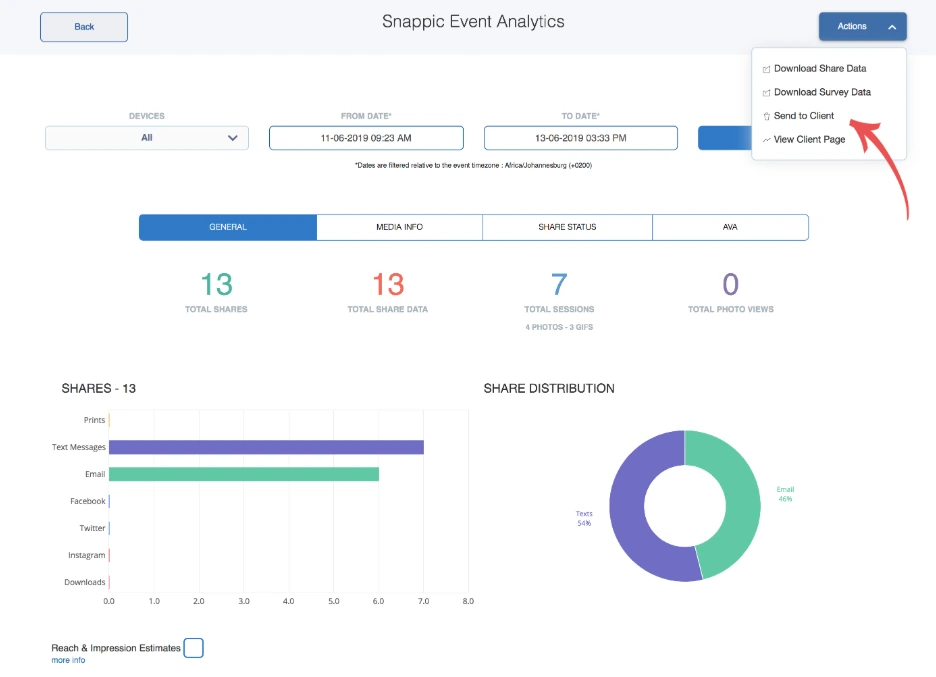
Snappic’s analytics include AVA (Advanced Vision Analytics), which uses facial recognition to extract anonymized demographic data (gender distribution, approximate age ranges, average faces per photo) from every event. A Send to Client button packages analytics, the gallery, and downloadable guest data into a branded webpage that operators forward to corporate clients as a post-event deliverable.
Source: Snappic
For operators building toward a multi-booth agency, the Scale plan includes sub-account management, an unbranded Grey Label App, and a dedicated success manager. This agency infrastructure is absent from Simple Booth’s plan structure.
AI capabilities: Integrated simplicity versus engine variety
Both platforms offer AI effects, but their approaches reflect their broader philosophies.
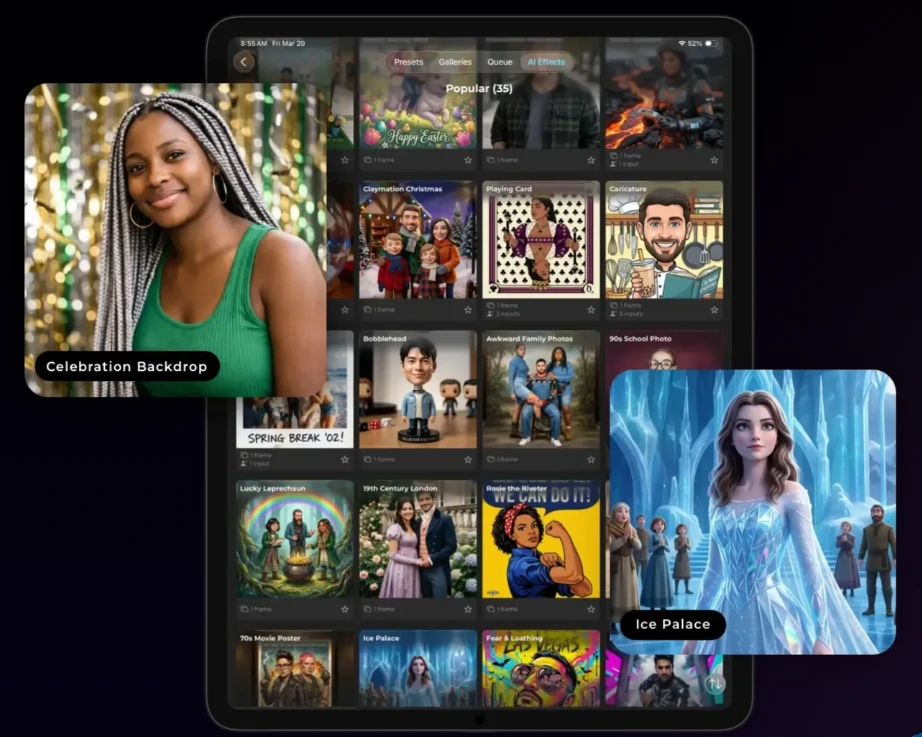
Simple Booth runs its AI Effects on the Nano Banana model family in three tiers: Nano Banana 1 (fastest, individual subjects, 1 credit), Nano Banana 2 (balanced, groups up to 5, 2 credits), and Nano Banana Pro (highest quality, groups up to 5, 3 credits).
Source: Simple Booth
The system automatically preserves identity at the platform level, keeping guests recognizable regardless of how dramatic the transformation. This removes a common failure point for live events, where an unrecognizable output frustrates guests instead of delighting them.
A distinct advantage is zero-cost prompt testing. Operators iterate on AI prompts outside of booth mode without consuming credits, then deploy confidently at the event. Credits cost $0.10 each and don’t expire. The AI effects integrate with the Layout Designer, so brand overlays, logos, and graphic frames composite on top of AI-generated photos in a single workflow.
Simple Booth also supports per-frame multi-prompt storyboarding, assigning a unique AI prompt to each frame in a multi-frame layout. This enables sequential narrative strips (comic book panels, cinematic scenes) that go beyond single-image transformations.
Snappic takes a different approach with multiple specialized AI engines. The core AI-FX pipeline handles style transfers and themed transformations with processing times of 2 to 5 minutes depending on server load. PersonaFX generates photorealistic or stylized avatars with survey-driven customization. BananaFX, running on Google’s Gemini 2.5, produces full image regenerations with faster render times than the core pipeline. Each engine consumes AI credits (AI-FX at $20 per 200 credits, 1 to 6 credits per image depending on the effect).
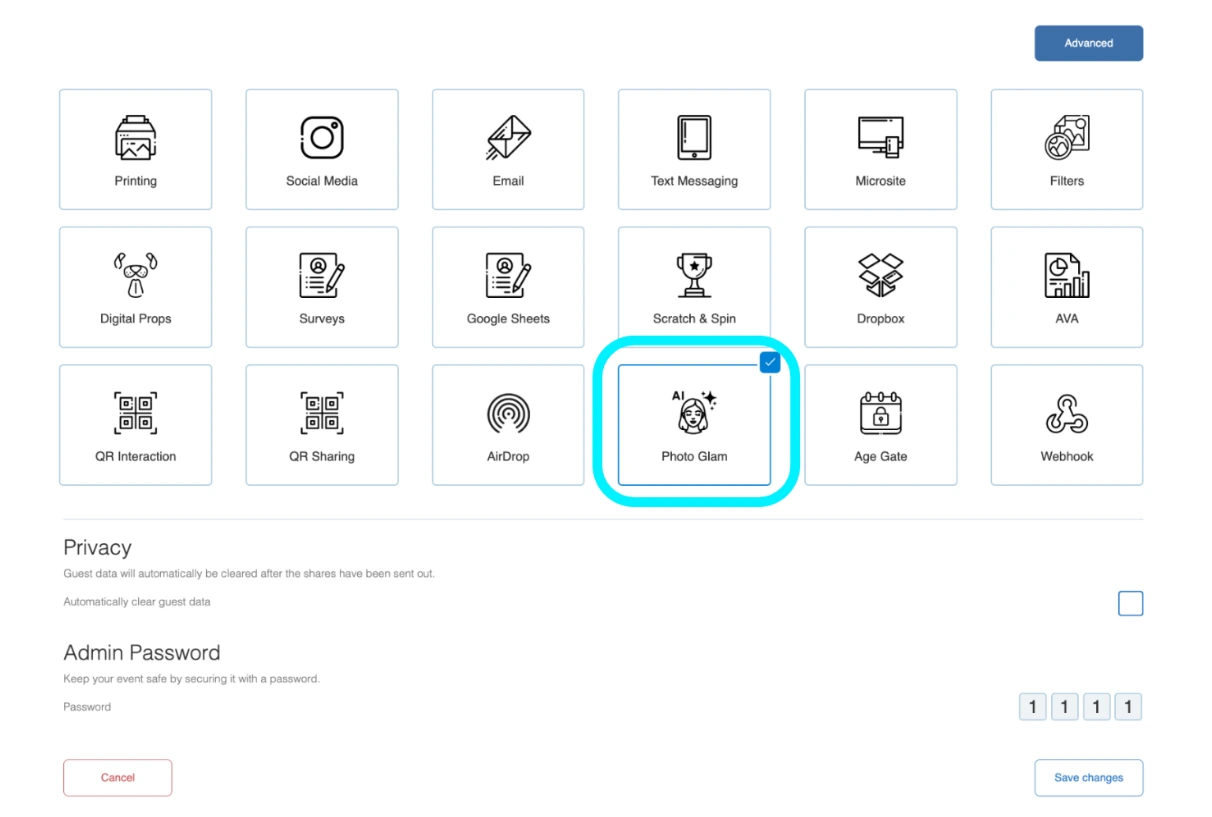
Snappic also offers two features that work without internet or credits: Photo Glam (skin smoothing and teeth whitening at configurable intensity) and Offline AI Background Removal (on-device processing, no backdrop required). These offline capabilities address a real problem: venues with poor connectivity where cloud-dependent AI effects would fail.
Source: Snappic
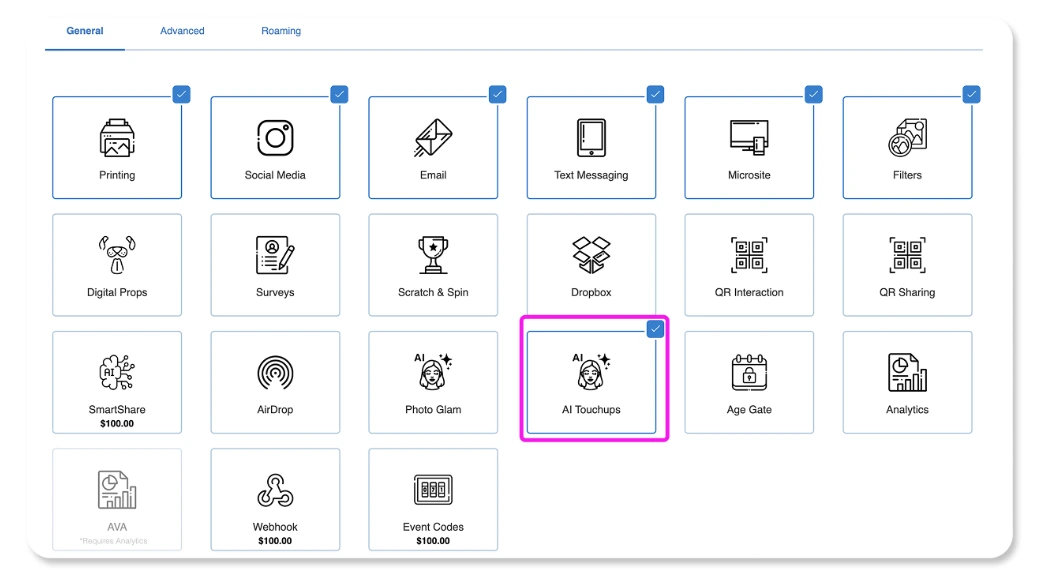
Snappic’s AI Touchups system offers 40+ enhancement parameters across seven categories, with Quick Presets tuned for weddings, corporate events, and photo booths. This gives operators finer control over photo retouching than Simple Booth’s Glam smoothing and portrait blur tools.
Source: Snappic
The practical difference: Simple Booth keeps AI simpler with one model family, automatic identity preservation, and free testing. Snappic offers more AI engines and offline processing, but with more complexity and variable credit costs.
Template design and customization
Simple Booth’s Layout Designer (introduced in HALO 5.0) is a full design tool built into the app and web dashboard. Operators place photo zones, add text layers with font, color, alignment, and shadow options, set background gradients, position logos, embed dynamic QR codes, and round borders, all without leaving the platform.
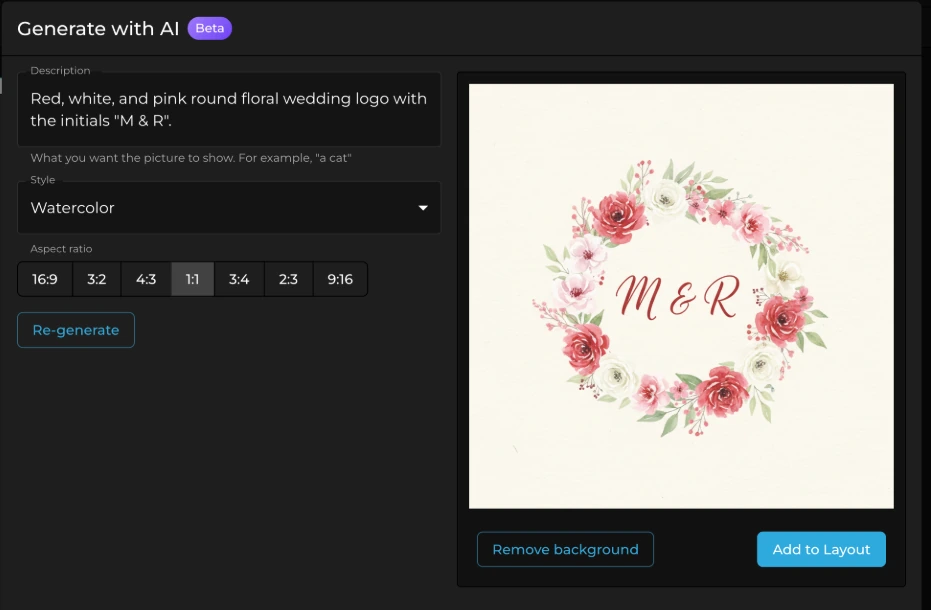
Each event can have multiple layout options with different motion types (still, GIF, Rebound). The tool also generates AI-powered layout images (watercolor, photorealistic, cartoon, pop art styles) at no credit cost, providing design elements that would otherwise require a graphic designer.
Source: Simple Booth
A feature unique to Simple Booth is guest-editable text layers (Plus plans and above). Participants type their own names, captions, or hashtags directly onto their photo before sharing, with dynamic text sizing that keeps the design clean regardless of message length. This personalizes every output without adding work for the booth operator.
Simple Booth provides 60+ themes and 100+ digital props, and settings configured in one preset can be shared with staff accounts and synced to multiple devices.
Snappic’s customization system splits between the Template Designer for photos and the VideoFX Template Builder for video. The Template Designer is a canvas-based browser editor with layered elements, blend modes (overlay, soft light, hard light, multiply, luminosity), frame rotation and mirroring, and a text editor with font, color, size, stroke, and alignment controls.
Source: Snappic
It supports custom template sizes up to 12MP. The VideoFX Template Builder adds a timeline editor for multi-clip video production with per-clip effects, speed multipliers, reverse playback, and animated overlays.
Snappic’s Event Templates system lets operators save any fully configured event as a reusable template, including all feature settings, not just the visual design. The platform ships 60+ pre-built event templates for quick deployment. Specialized types include Magazine Covers (transparent PNG overlay + background removal) and Trading Cards (survey fields that bake guest-entered text into the card layout).
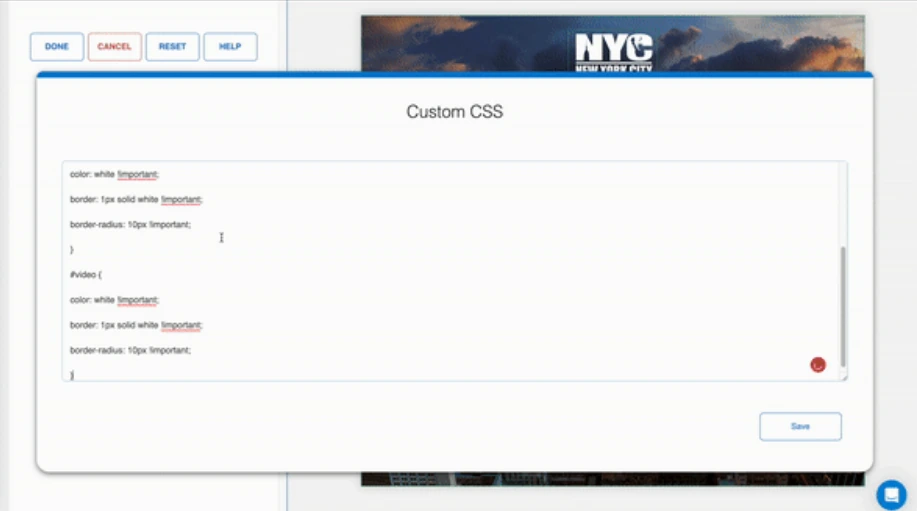
Snappic adds two customization capabilities Simple Booth lacks. First, animated overlays using sequential transparent PNG frames (up to 30 for stills and GIFs) that play over the captured photo. Second, custom CSS on microsites, giving technically capable operators pixel-level control over the guest gallery’s appearance, including Google Fonts integration.
Source: Snappic
Both platforms provide translation and multi-language support for international events. Simple Booth’s Virtual Booth auto-localizes into nine languages based on browser settings. Snappic’s translation presets let operators customize every guest-facing string in both the iPad app and Virtual Booth.
Pricing and cost structure
The pricing comparison goes beyond subscription rates, because both platforms have variable costs that affect the total bill.
Simple Booth uses a per-license subscription model across five tiers. Each plan includes one device license, with additional devices priced as add-ons. Billing is available weekly, monthly, or annually:
| Plan | Monthly | Annual | Key additions |
|---|---|---|---|
| Lite | $29.99/mo | $289.99/yr | Basic capture + delivery (ads shown; App Store only) |
| Core | $49/mo | $490/yr | Ads removed, DSLR, video, background replacement, Virtual Booth |
| Plus | $99/mo | $990/yr | Custom branding, analytics, guest-editable text, custom AI effects |
| Pro | $149/mo | $1,490/yr | Lead capture, API, phone support, moderation, age gate |
| Select | $249/mo | $2,490/yr | Custom legal terms, demographic analytics, security questionnaires |
Weekly billing is available on Lite ($14.99), Core ($24), and Plus ($49), making it practical for operators with irregular event schedules. AI credits cost $0.10 each and don’t expire. HALO hardware kits start at approximately $2,090 (Event Kit with iPad and Simple Care protection).
Snappic uses a per-booth-license subscription with a different philosophy: every feature is included on every plan, and tiers differ only by device count and add-on eligibility:
| Plan | Monthly | Annual | Key additions |
|---|---|---|---|
| Starter | $69/mo | $499/yr | 1 booth license; core photo/GIF capture, SMS/email sharing, 60+ templates |
| Business | $189/mo | $1,799/yr | 1 booth + 1 sharing station; VideoFX, AI-FX, microsites, analytics, surveys |
| Premium | $279/mo | N/A | White-label, webhooks, event codes, LiveConnect, 400 SmartShare credits |
| Scale | $399/mo | $3,999/yr | Sub-accounts, Grey Label App, dedicated success manager |
Snappic also offers per-event licenses at $29 (Starter) or $79 (Business) for 48-hour access, suited to operators running fewer than 3 events per month.
The variable costs differ. Simple Booth’s AI credits ($0.10 each, 1 to 3 credits per generation) are the main recurring cost beyond the subscription. Snappic’s credit system is broader: AI-FX credits ($20 per 200), background removal credits ($15 per 100), AI sharing credits ($20 per 1,000), and international SMS credits ($39 per 1,000) are all billed separately. For operators running AI-heavy corporate events, these add up.
A practical comparison: an operator running 8 to 10 events per month on an iPad booth with AI effects and lead capture would need Simple Booth’s Pro plan at $149/month plus AI credits, versus Snappic’s Business plan at $189/month plus AI-FX and background removal credits. Simple Booth’s weekly billing options and lower entry price make it more accessible for operators starting out. Snappic’s per-event pricing gives occasional operators a cheaper entry point, but the monthly subscription becomes more economical at 3+ events.
Both platforms offer free trials (Simple Booth: 7 days; Snappic: 14 days, no credit card required).
Support and reliability
Support quality matters especially in photo booth software because failures happen during live events with no option to “try again tomorrow.”
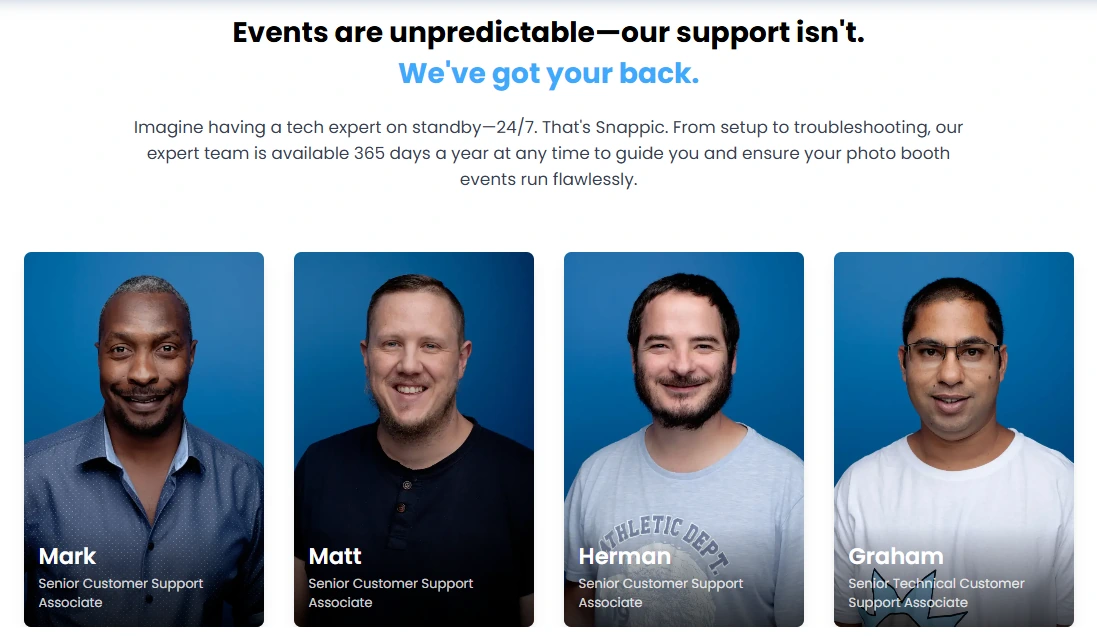
Snappic leads here with 24/7/365 live support on all plans, including holidays and weekends. App Store reviews confirm fast response times, with users describing support that “answers in a matter of seconds”. The Business plan adds Priority Support, and the Scale plan includes a Dedicated Customer Success Manager. Round-the-clock availability is a real guarantee for Saturday night corporate events.
Source: Snappic
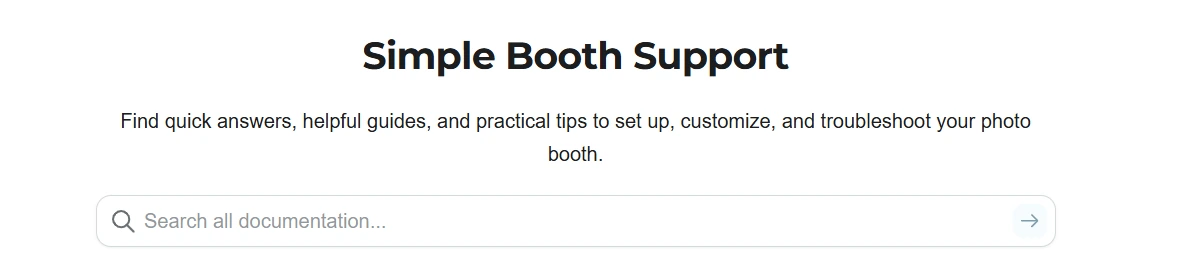
Simple Booth tiers its support by plan: 7-day support on Lite, email and chat on Core/Plus, phone support on Pro, and a dedicated account manager during events on Select. The company responds to negative App Store reviews with troubleshooting guidance, and its Help Center contains 148+ articles across 10 collections. The 5.0 Transition Guide on GitBook includes an AI assistant for natural-language queries against the documentation.
Source: Simple Booth
On reliability, both platforms address venue connectivity problems differently. Simple Booth’s offline upload queue stores sessions and delivers them when connectivity returns. Snappic queues shares and uploads similarly, and its Photo Glam and Offline AI Background Removal process entirely on-device, so guests still get enhanced photos without internet. Both platforms require connectivity for cloud-based AI effects.
Simple Booth’s App Store track record is much larger: 4.7 stars from 2,400+ ratings versus Snappic’s 4.5 stars from 93 ratings. That volume difference makes Simple Booth’s rating more statistically reliable. Critical reviews for Simple Booth surface a recurring pattern of bugs following software updates, with the company advising operators to disable auto-updates before events. Snappic’s smaller review corpus makes systematic issues harder to identify.
Integrations and data connectivity
Neither platform is an integration powerhouse, but they take different approaches to connecting with external tools.
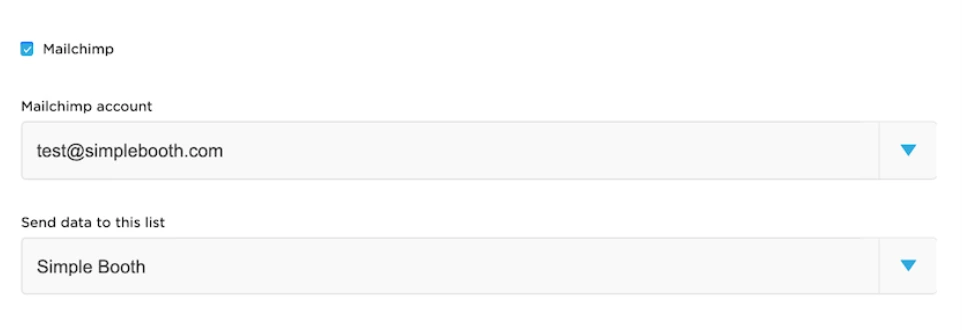
Simple Booth offers MailChimp as its only native CRM integration, syncing lead data automatically from events. Beyond MailChimp, the platform provides an Open API (Pro and Select plans) for custom CRM delivery, though it’s limited to two documented endpoints: listing data captures and purging personal information.
Source: Simple Booth
The API uses static token authentication and requires a developer to implement. Dropbox integration (Core+) handles bulk photo sync. No Zapier, Make, or other iPaaS connector is documented.
Snappic doesn’t publish a public API but offers a more structured webhook system (Premium and Scale plans, or as a Business add-on). Webhooks fire in real time across four event types (Session, Share, Survey, Competition Win) with documented JSON payloads, HMAC-SHA256 signature verification, and automatic retry on failure.
A no-code Google Sheets integration provides a developer-free path for basic data routing. Snappic also supports Dropbox instant upload, Stripe payments at the booth (Business+), and tracking pixel injection (Google Analytics, Meta Pixel, Google Tag Manager) on microsites.
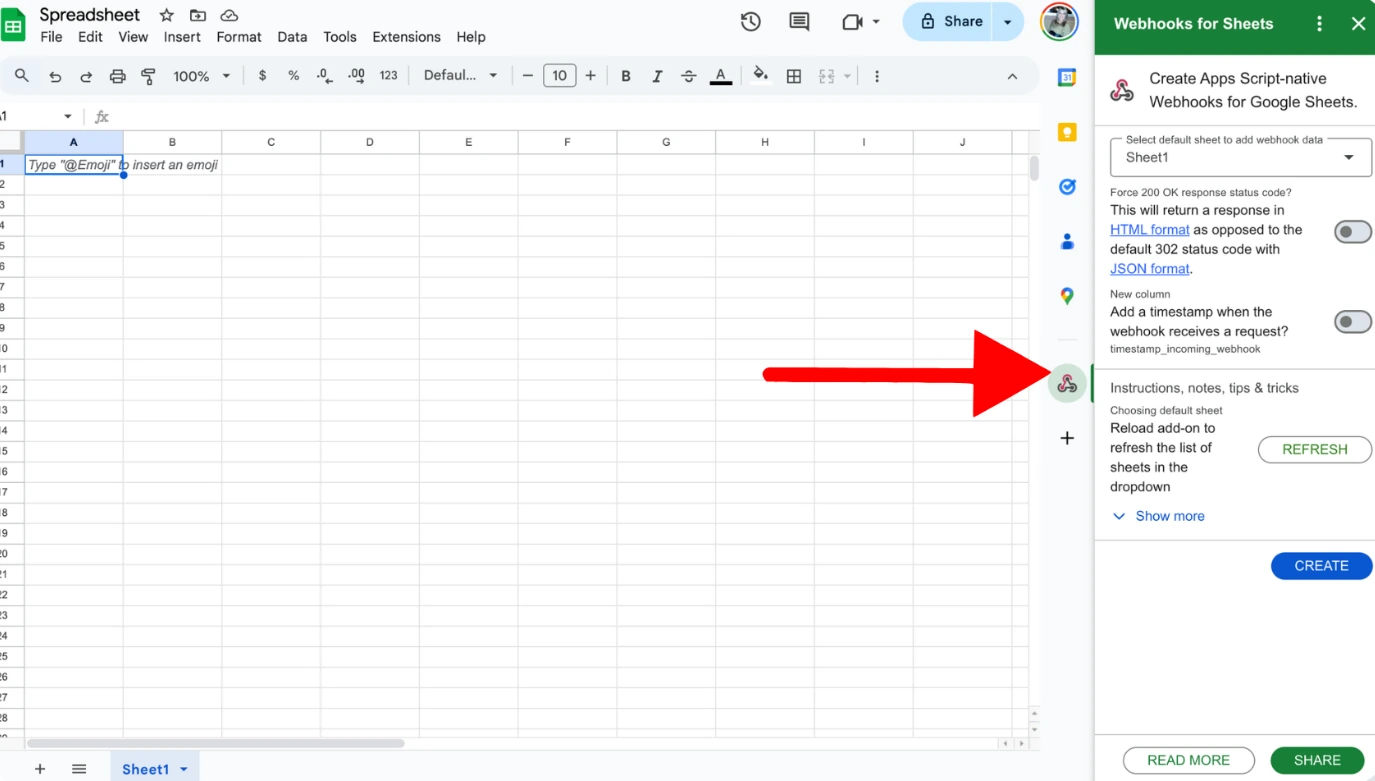
Source: Snappic
For operators whose corporate clients require real-time data flow to CRMs or marketing platforms, Snappic’s webhook system is more capable. For operators who just need leads in MailChimp, Simple Booth’s native integration is simpler.
Simple Booth vs Snappic: Which should you choose?
The choice depends on your booth types, your business model, and how much complexity you’re willing to manage.
Choose Simple Booth if:
- You run an iPad-based photo booth business and want an integrated hardware-and-software system
- Fast setup matters (the 1-minute, no-tools HALO deployment is a real operational advantage for multi-event weeks)
- You need an intuitive platform that’s easy to train new staff on and runs without an attendant
- You value an in-app design tool (Layout Designer) that eliminates dependence on external graphic design software
- Lead capture and marketing ROI are primary goals, with documented opt-in rates of 87%+
- You want weekly billing options for variable event schedules
- You serve permanent venue installations where the wall-mount Install Kit and unattended operation matter
- You need a browser-based Virtual Booth for hybrid or digital-only activations
- You prefer a platform backed by 30,000+ customers and 2,400+ App Store ratings
Start a free 7-day trial of Simple Booth and see how the HALO system works for your events.
Choose Snappic if:
- You operate multiple booth formats (360, Glambot, Mirror) and need one platform across all of them
- Video production with slow-motion, timeline editing, and branded output is central to your service offering
- You want access to multiple AI engines (AI-FX, PersonaFX, BananaFX) for different event types
- 24/7/365 live support is a hard requirement for your event schedule
- You’re building a multi-booth agency and need sub-account management, white labeling, and a Grey Label App
- SmartShare’s face-recognition delivery would speed up your high-volume events
- You want all features available on every plan tier, with pricing based only on device count
- You need offline AI capabilities (Photo Glam, Offline Background Removal) for low-connectivity venues
Both platforms will continue developing their AI capabilities and extending their feature sets. Simple Booth’s trajectory points toward deeper hardware-software integration and design tools that keep operators inside the platform. Snappic’s trajectory points toward broader AI engines and agency-tier infrastructure for multi-format businesses.
The deciding factor is usually the booth types you run today and plan to run next year. If your business is built around iPad booths and you want an integrated system with strong lead capture, Simple Booth delivers that with less complexity and a lower entry price. If you’re scaling across 360, Glambot, Mirror, and iPad configurations and need one platform that handles all of them with video production, Snappic is the more versatile choice.
Simple Booth vs Snappic FAQ
What booth types does each platform support?
Simple Booth runs exclusively on iPad with its proprietary HALO ring-light hardware, plus a browser-based Virtual Booth for digital experiences. Snappic supports iPad, 360-degree video, Robot Arm/Glambot, Mirror, and Roaming configurations from a single app, making it the broader choice for operators who run multiple booth formats.
Which platform is cheaper to get started with?
Simple Booth starts at $49/month for Core (or $24/week for operators who prefer weekly billing), while Snappic starts at $69/month for Starter or $29 per individual event. Simple Booth also requires HALO hardware (starting around $2,090 for the Event Kit), while Snappic is software-only and runs on existing iPads. For software cost alone, the platforms are comparable, but Simple Booth’s hardware investment adds to the upfront total.
Do both platforms work offline at venues with poor Wi-Fi?
Both platforms queue photo sharing and uploads for delivery when connectivity returns. Snappic has an edge with Photo Glam (skin smoothing) and Offline AI Background Removal, which process entirely on-device without internet or credit consumption. Cloud-based AI effects on both platforms require an active internet connection.
How do the AI photo effects compare?
Simple Booth uses one AI model family (Nano Banana) in three quality tiers, with automatic identity preservation and free prompt testing outside booth mode. Credits cost $0.10 each and never expire. Snappic runs three distinct AI engines (AI-FX, PersonaFX, BananaFX) optimized for different transformation types, with AI-FX credits at $20 per 200 and processing times of 2 to 5 minutes. Snappic offers more AI variety; Simple Booth offers simpler AI with lower per-credit cost.
Which platform has better support for live events?
Snappic offers 24/7/365 live support on all plans, a real advantage for operators running events on evenings and weekends. Simple Booth tiers support by plan: email and chat on lower tiers, phone support on Pro, and a dedicated account manager during events on Select. For operators on higher-tier plans, Simple Booth’s support is strong; for operators on entry plans who need weekend support, Snappic’s round-the-clock availability stands out.
Can I use either platform for brand activations and lead capture?
Both platforms support lead capture at events. Simple Booth reports opt-in rates as high as 87 to 89% and offers up to 10 custom data capture fields on the Select plan, with native MailChimp integration and an Open API for CRM delivery. Snappic offers custom surveys, AVA demographic analytics, and a one-click Send to Client feature that packages analytics into a branded deliverable for corporate clients. Simple Booth is stronger on direct lead capture rates; Snappic adds demographic analytics and client reporting.
Does either platform support Windows or Android devices?
Neither platform supports Windows or Android. Simple Booth runs exclusively on iPad. Snappic runs on iPad, iPhone, and Mac. Operators using Windows-based setups with DSLR cameras would need to look at alternatives like dslrBooth or Darkroom Booth for Windows compatibility.
Which platform is better for video production?
Snappic is the stronger choice for video. Its VideoFX system includes a three-tab template builder with multi-clip timeline editing, per-clip effects, speed multipliers for up to 8x slow motion, AI segmentation for virtual backgrounds in video, and pre-built Glambot templates. Simple Booth captures video from 5 to 120 seconds with basic overlays and branding but does not offer the timeline editing, slow-motion control, or production tools that Snappic provides.
Keep reading
 Showdowns
Simple Booth vs Darkroom Booth: Which Photo Booth Software Fits Your Business in 2026?
iPad turnkey vs Windows DSLR veteran. Simple Booth or Darkroom Booth?
 Showdowns
Simple Booth vs Flassh: Which Photo Booth Platform Fits Your Events in 2026?
Integrated system vs speedy setup. Simple Booth or Flassh?
 Showdowns
Simple Booth vs LumaBooth: Which Photo Booth Software Fits Your Business in 2026?
Turnkey hardware vs budget cross-platform app. Simple Booth or LumaBooth?