Simple Booth vs Breeze Booth: Which iPad Photo Booth Software Fits Your Business in 2026?

Choosing between Simple Booth and Breeze Booth for your photo booth business comes down to five questions:
- Do you want a turnkey system that works out of the box, or will you invest time mastering a platform for full creative control?
- Is your priority fast setup and easy operation, or customization of every screen a guest touches?
- Do you need integrated proprietary hardware, or do you already have your own rig and just need flexible software?
- Are lead capture, marketing analytics, and CRM integrations important to your business model?
- Do you run high-volume events with minimal staff, or do you specialize in custom brand activations?
In short, here’s what we recommend:
Simple Booth is the photo booth that runs itself. With its HALO hardware (machined aluminum chassis, patented ring light producing up to 2,100 lumens), cloud-connected iPad app, and Layout Designer for in-app template creation, it delivers a complete system that sets up in under a minute and operates without an attendant.
The platform captures first-party data at an 87%+ opt-in rate, integrates AI photo effects natively, and includes a Virtual Booth product for digital-only activations. With 30,000+ customers and a 4.7-star App Store rating from 2,400+ reviews, it’s built for operators and marketers who value reliability and speed over configuration depth.
Breeze Booth is photo booth software for iPad built around a single principle: “Your way, not our way.” The platform gives operators full creative control over the guest-facing interface, from every countdown frame and menu screen to custom animated overlays and survey-driven personalized prints.
It supports photos, GIFs, and video in a single app, connects to Canon DSLRs, 360 spinners, robot arms, Nayax payment terminals, and Arduino devices, and can run 100% offline with no data sent to any third party. At $49/month per device, it’s the choice for technically skilled operators building custom brand activations, payment kiosks, and specialized booth formats.
Both platforms turn iPads into professional photo booths, but they serve different operator profiles and business models.
Simple Booth vs Breeze Booth at a glance
| Simple Booth | Breeze Booth | |
|---|---|---|
| Core Philosophy | Turnkey, self-operating system | Full creative control |
| Proprietary Hardware | HALO ring-light kits (aluminum chassis) | Software only (BYO hardware) |
| Setup Time | Under 1 minute | Significant configuration required |
| Learning Curve | Minimal | Steep |
| Design Customization | Layout Designer with themes and templates | Custom UI on every screen |
| Capture Modes | Photos, GIFs, Rebound clips, video | Photos, GIFs, video, 360, slow-motion |
| Camera Support | iPad camera; Canon & Sony DSLR/mirrorless, wired or wireless (Core+) | iPad/iPhone camera; Canon DSLR |
| Payment Integration | Not available | Nayax, Stripe QR, coin/bill acceptors |
| Virtual/Remote Booth | Yes (browser-based Virtual Booth) | No |
| Offline Mode | Yes (queues uploads) | Yes (100% offline capable) |
| Starting Price | $24/week (Core, for professional use) | $49/month per device |
| Annual Price | From $490/year (Core) to $2,490/year (Select) | $499/year per device |
| Free Trial | 7 days | Unlimited (watermarked after 10 sessions/day) |
| Best For | Operators and marketers wanting fast, reliable events | Technical operators building custom experiences |
The core difference: Turnkey operation vs. full creative control
The divide between Simple Booth and Breeze Booth is philosophical before it’s technical.
Simple Booth grew out of event professionals who needed a booth that worked without fuss. Co-founder Mark Hennings had the original idea as a wedding videographer in 2012 and launched the app in 2013, and co-founder Jeremy Cox contributed the HALO hardware prototype from his DJ and event business.
That origin shaped every product decision since: the HALO chassis snaps together without tools, the app locks into booth mode for unattended operation, and the online dashboard lets operators configure and monitor booths remotely. The platform assumes you want to spend your time running events, not configuring software.
This accessibility extends to the design workflow. The Layout Designer introduced in HALO 5.0 gives operators an in-app template builder with layers, fonts, gradients, and logo placement, removing the need for Photoshop or external design tools. Combined with 60+ themes and 100+ digital props, operators can create polished branded experiences without graphic design expertise.
Breeze Booth comes from the opposite direction. Breeze Software traces its lineage to 2001, when Chris and Sue Breeze built professional camera control software deployed at the Super Bowl, Olympics, and Everest expeditions. That engineering heritage carries through to the iPad product: every screen in the guest journey is a replaceable file.
The Touchscreen Editor lets operators place and size interactive zones on custom-designed screens. The Print Layout Editor is a drag-and-drop canvas for print composition. The Profile system allows multiple complete UI configurations within a single event, switchable by guest touch.
This flexibility demands investment. Operators design screens externally in Photoshop or After Effects, place files into a folder structure, and configure touchscreen actions, token variables, and hardware connections through a web-based Event Editor.
The payoff is a booth experience where the Breeze brand disappears entirely and every interaction point carries the operator’s or client’s identity. The tradeoff is a learning curve that filters out operators looking for a plug-and-play solution.
Simple Booth delivers a complete, integrated system
Simple Booth is one of the few photo booth platforms that sells both the software and the hardware it runs on, and that vertical integration defines its advantage.

The HALO chassis is machined from a single billet of anodized aluminum with a patented ring-light system: 112 LEDs producing up to 2,100 lumens, rated for 50,000 hours of operation.
The iPad snaps in via a tool-less faceplate, and a concealed USB-C cable keeps it charged throughout the event. The Event Kit ships with an adjustable selfie stand and waterproof rolling travel case; the Install Kit includes a wall mount for permanent venues.
Source: Simple Booth

The software matches this operational focus. Mission Control, accessed via a hidden two-finger pinch gesture, lets operators monitor device health, adjust camera settings, and sync dashboard changes without breaking the guest-facing interface.
A Preflight Check screen catches configuration issues before each event launch. Offline mode queues sessions and delivers them automatically when connectivity returns. Rendering optimizations deliver image previews up to 12x faster, so guests see their photos instantly rather than waiting for processing.
Source: Simple Booth
For brand marketers, the real differentiator is the data pipeline. Simple Booth’s lead capture forms achieve 87 to 89% opt-in rates because data collection sits inside the natural flow of receiving a photo, not as a separate ask. The Select tier adds demographic analytics via face detection, including age estimation, gender breakdown, and average group size.
The platform also includes Virtual Booth, a browser-based product requiring no hardware at all. Participants join via QR code or link from any device, apply branded overlays and AI effects, and submit to the same gallery and analytics dashboard as HALO sessions. For brands running hybrid events, both physical and virtual captures feed a single combined view.
Treetop Golf built 150,000 unique email addresses across locations using Simple Booth’s lead capture system. (Simple Booth)
Breeze Booth offers full design customization
Breeze Booth treats photo booth software as a platform for building custom interactive experiences rather than running preconfigured ones.
The design system is file-based. A Profile is a collection of assets: a settings file, a manifest file, and a Screen Folder containing all custom screen designs and creative output files. Named files trigger automatically at the correct moment in the booth workflow. Operators design their screens externally, then place those files into the folder structure.
The result is that every screen type in the guest journey is replaceable: ready screens, countdown frames, menus, keyboards, survey screens, payment screens, gallery screens, and error states.
What makes this more than cosmetic branding is the token system. Survey responses a guest enters at the booth become variables that can be injected into print layouts, file names, sharing messages, and overlay selection logic in real time.
The Trading Card use case shows this end-to-end: a guest enters their name, team, and player number through a custom survey keyboard, and those values render directly onto their personalized print with no post-processing step.
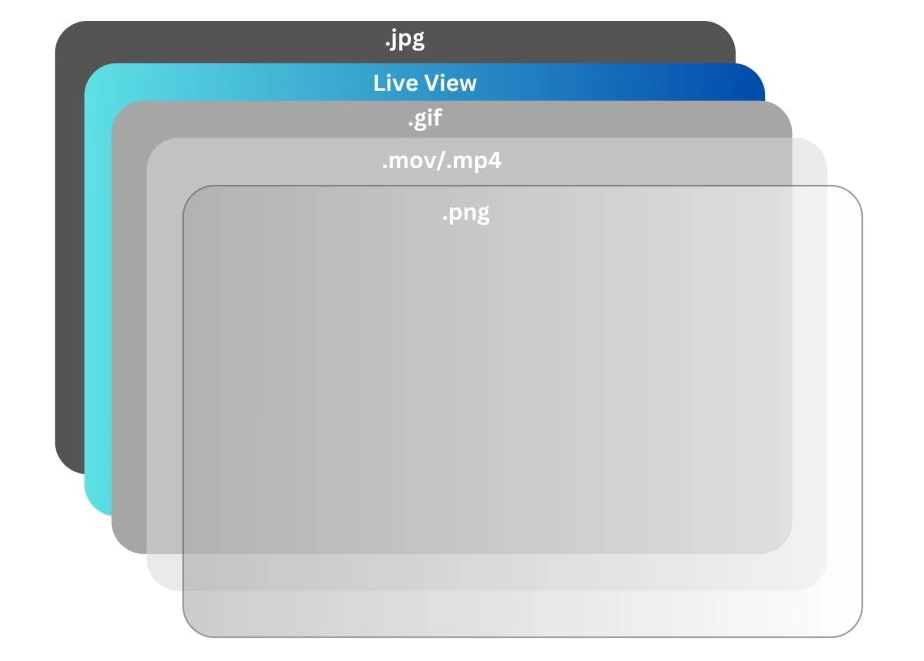
The platform also supports animated screen compositing. Operators can combine JPG, transparent PNG, animated GIF, and alpha-channel QuickTime video on a single screen, creating booth interfaces with looping background videos and transparent animated overlays over the live camera view.
Source: Breeze Booth
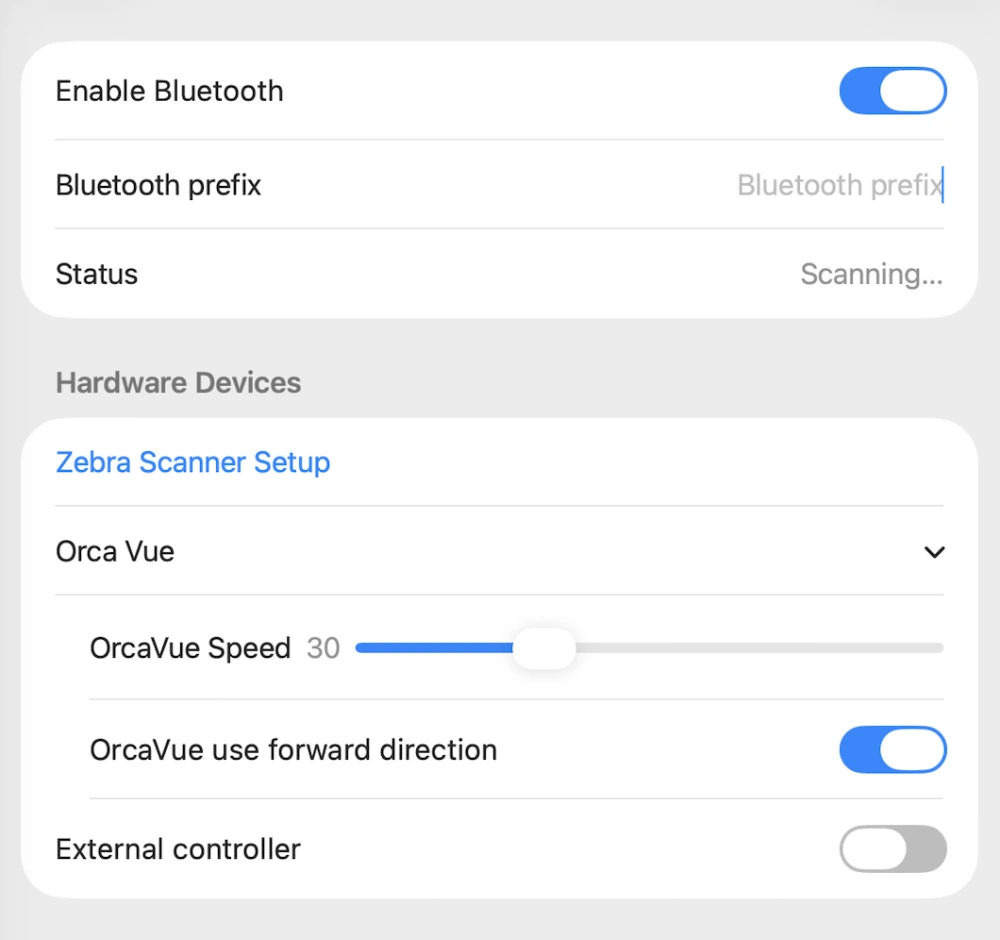
For operators building specialized booth formats, Breeze Booth’s hardware integration list is broad: Canon DSLR and mirrorless cameras, Windows printers via AirPrint, Bluetooth devices, Arduino controllers, DMX lighting, OrcaVue 360 spinning platforms, robot arms, and Nayax VPOS contactless card readers.
Source: Breeze Booth
The Auto Motion Start feature detects when any 360 spinner or robot arm begins moving and triggers recording automatically, making Breeze Booth compatible with any 360 hardware on the market.
This depth serves a specific buyer. An App Store reviewer called Breeze Booth “the most flexible Photo Booth app on the market.” That flexibility is real, but it comes with a setup investment that Simple Booth’s Layout Designer and preset system are designed to eliminate.
Capture modes and creative output
Both platforms handle photos, GIFs, and video, but their approaches reflect their broader design philosophies.
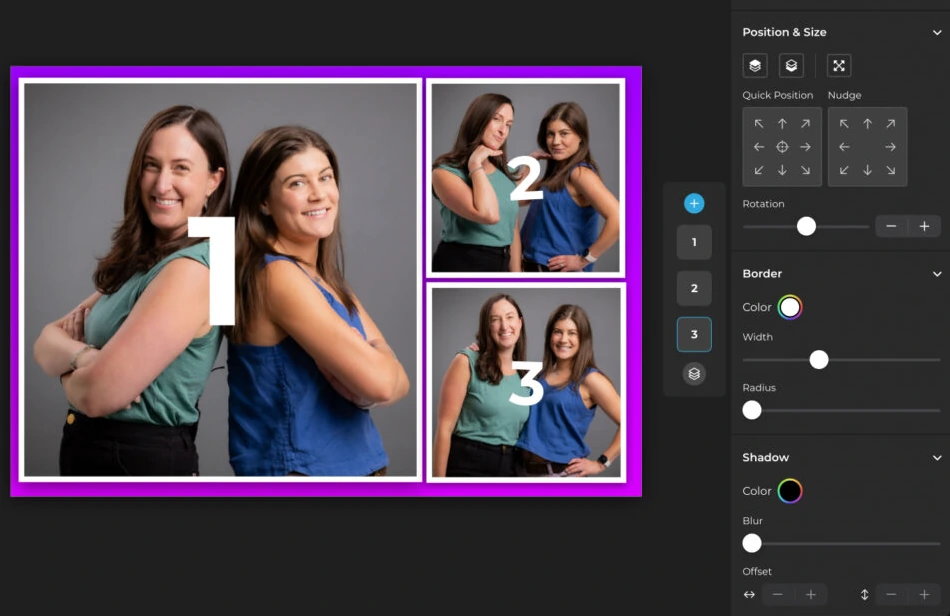
Simple Booth offers still photos (single and multi-frame), animated GIFs, Live GIFs, Rebound boomerang clips, and full-length video (5 to 120 seconds, Core and above). The Layout Designer supports multiple layout options per event, each with its own motion type, and operators can assign unique AI prompts to each frame in a multi-frame layout for narrative strips.
Source: Simple Booth
Canon and Sony DSLR and mirrorless camera integration (Core+) connects via USB or wirelessly over WiFi, giving operators studio-grade image quality through the HALO workflow. Wireless DSLR connectivity is a differentiating feature that most competitors, including Breeze Booth, do not offer.
Image processing includes Glam skin smoothing, DSLR-style background blur and bokeh, and AI background replacement without a physical green screen.

Source: Simple Booth
Simple Booth was the first iPad photo booth to offer DSLR-quality background blur. The guest-editable text layer feature (Plus+) lets participants type names or captions directly onto their photo before sharing, with dynamic text sizing to keep the design clean.
Breeze Booth covers a wider range of output formats. Beyond standard photos, GIFs, and video, it supports 360-degree video, slow-motion capture, Glam Robot sequences, boomerang playback, and audio guest book recording. The Video Edit List provides frame-level editing with speed ramps, jump cuts, pans, zooms, and rotations, exportable as a reusable file.
For photos, Breeze Booth captures 0 to 10 shots per session, supports custom LUT creation via Photoshop templates (rather than a preset filter library), and includes 14 blend modes for overlay compositing.
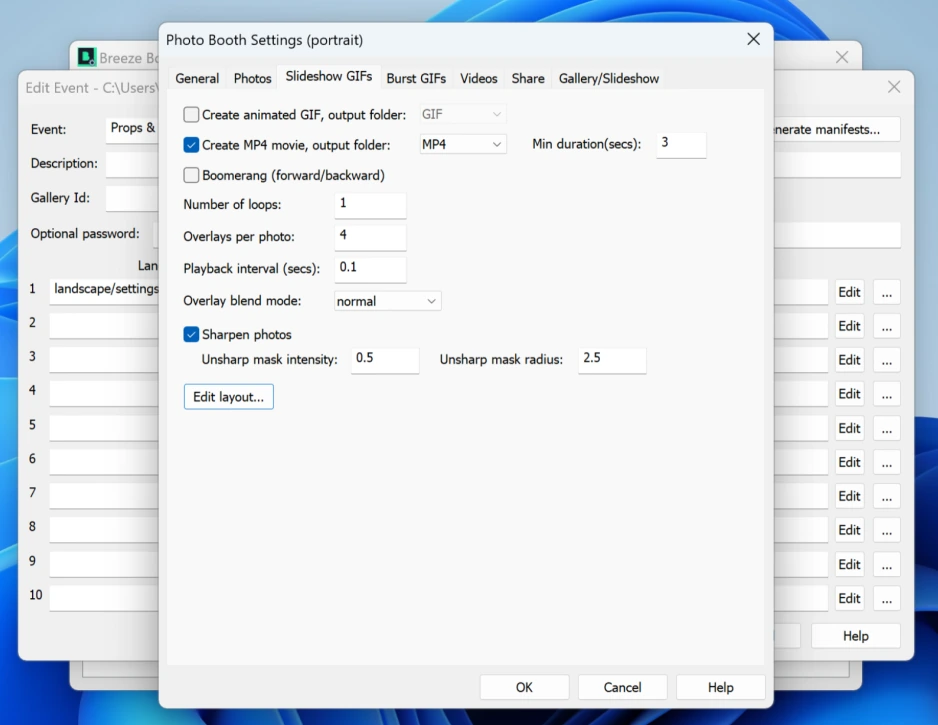
Burst GIFs capture rapid frame sequences with configurable intervals (as fast as ~0.05 seconds per frame), and Slideshow GIFs assemble multi-shot sessions into animated outputs with frame-by-frame animated overlays.
Source: Breeze Booth
The difference in output scope reflects each platform’s target operator. Simple Booth covers the formats most rental companies and marketers need, with the emphasis on polish and ease of configuration. Breeze Booth covers a broader range of specialized formats (360, slow-motion, robot video, audio guest books) for operators building novel booth concepts.
AI effects and image processing
Both platforms have invested in AI, but their architectures differ.
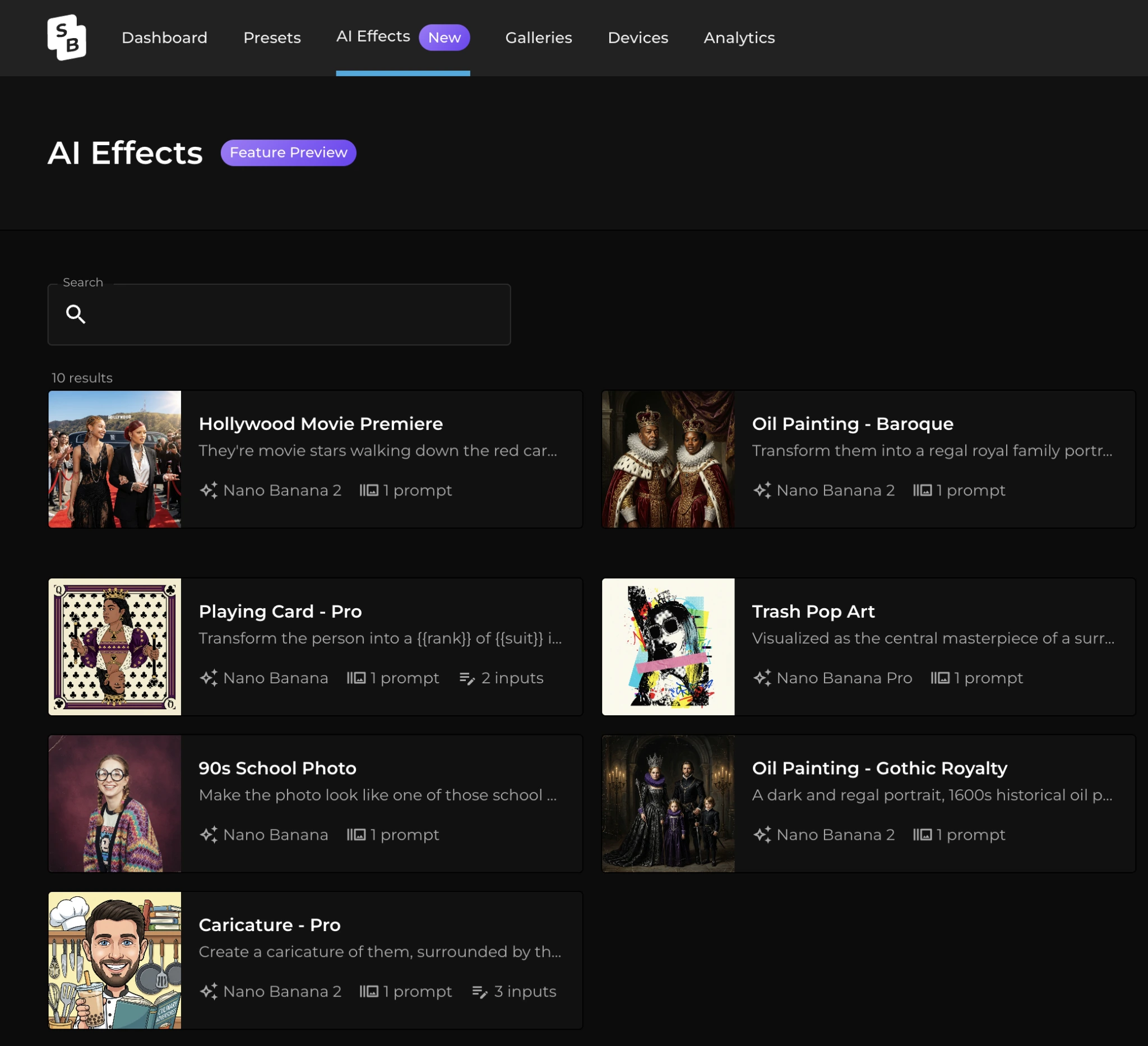
Simple Booth uses credit-based AI Effects powered by Nano Banana models that transform captured photos using text prompts. Three model tiers (Nano Banana 1, 2, and Pro) balance speed, quality, and group size, consuming 1×, 2×, or 3× credits at $0.10 each.
Source: Simple Booth
The platform preserves identity and likeness automatically, so guests stay recognizable regardless of the artistic transformation applied. Operators can test prompts outside of booth mode at zero credit cost, iterating freely before an event.
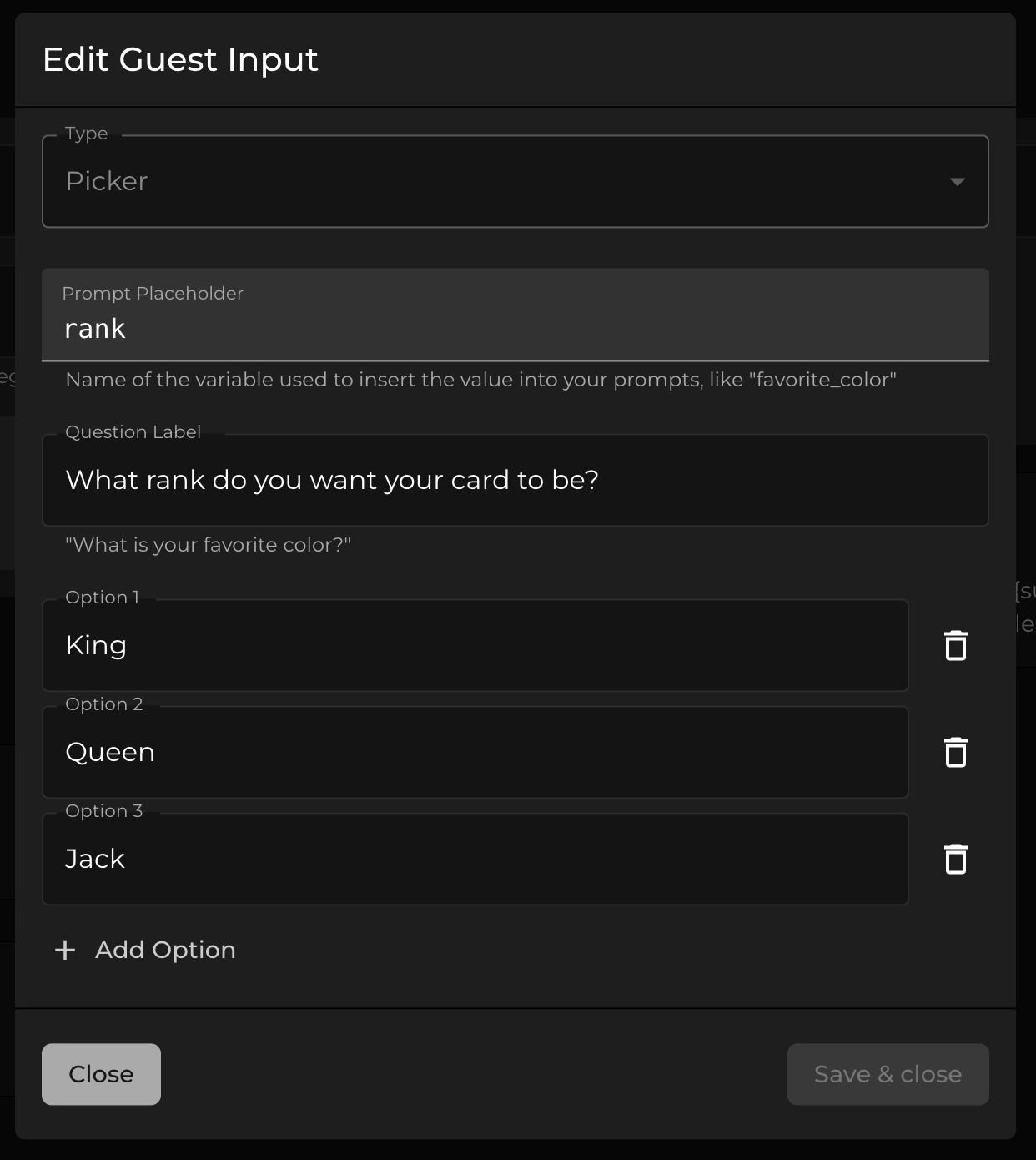
The Guest Input system (Pro/Select) lets participants answer questions that inject directly into the AI prompt as template variables, producing personalized outputs per guest.
Source: Simple Booth
AI-Generated Layout Images let operators generate graphic design elements (borders, themed frames) inside the Layout Designer at no credit cost. Purchased credits do not expire, reducing risk for operators with unpredictable event calendars.
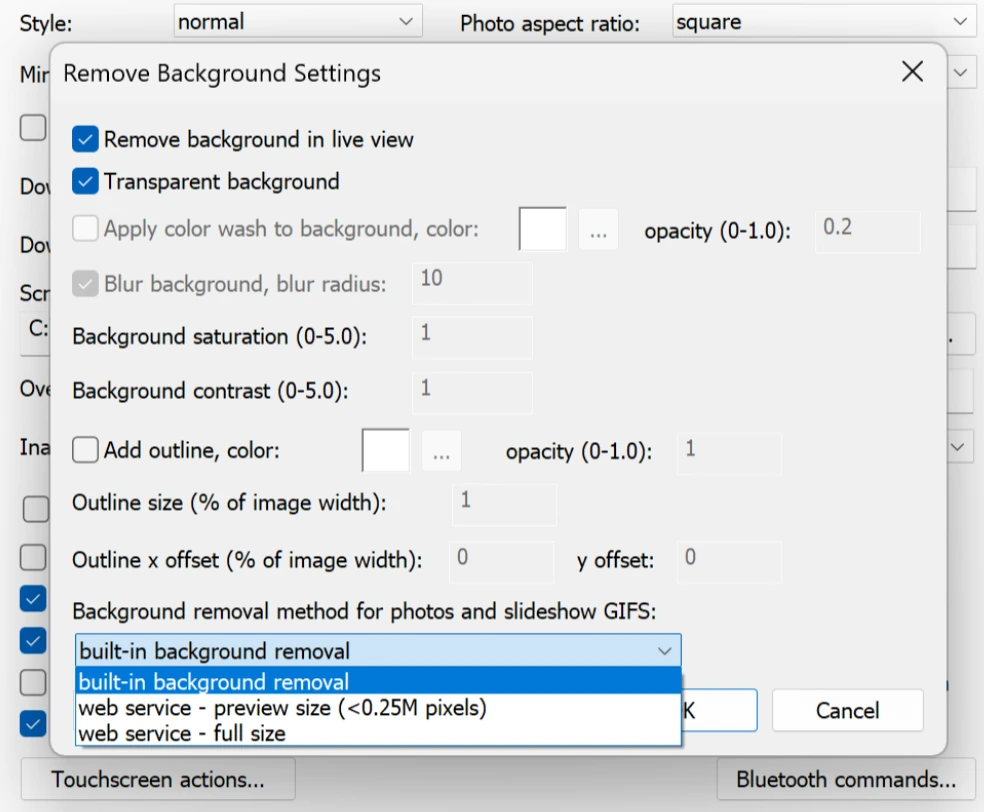
Breeze Booth uses a dual-tier architecture. On-device AI background removal runs locally on the iPad with no internet, no credits, and no extra cost, covering live view, photos, GIFs, and video.
Source: Breeze Booth
Cloud-based effects run through Breeze FX, a separate service offering OpenAI GPT-4o-powered image generation, Face Swap, Cartoon conversion in nine anime-inspired styles, skin smoothing, head extraction, and AI content moderation that scans for nudity, weapons, and other flagged content before output.
Breeze FX operates on a per-image credit system with costs ranging from $0.032 per image (Face Swap) to $0.455 per image (GPT Image generation), separate from the Breeze Booth subscription.
The GPT Image integration supports survey token injection into AI prompts, similar to Simple Booth’s Guest Input system. Multiple AI models (OpenAI GPT-4o, Google Gemini, BytePlus Seedream) are available under a single credit pool. Processing time is typically 10 to 60 seconds depending on the effect.
Simple Booth’s advantage is the integrated workflow: AI effects feed directly into the Layout Designer, so brand overlays composite on top of AI-generated photos in a single pipeline. Breeze Booth’s advantage is the breadth of specialized AI models (face swap, cartoon styles, content moderation) and the always-available on-device background removal that works without internet.
Sharing, galleries, and data capture
How guests receive their photos, and what data operators collect, shapes the business value of each platform.
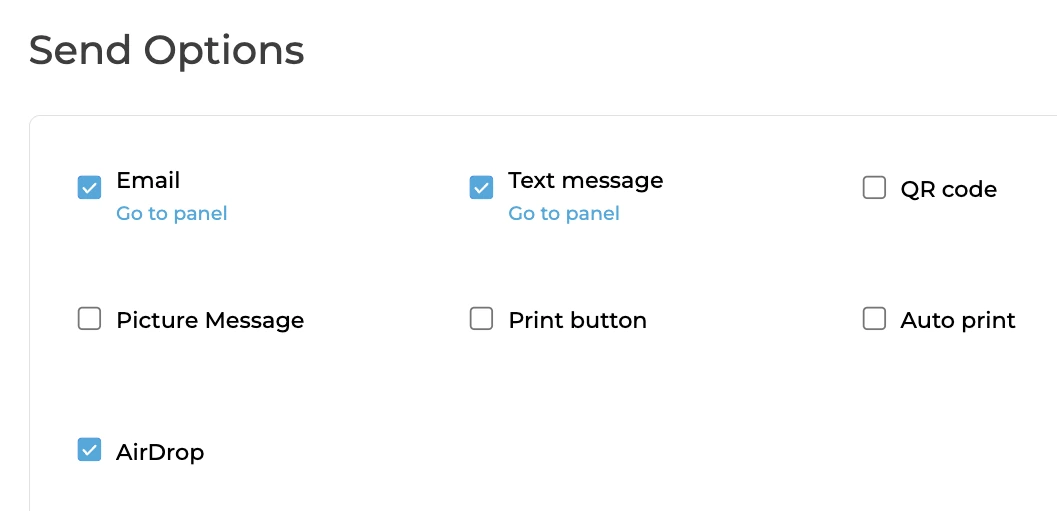
Simple Booth delivers photos via QR code, email, SMS, AirDrop, and WhatsApp. WhatsApp delivery, added in HALO 5.0, opens international markets where SMS-only systems fall short.
Source: Simple Booth

Each event generates an online gallery with configurable privacy levels (Public, Unlisted, Private), custom hashtags, and header images. Any public gallery converts into a Live Feed display for TV or projector with a single tap.
Source: Simple Booth
Lead capture is where Simple Booth stands apart. The in-app data capture form collects up to 6 standard fields on Pro (email, first name, last name, phone, postal code, date of birth) and up to 10 custom fields on Select, including checkboxes and required legal terms.
Data syncs to MailChimp natively or flows to custom CRMs via the Open API (Pro+). The analytics dashboard tracks participants, gallery views, social share clicks, and Facebook reactions over time.
G7 Entertainment Marketing has used Simple Booth for 10+ years, generating 136,000+ fan interactions across their event marketing campaigns. (Simple Booth)

Breeze Booth shares media via SMS, custom HTML email, MMS (US and Canada), and QR code. The cloud delivery layer runs through Breeze Cloud, which provides real-time Galleries (event-level) and Microsites (session-specific mini-galleries, useful for video files too large for SMS or email). Mission Control provides a live cross-event dashboard for monitoring multiple booths at once.
Source: Breeze Booth
Breeze Booth’s survey system collects text fields, checkboxes, and radio buttons with configurable mandatory/optional status.
However, survey data exports as tab-delimited CSV only. No native MailChimp, HubSpot, or Zapier connector is documented. Breeze Cloud Pro ($39.99/month) adds webhooks and API access that can push data to Zapier, Make, MailChimp, and MailerLite, but this requires additional cost and configuration.
The contrast is clear: Simple Booth treats data capture as a core marketing function with native CRM integration and analytics. Breeze Booth treats data capture as a survey input that drives the creative output (personalized prints via tokens), with post-event marketing left to the operator’s own tooling.
Pricing comparison
Simple Booth uses a per-license subscription model with three billing cycles (weekly, monthly, annual) across five tiers:
| Plan | Weekly | Monthly | Annual |
|---|---|---|---|
| Lite | $14.99 | $29.99 | $289.99 |
| Core | $24 | $49 | $490 |
| Plus | $49 | $99 | $990 |
| Pro | - | $149 | $1,490 |
| Select | - | $249 | $2,490 |
The Lite tier includes ads and excludes custom branding, DSLR support, analytics, and lead capture. Professional use starts at Core ($24/week or $490/year), which unlocks DSLR connectivity, background replacement, video, and AI effects. Pro adds lead capture, API access, phone support, and moderation.
Each plan includes one device license. Additional devices require add-on licenses at a discount (e.g., Core add-ons: $36/month or $360/year each). A 5-device Core operation on annual billing costs $490 + (4 × $360) = $1,930/year in software.
HALO hardware kits sell separately starting at approximately $2,090 (Event Kit with iPad and Simple Care protection). AI effect credits cost $0.10 each, purchased in bulk, and do not expire. A 7-day free trial is available.
Breeze Booth uses a simpler per-device subscription:
- Monthly: $49 per device
- Annual: $499 per device (approximately $41.58/month)
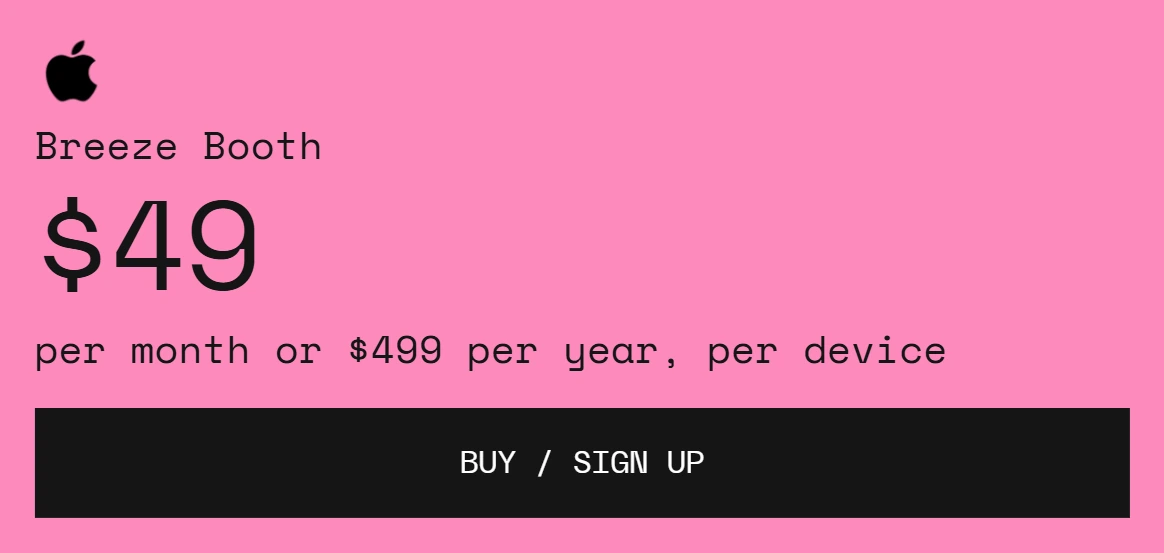
There are no tiered feature plans. Every subscriber gets the full feature set. The same 5-device operation costs $2,495/year (5 × $499) in base software.
The total cost picture changes when you add cloud and AI services. Breeze Cloud Basic is free with any license (galleries, microsites, QR sharing, 50 GB storage). Breeze Cloud Pro costs $39.99/month for webhooks, API access, and per-event custom domains.
Breeze FX bills per image (from $0.032 for Face Swap to $0.455 for GPT Image generation). An operator running AI effects at 100 events averaging 50 photos each could spend $1,600–$2,275 annually on FX credits alone, depending on effect type.
Breeze Booth offers a free trial with no time limit: all features are accessible, but output is watermarked after 10 sessions per day. Simple Booth’s trial is limited to 7 days but provides an unwatermarked experience.
For operators focused on core photo booth functionality, Breeze Booth’s flat $499/year per device with all features included is straightforward. For operators who need lead capture, CRM integration, analytics, and marketing tools, Simple Booth bundles those into the subscription while Breeze Booth requires assembling separate products.
Kurt Nielson Photography found that Simple Booth “paid for itself pretty quickly. Now it’s just extra money coming in.” (Simple Booth)
Simple Booth vs Breeze Booth: Which should you choose?
The choice depends on your business model, technical capability, and what you need the booth to do beyond taking photos.
Choose Simple Booth if:
- You want a complete hardware-and-software system from a single vendor
- Fast setup and unattended operation are essential to your business model
- Lead capture, CRM integration, and marketing analytics drive your revenue
- You prefer an in-app design tool over external graphic design software
- You need a Virtual Booth product for remote or hybrid events
- Your team values quick onboarding with minimal technical training
- WhatsApp and AirDrop delivery matter for your market
- You want tiered plans that scale from personal use to enterprise compliance
Start your free 7-day trial and see why 30,000+ customers trust Simple Booth.
Arizona Opera grew its email list by 1,000 addresses in just a few events using Simple Booth’s lead capture. (Simple Booth)
Choose Breeze Booth if:
- You need pixel-perfect control over every screen in the guest experience
- You build specialized booth formats (360 video, Glam Robot, trading cards, payment kiosks)
- Your business requires integrated payment processing (Nayax, Stripe QR, coin/bill acceptors)
- You want 100% offline operation with no data sent to any third party
- GDPR compliance and data privacy are non-negotiable for your client base
- You already own your own booth hardware and need flexible software
- You value a single flat-rate plan with all features included
- You’re comfortable with a steeper learning curve in exchange for deeper customization
Try Breeze Booth with the unlimited free trial.
These platforms serve the same industry from opposite ends. Simple Booth reduces the distance between unboxing and running a profitable event. Breeze Booth removes the ceiling on what an operator can build. The right choice isn’t about which platform is more capable in absolute terms. It’s about which capability profile matches your business.
For rental companies scaling on volume and operators who treat the photo booth as a marketing channel, Simple Booth’s integrated system, data pipeline, and operational simplicity deliver the most value per dollar.
For technical operators building custom brand activations, interactive kiosks, or novel booth formats that demand design control down to the pixel, Breeze Booth’s open architecture and hardware flexibility are hard to match.
Simple Booth vs Breeze Booth FAQ
What is the main difference between Simple Booth and Breeze Booth?
Simple Booth is a turnkey photo booth system combining proprietary HALO ring-light hardware, a cloud-connected iPad app, and built-in marketing tools like lead capture and analytics. Breeze Booth is photo booth software that gives operators full creative control over every screen in the guest experience, with broader hardware compatibility and deeper customization but a steeper learning curve.
Which platform is easier to set up and learn?
Simple Booth is significantly easier. The HALO hardware sets up in under a minute without tools, and the app’s preset editor, Layout Designer, and Preflight Check are designed for operators without technical backgrounds.
Breeze Booth requires configuring custom screen assets, touchscreen action zones, hardware connections, and a token system through a separate web-based Event Editor, demanding real technical investment before running a live event.
Does either platform work without an internet connection?
Both support offline operation, but in different ways. Simple Booth queues sessions in an offline upload queue and delivers them when connectivity returns. Breeze Booth can run 100% offline with no personal data or images sent to any third party (including Breeze Software itself), making it suitable for environments with strict data privacy requirements or no internet access at all.
Which platform has better lead capture and marketing features?
Simple Booth has a clear advantage here. It captures lead data at an 87%+ opt-in rate, integrates natively with MailChimp, offers an Open API for custom CRM delivery, and provides an analytics dashboard tracking participants, gallery views, and social shares.
Breeze Booth collects survey data that exports as CSV, with no native CRM integrations; webhook-based delivery to marketing platforms requires the Breeze Cloud Pro add-on at $39.99/month.
Can Breeze Booth handle payment processing at unattended kiosks?
Yes. Breeze Booth integrates with Nayax VPOS contactless card readers (supporting tap-to-pay, chip/PIN, Apple Pay, and Google Pay), Stripe QR code payments, and MDB-compatible coin and bill acceptors. It supports pay-per-print, pay-per-session, and pay-per-share pricing models. Simple Booth does not offer integrated payment processing.
How do the AI effects compare between the two platforms?
Simple Booth uses Nano Banana AI models at $0.10 per credit with automatic identity preservation, zero-cost prompt testing, and credits that never expire.
Breeze Booth uses Breeze FX, a separate cloud service with per-image pricing ranging from $0.032 (Face Swap) to $0.455 (GPT Image generation), plus on-device AI background removal included free. Breeze FX offers more specialized AI models (face swap, nine cartoon styles, content moderation), while Simple Booth integrates AI effects directly into its Layout Designer workflow.
Does Simple Booth require HALO hardware to work?
No. The HALO iPad app runs on any compatible iPad without HALO hardware. The HALO ring-light kits provide studio-grade lighting and a professional chassis, but the software works independently using the iPad’s built-in camera and lighting. Canon and Sony DSLR and mirrorless camera connectivity is available on the Core plan and above, with both wired USB and wireless WiFi connection options.
Which platform supports more capture formats?
Breeze Booth supports a wider range of specialized formats including 360-degree video, slow-motion, Glam Robot sequences, audio guest books, and animated photos alongside standard photos, GIFs, and video. Simple Booth covers photos, GIFs, Rebound boomerang clips, and video, plus a browser-based Virtual Booth that Breeze Booth does not offer.
Keep reading
 Showdowns
Simple Booth vs Darkroom Booth: Which Photo Booth Software Fits Your Business in 2026?
iPad turnkey vs Windows DSLR veteran. Simple Booth or Darkroom Booth?
 Showdowns
Simple Booth vs Flassh: Which Photo Booth Platform Fits Your Events in 2026?
Integrated system vs speedy setup. Simple Booth or Flassh?
 Showdowns
Simple Booth vs LumaBooth: Which Photo Booth Software Fits Your Business in 2026?
Turnkey hardware vs budget cross-platform app. Simple Booth or LumaBooth?