Simple Booth vs POV Camera: Professional Photo Booth or Crowdsourced Guest Photos in 2026?
If you’re comparing Simple Booth and POV Camera for your next event, you’re choosing between two different approaches to event photography:
- Do you want a dedicated photo station that produces branded images, or a distributed camera experience where every guest captures candid moments from their own phone?
- Is your priority lead capture, data collection, and marketing ROI, or collecting as many guest perspectives as possible?
- Do you need a physical setup with studio lighting and AI effects, or a no-hardware solution that works from a single QR code scan?
- Are you running brand activations and corporate marketing events, or weddings, parties, and social gatherings?
- Do you want an operator-managed system with offline resilience, or a self-service tool that requires no staff at all?
In short, here’s what we recommend:
POV Camera is a digital disposable camera app that lets guests scan a QR code and start shooting from their own phone, no app download required. The experience recreates the charm of physical disposable cameras with per-guest shot limits and a scheduled photo reveal that turns the shared gallery into its own event.
With a 4.9-star rating from 28,433 App Store reviews and per-event pricing starting at $4.99 for 25 guests, POV works well for couples, party hosts, and social event organizers who want candid, multi-perspective photos without managing any equipment.
Simple Booth is a photo booth platform that pairs subscription software with HALO ring-light hardware to deliver branded photo experiences.
With 30,000+ customers and 40 million+ moments captured, it serves event rental companies, venue operators, and brand marketers who need lead capture (87%+ opt-in rates), AI photo effects, DSLR camera support, analytics, and a browser-based Virtual Booth for digital activations.
Pricing starts at $24/week for rental businesses (Core plan), with a $14.99/week Lite tier for personal use and hardware kits sold separately.
These aren’t competing products in the traditional sense. They solve different problems using different methods, and many event organizers could benefit from both.
Simple Booth vs POV Camera at a glance
| POV Camera | Simple Booth | |
|---|---|---|
| Core Approach | Crowdsourced guest phone photography | Professional photo booth station |
| Hardware Required | None (guests use their own phones) | iPad + HALO ring-light kit (or Virtual Booth for no-hardware) |
| Guest Experience | Scan QR, shoot from anywhere at event | Walk up to booth, pose, receive polished photo |
| Photo Style | Candid, multi-perspective, disposable camera aesthetic | Studio-lit, branded, AI-enhanced |
| Capture Modes | Still photos only | Photos, GIFs, Rebound clips, video |
| Lead Capture | Not available | Built-in with 87%+ opt-in rate |
| AI Effects | Not available | AI transformations, background replacement, glam smoothing |
| Offline Mode | Not available (internet required) | Queues sessions and delivers when connectivity returns |
| Live Display | Live Slideshow (business tier) | Live Feed (all plans) |
| Integrations | None | MailChimp, Dropbox, Open API (Pro+) |
| Pricing Model | Per-event flat fee by guest count | Per-device subscription (weekly/monthly/annual) |
| Starting Price | Free (up to 10 guests); $4.99 for 25 guests | $14.99/week (Lite); hardware kits sold separately |
| Best For | Weddings, parties, social events | Rental businesses, venues, brand activations |
The biggest difference: Guest phones vs dedicated booth
Both platforms capture photos at events, but their methods differ, and that difference shapes everything about how they work.
POV Camera distributes the camera to every guest’s pocket. Guests scan a QR code and get a disposable camera experience on their phone.
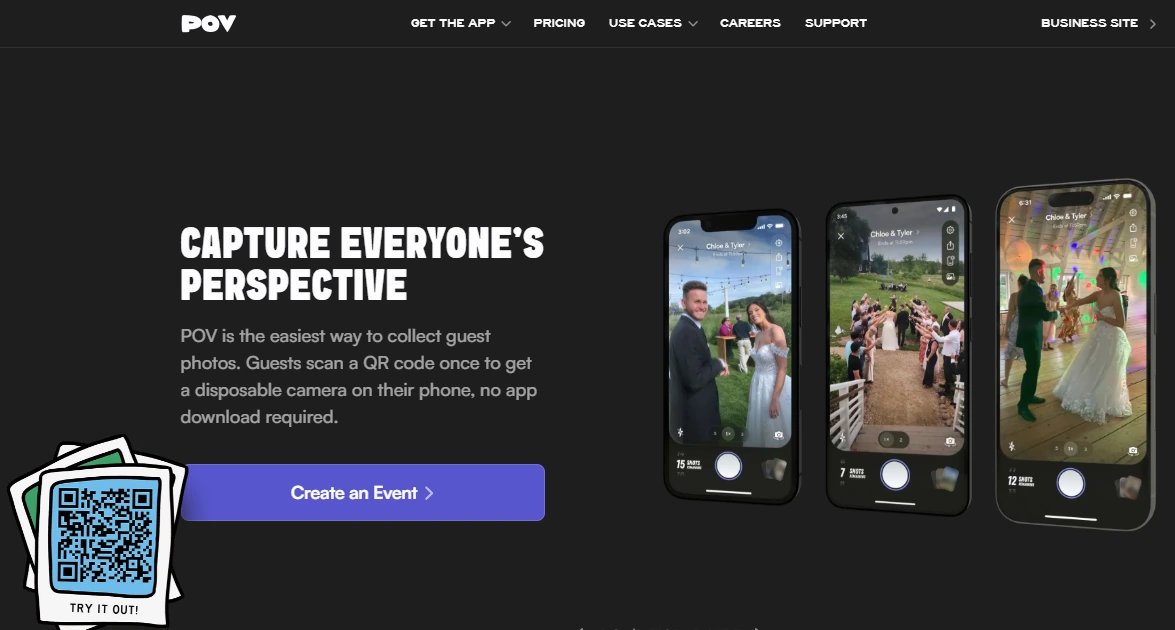
On iOS, this loads via Apple App Clips (a lightweight camera that appears instantly without an App Store download). On Android, guests access a web-based experience. The result is dozens or hundreds of candid, unposed photos taken from every angle of the event by the people living it.
The design mirrors physical disposable cameras: a per-guest shot limit creates scarcity that makes guests more intentional about what they photograph, and a scheduled photo reveal builds anticipation by keeping the gallery hidden until a chosen moment. The host configures the event, distributes the QR code, and guests handle the rest. No equipment to set up, no operator to manage, no staff to hire.
Simple Booth concentrates the experience at a single station. The HALO hardware kit (a machined aluminum ring light with 112 LEDs producing up to 2,100 lumens) mounts an iPad and creates even lighting in any venue. Guests walk up, pose, and receive a polished, branded photo they can share immediately via QR code, SMS, email, AirDrop, or WhatsApp.
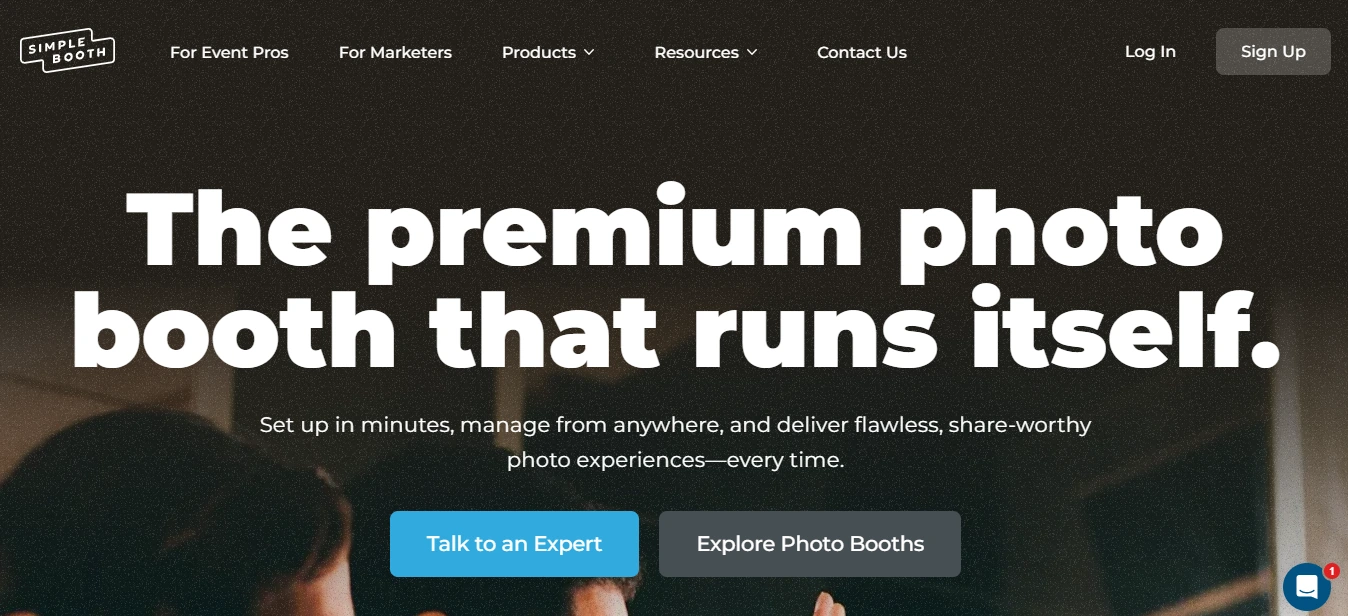
The design philosophy is professional control. Operators configure everything from the Layout Designer (custom overlays, text, logos, gradients) to AI Effects that transform photos using text prompts. The booth captures lead data during the photo flow, feeds a real-time analytics dashboard, and syncs everything to the cloud. The output is a marketing asset, not just a memory.
The distinction matters because the two approaches produce different kinds of value. POV captures volume and authenticity: the moment your grandmother photographed the dance floor, the angle your friend found of the ceremony. Simple Booth captures quality and data: a branded image paired with a name, email, and phone number that flows into your marketing pipeline.
POV excels at easy guest participation
POV Camera built its product around a single principle: the fewer steps between a guest and a camera, the more photos you collect.
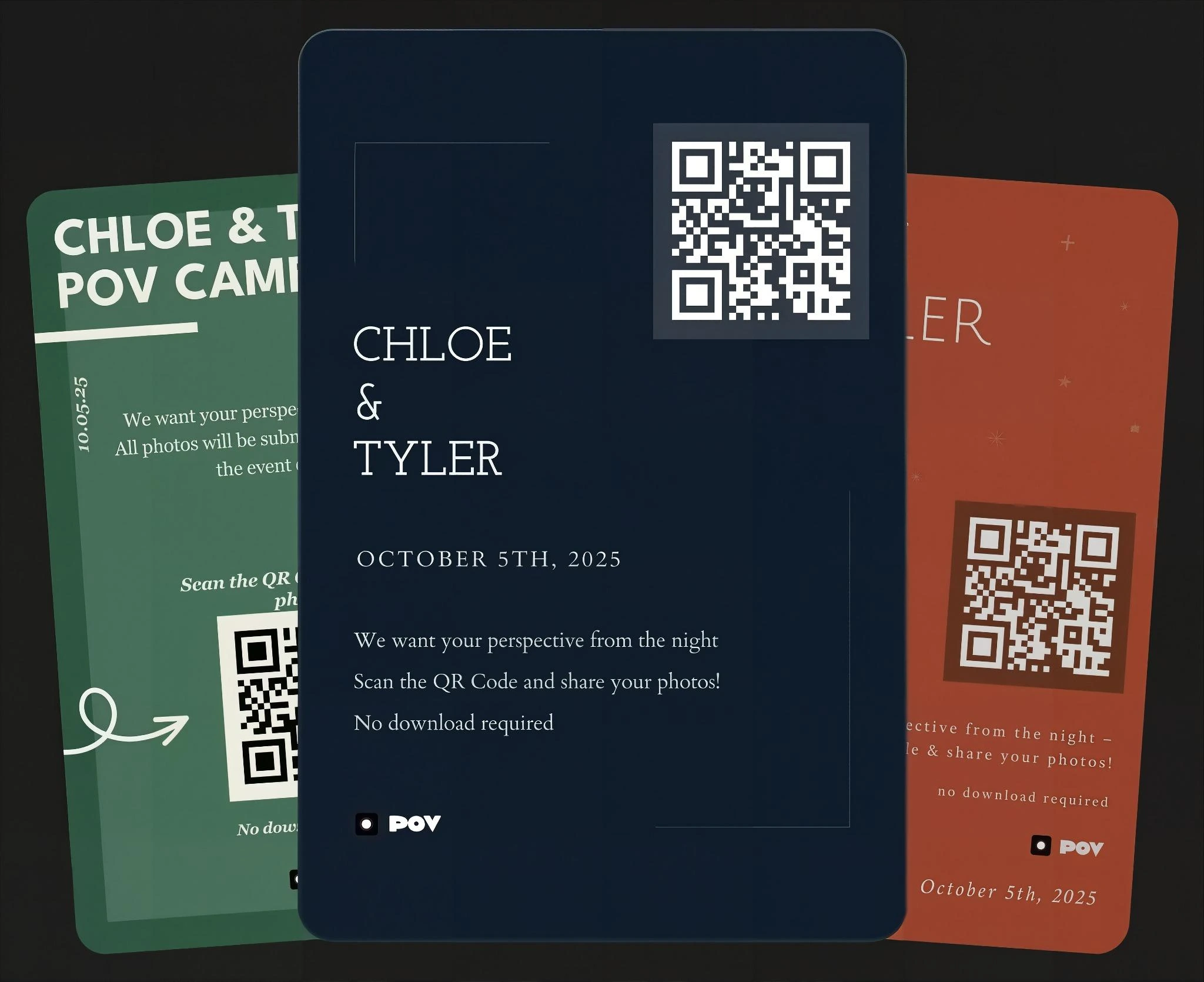
The three join paths (QR code, shareable link, and the POV Block NFC device at $14.99) all land guests in the same camera experience without requiring an account, a download, or even a name. App Store reviewers consistently praise this accessibility: one host reported that guests found it “very easy and user-friendly, even our older guests”.
Source: POV Camera
The scheduled photo reveal is a feature that generic photo-sharing tools lack. Instead of photos appearing immediately, the host picks a date and time when the full gallery becomes visible to everyone. One reviewer described using it for a birthday surprise: “We set the date for him to view them a few days later on his actual birthday.” This turns the gallery into a shared experience rather than a passive archive.
For business events, POV offers a Business Essentials Package that adds Custom Branding (logo overlays on every photo), Live Slideshow (real-time photo display on any screen via browser), and 24/7 Customer Support. The branding overlays are swappable between conference sessions, so multi-sponsor events can rotate branding as the program changes.
Hosts can moderate at any time, reviewing, deleting, sorting, and favoriting photos from the gallery dashboard, with changes reflected on the Live Slideshow immediately. Privacy controls let hosts choose whether guests see all photos or only their own, and galleries have indefinite access with no expiration.
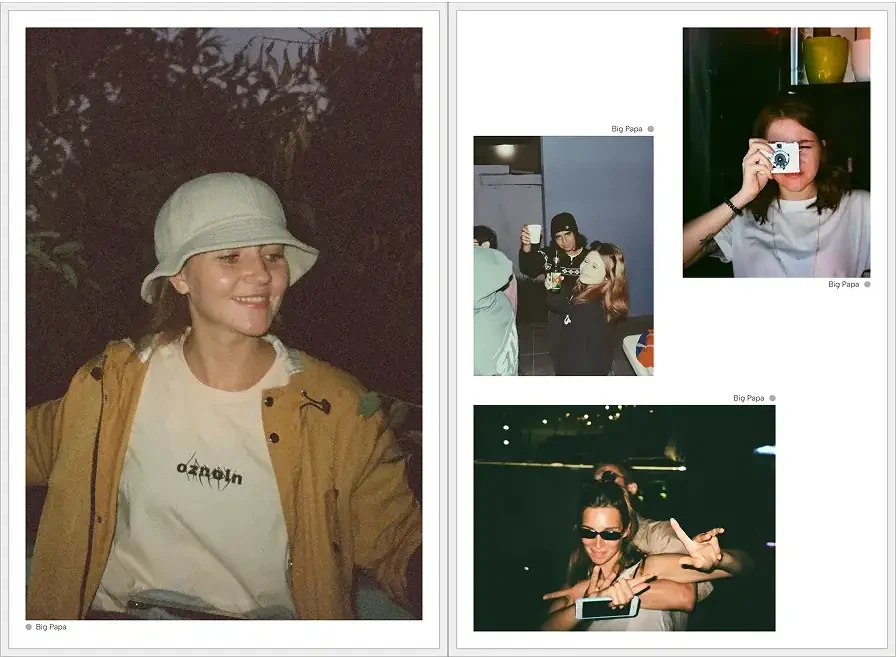
The Photobooks product extends the digital experience into a physical keepsake: a 6x9” softcover book starting at $19.99, designed by POV’s team without any host input. The intentional no-preview policy (described as “a mystery until it arrives at your door”) mirrors the disposable camera brand. Shipping is limited to the United States including Alaska, Hawaii, and Puerto Rico.
Source: POV Camera
Where POV shows limitations is in the features it deliberately omits. There is no lead capture, no analytics dashboard, no CRM integration, no API, and no offline mode (internet is required for both joining and uploading). For social events where the goal is “get everyone’s photos in one place,” these gaps don’t matter. For marketing teams measuring ROI, they’re deal-breakers.
Simple Booth delivers professional quality and marketing data
Simple Booth treats every photo booth session as both an entertainment moment and a marketing touchpoint.
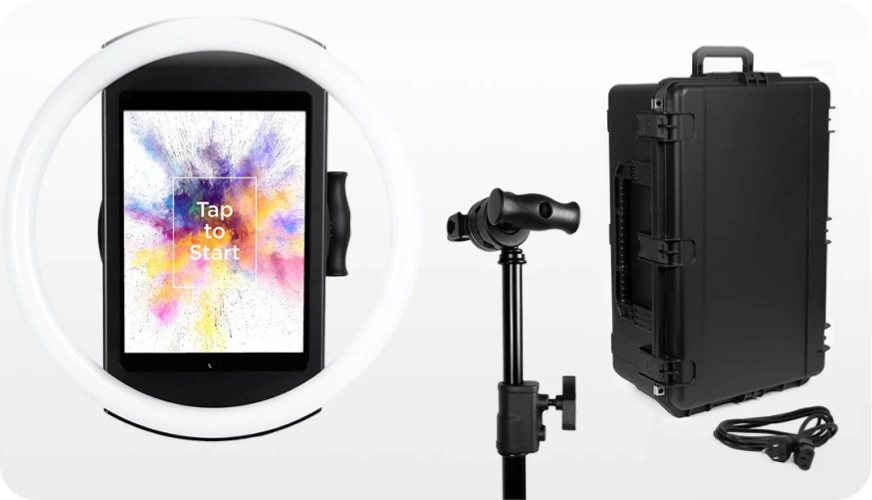
The HALO hardware produces consistent results regardless of venue lighting. The ring light’s diffuser creates even illumination for groups standing 6-8 feet back, and the LEDs are rated for 50,000 hours of operation. Setup takes under one minute: the iPad snaps in via a tool-less faceplate and charges through a concealed built-in USB-C cable. The full Event Kit travels in a rolling case at 49 lbs.,
Source: Simple Booth
On the software side, capture options go well beyond still photos. The HALO app supports photo strips, custom layouts, GIFs, Rebound boomerang clips, and full-length video (5 to 120 seconds).
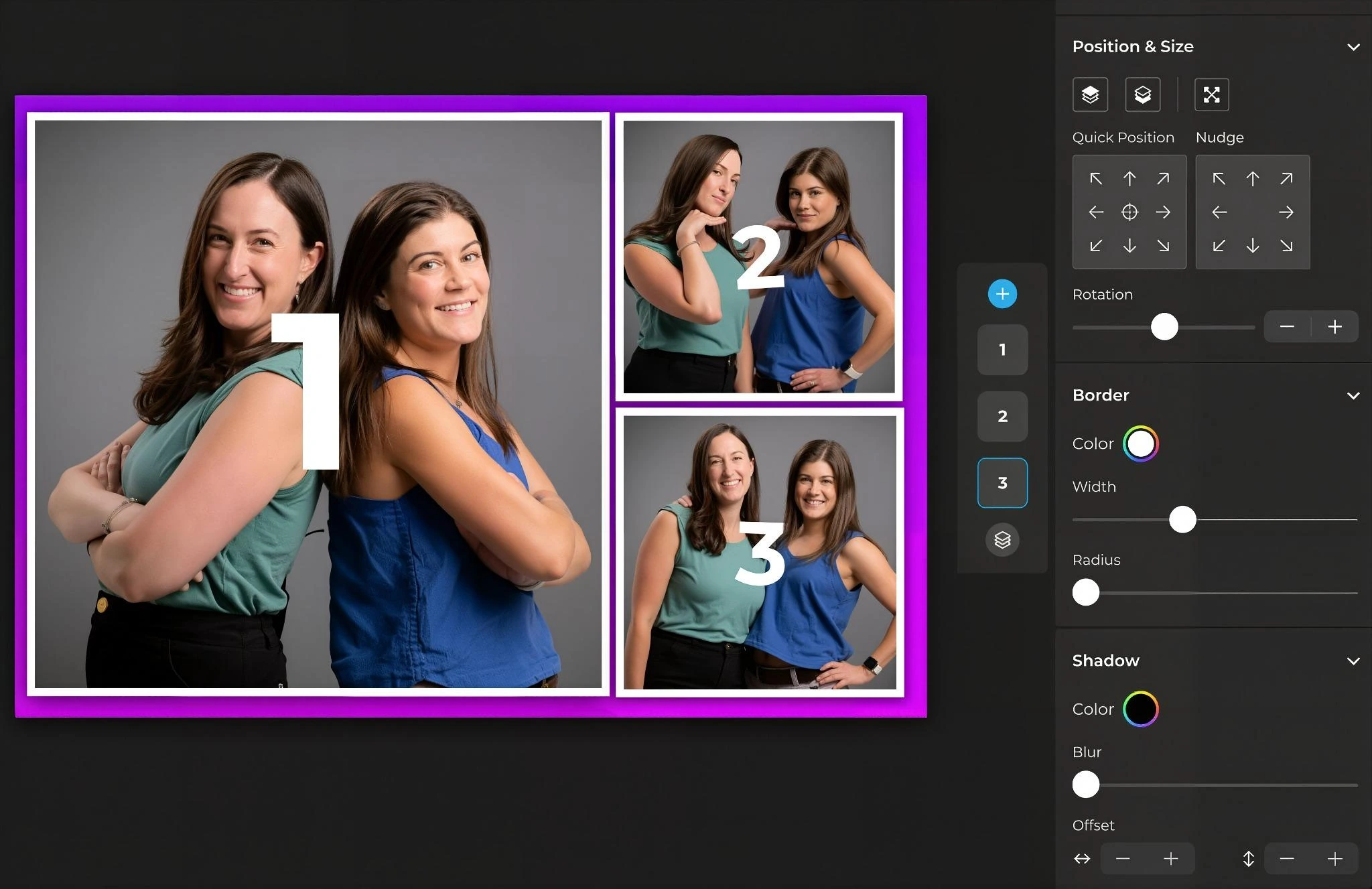
The Layout Designer (introduced in HALO 5.0) lets operators build custom templates with layers, fonts, gradients, QR codes, and logo placements, all inside the app without external design software. Guest-editable text layers let participants type names or captions directly onto their photo before sharing.
Source: Simple Booth
The AI Photo Booth adds another dimension. Three Nano Banana AI models transform captured photos using text prompts while preserving guest identity and likeness.
Operators can assign unique prompts to each frame in a multi-frame layout, creating comic-strip or narrative effects. Testing prompts outside of booth mode costs zero credits, so operators iterate freely before events. Credits cost $0.10 each and never expire.
Data capture is where Simple Booth diverges most from POV. The platform collects guest information (email, name, phone, postal code) as a natural part of the photo delivery flow, achieving opt-in rates of 87 to 89%.
Data exports as CSV, syncs with MailChimp, or routes to a custom CRM via the Open API (Pro and Select plans). Analytics track participants, uploads, gallery views, social shares, and (on Select) demographic insights via face detection.
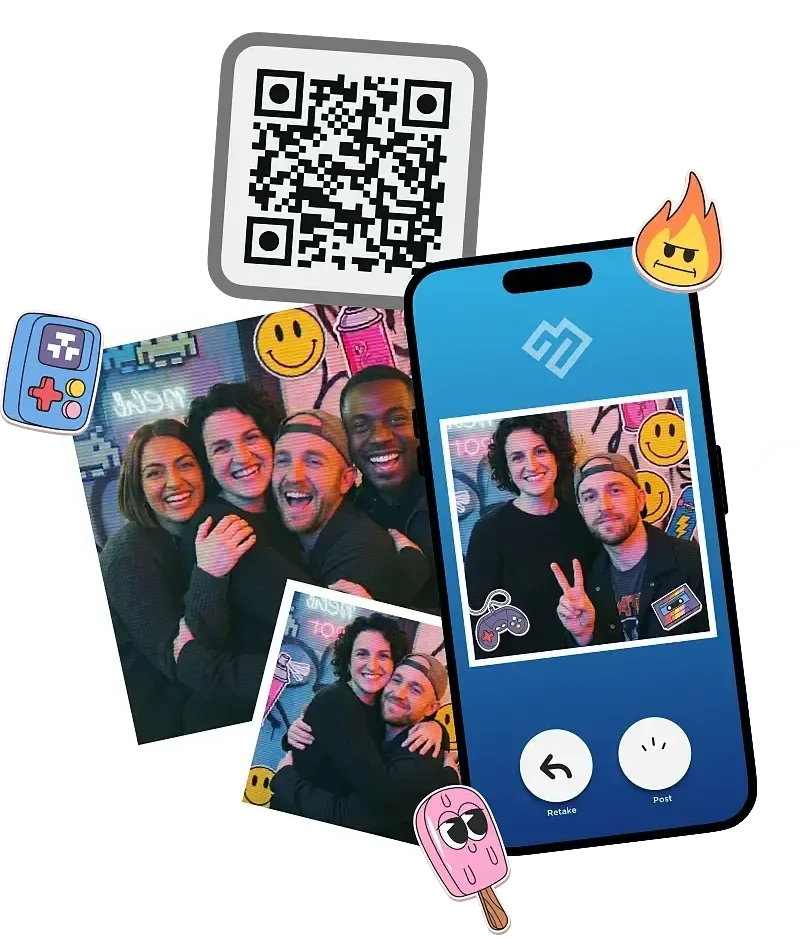
The Virtual Booth extends Simple Booth beyond physical hardware. Running in any browser with no app install required, it delivers branded photo experiences through QR codes or links, usable at virtual events, on product packaging, or as an always-on web campaign. It includes Magic Background Replacement, overlays, AI Effects, and the same data capture and analytics as the hardware booth.
Source: Simple Booth
An operational advantage worth noting is offline mode. The HALO app queues sessions when connectivity drops and delivers them when it returns. For venues with unreliable Wi-Fi (basements, outdoor sites, rural locations), this prevents the silent photo loss that internet-dependent tools risk.
Treetop Golf built 150,000 unique email addresses across their locations using Simple Booth’s lead capture as part of their permanent venue installation.
Event customization and host control
Both platforms give hosts control over the guest experience, but the depth and purpose of that control differ.
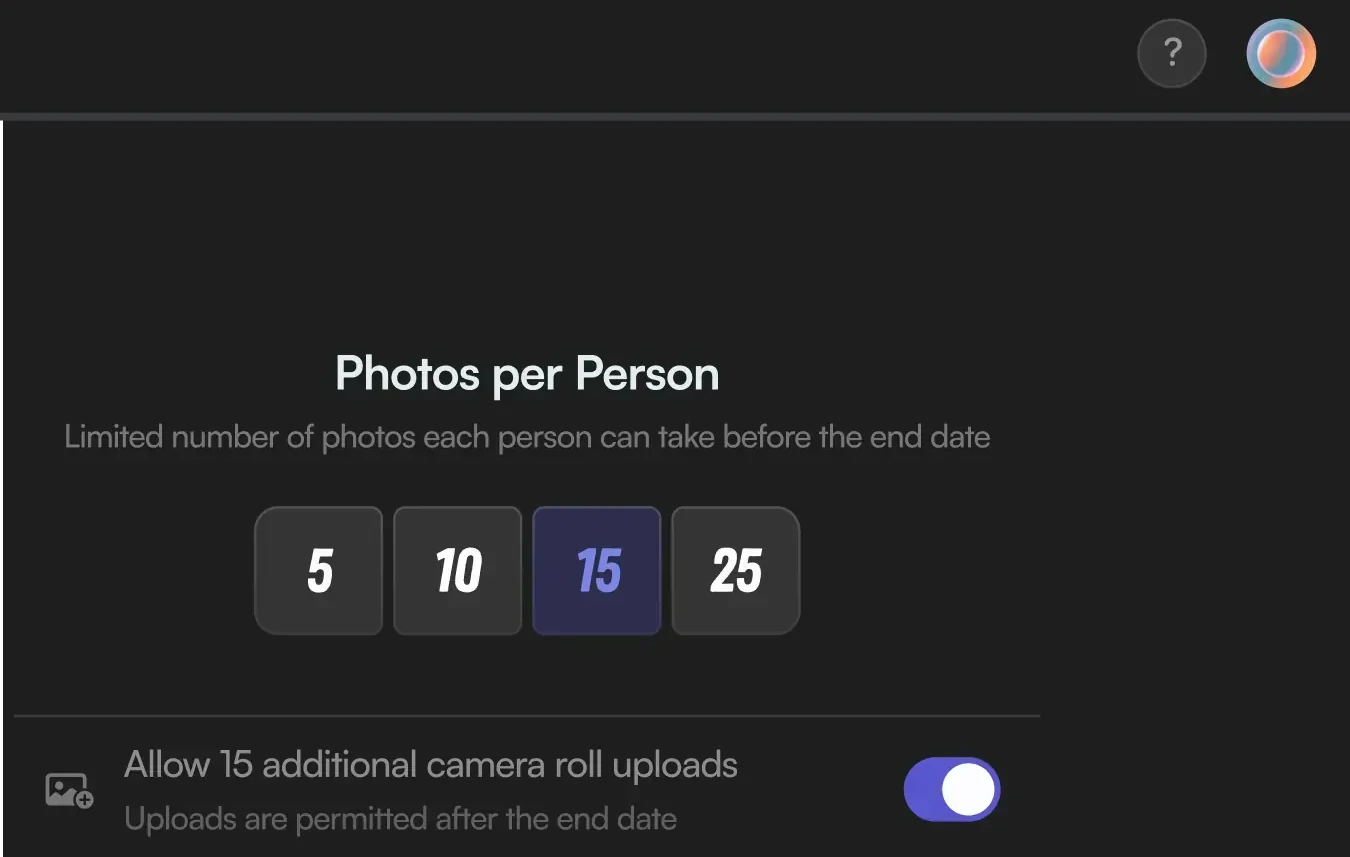
POV Camera focuses on shaping the photography behavior itself. Hosts pick a camera style, upload a cover image, set a per-guest photo cap, and schedule when photos become visible. The per-guest shot limit isn’t just storage management; it recreates the scarcity of a physical disposable camera, producing more intentional, varied contributions than an unlimited-upload tool would.
Source: POV Camera
Events can be purchased up to a year in advance, configured at any point, and kept private until the host shares the QR code (a “publish-now, share-later” model that decouples setup from event timing).
QR codes come from a library of styled, ready-to-print templates or can be custom-designed. Business users add graphic overlays to brand every photo, with the option to swap designs between conference sessions for multi-sponsor events.
Simple Booth offers deeper customization because the platform controls the entire capture-to-delivery pipeline. The preset editor presents the full booth flow visually (start screen, capture settings, photo processing, delivery method, and data capture form) as a single configurable sequence. Operators can build multiple presets for different events or different moments within the same event.
The Layout Designer goes beyond overlays into full graphic design: photo placement, text layers with font and color control, gradients, borders, and AI-generated layout images for creating design elements like themed frames on the fly. 60+ themes and 100+ digital props come included, and operators on Core and above can connect Canon and Sony DSLR and mirrorless cameras for higher image quality.
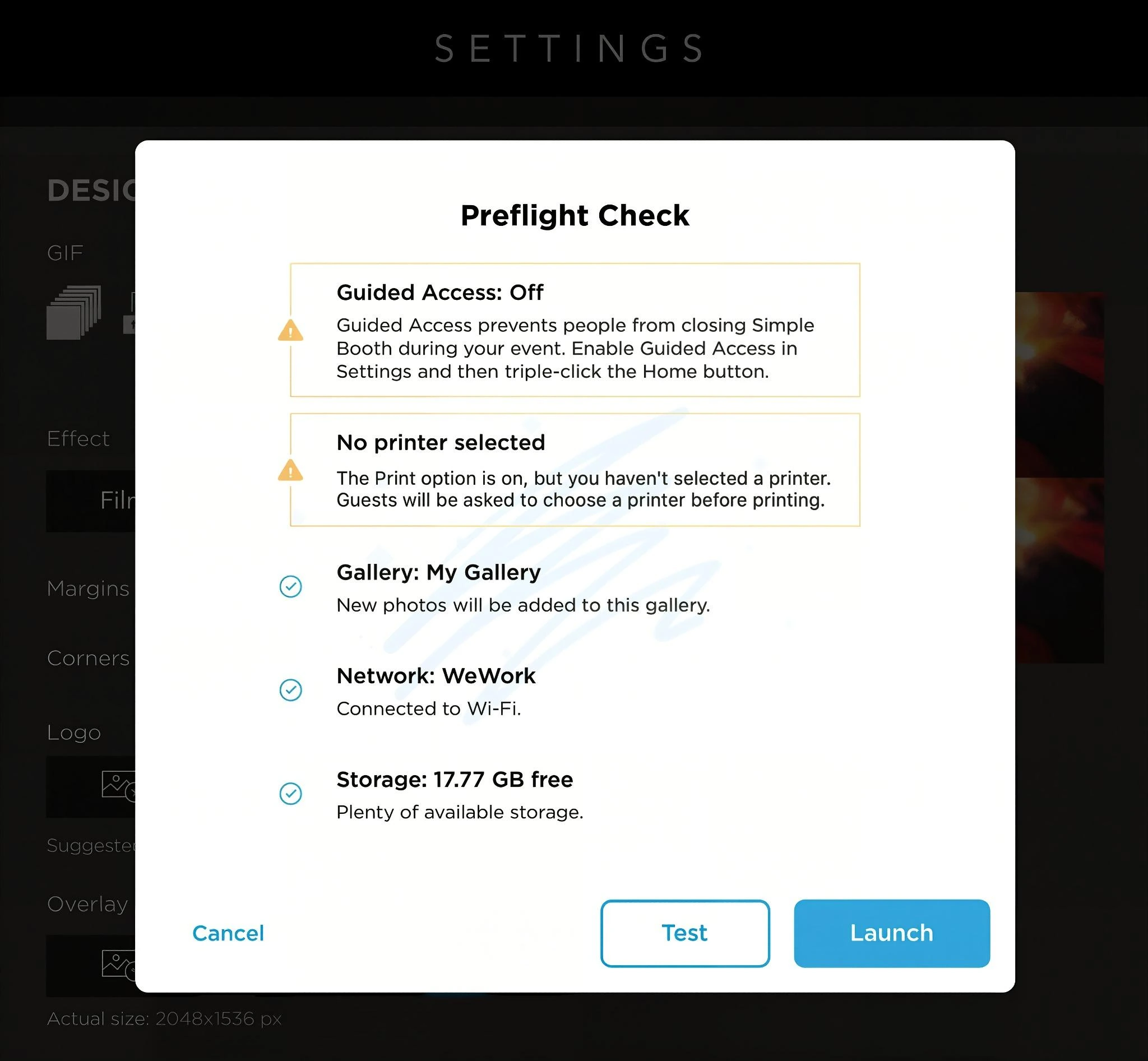
The Mission Control overlay (triggered by a two-finger pinch) lets operators monitor device health, adjust camera settings, and sync dashboard changes during live events without breaking the guest-facing interface. A Preflight Check screen catches configuration issues before launch.
Source: Simple Booth
G7 Entertainment Marketing has used Simple Booth for “10+ years” across their events, accumulating 136,000+ fan interactions through the platform.
Live display and gallery features
Both platforms offer real-time photo display and post-event galleries, with different capabilities.
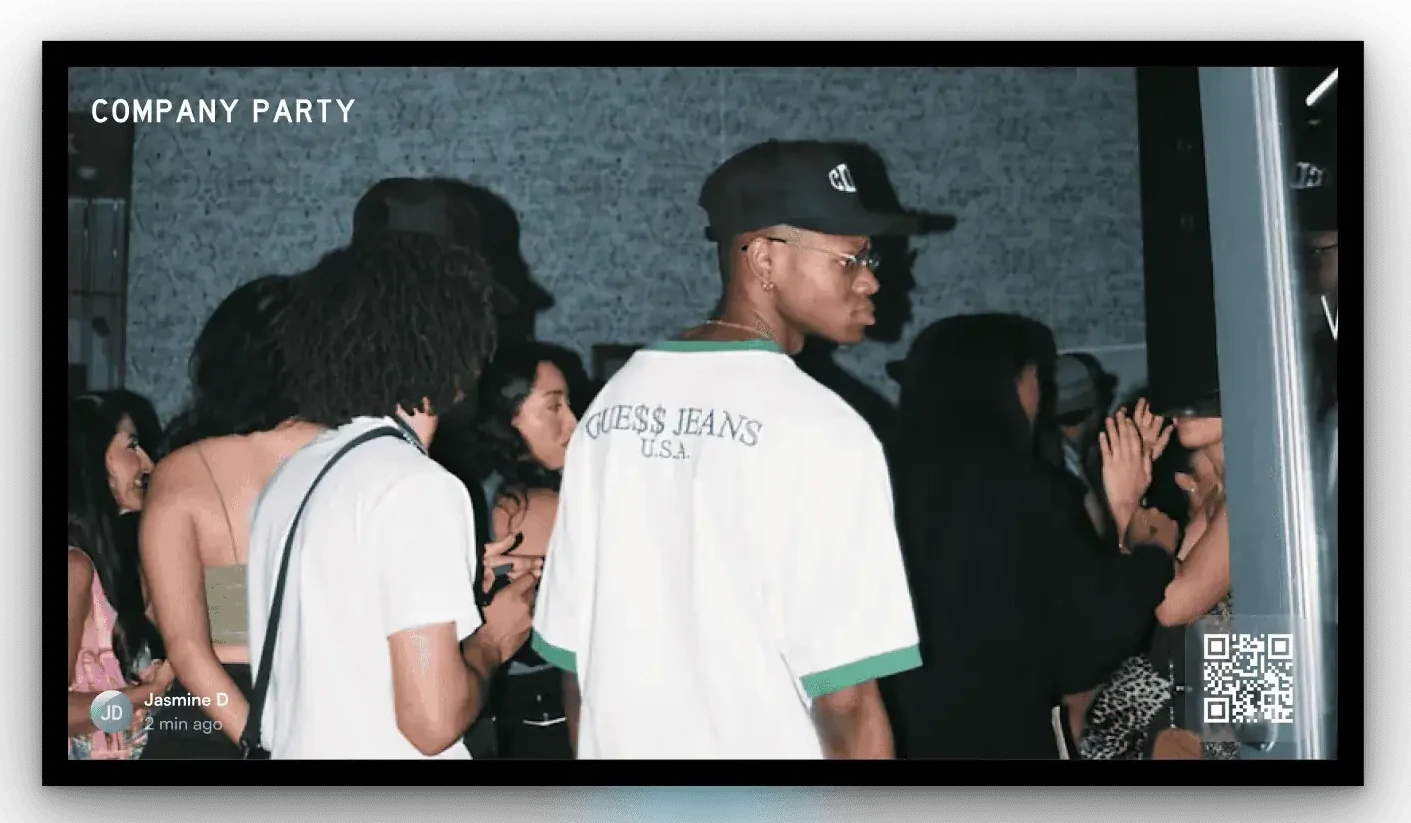
POV Camera’s Live Slideshow runs in any modern web browser and connects to venue screens via HDMI or casting, no proprietary software required. New guest photos appear in real time, and the host can customize transition timing and toggle on-screen elements like event title and QR code. Deleting or favoriting a photo from the dashboard updates the slideshow immediately.
Source: POV Camera
Post-event, the gallery provides indefinite access. Organizers own all event photos and can use them on social channels. There is no automated tagging or person identification.

Simple Booth’s Live Feed converts any public gallery into a real-time slideshow for TV, projector, or browser, available on all plans. Interstitial ads can be placed throughout the gallery grid on higher tiers, turning the display into a branded content stream.
Source: Simple Booth
Simple Booth galleries offer more features than POV’s. Operators customize gallery title, color themes, header images, custom hashtags (auto-populated on X/Twitter shares), and external header links.
Gallery privacy levels (Public, Unlisted, Private) give operators visibility control. Sharing options span Facebook, X, LinkedIn, and Instagram, with Simple Booth automatically reformatting incompatible layouts into Instagram-compatible files.
The analytics dashboard tracks social sharing activity, including Facebook share clicks, referred views, reactions, and comments (metrics POV does not provide).
Pricing comparison
The pricing models reflect how differently these platforms operate.
POV Camera uses a per-event, flat-fee model tiered by guest count. Events with up to 10 guests are free, no payment required.
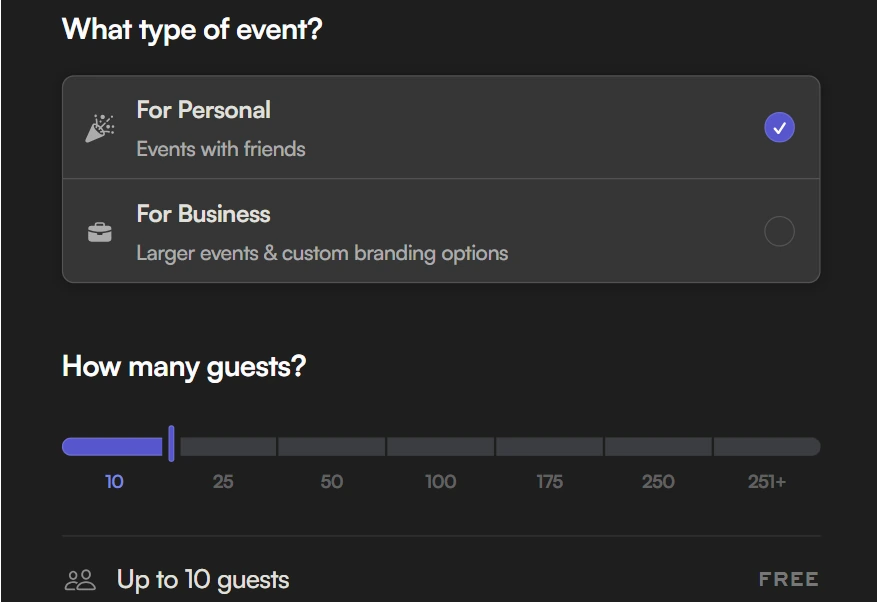
Paid tiers scale with attendance: the Apple App Store confirms price points of $4.99 (25 guests), $9.99, $14.99, $24.99, $34.99, $54.99, $64.99, and $89.99 for larger events. The exact guest-count mapping for tiers above 25 guests is determined by an interactive calculator on the pricing page.
The Business Essentials Package (Custom Branding, Live Slideshow, 24/7 Support) is available as an add-on to any tier, with the 10-guest free tier including it as a trial. Additional costs include the Photobook at $19.99+ plus shipping and the optional POV Block at $14.99.
No recurring subscription, no per-device licensing, no implementation fees. Each event is a standalone purchase.
Simple Booth uses a per-license subscription model with three billing cycles:
| Plan | Weekly | Monthly | Annual |
|---|---|---|---|
| Lite | $14.99 | $29.99 | $289.99 |
| Core | $24 | $49 | $490 |
| Plus | $49 | $99 | $990 |
| Pro | - | $149 | $1,490 |
| Select | - | $249 | $2,490 |
Each plan includes one device license. Additional devices require add-on licenses at a discounted rate (roughly 74% of the primary license on monthly and annual terms). Hardware kits are sold separately through buy.simplebooth.com, with Event Kits starting at approximately $2,090. AI effect credits cost $0.10 each on top of the subscription.
A 7-day free trial is available with 25 free AI credits. No permanent free plan.
The cost comparison depends on usage patterns. A couple buying POV for a 100-guest wedding pays a one-time fee under $35. A photo booth rental company running weekly events with Simple Booth pays at least $24/week in software plus the initial hardware investment, but earns revenue from every rental.
A brand running quarterly activations with Simple Booth captures leads worth more than the subscription cost, while POV captures photos but no contact data.
Reliability and connectivity
POV Camera requires an internet connection for guests to join and upload photos. This is a hard constraint. At outdoor weddings, rural venues, or conference halls with spotty Wi-Fi, some guests may be unable to participate, or photos may fail to upload. A small number of App Store reviews cite gallery loading issues during events.

Source: POV Camera
POV compensates with simplicity: fewer moving parts means fewer failure modes. There is no hardware to malfunction, no software updates to disrupt an event, and no batteries to run out.
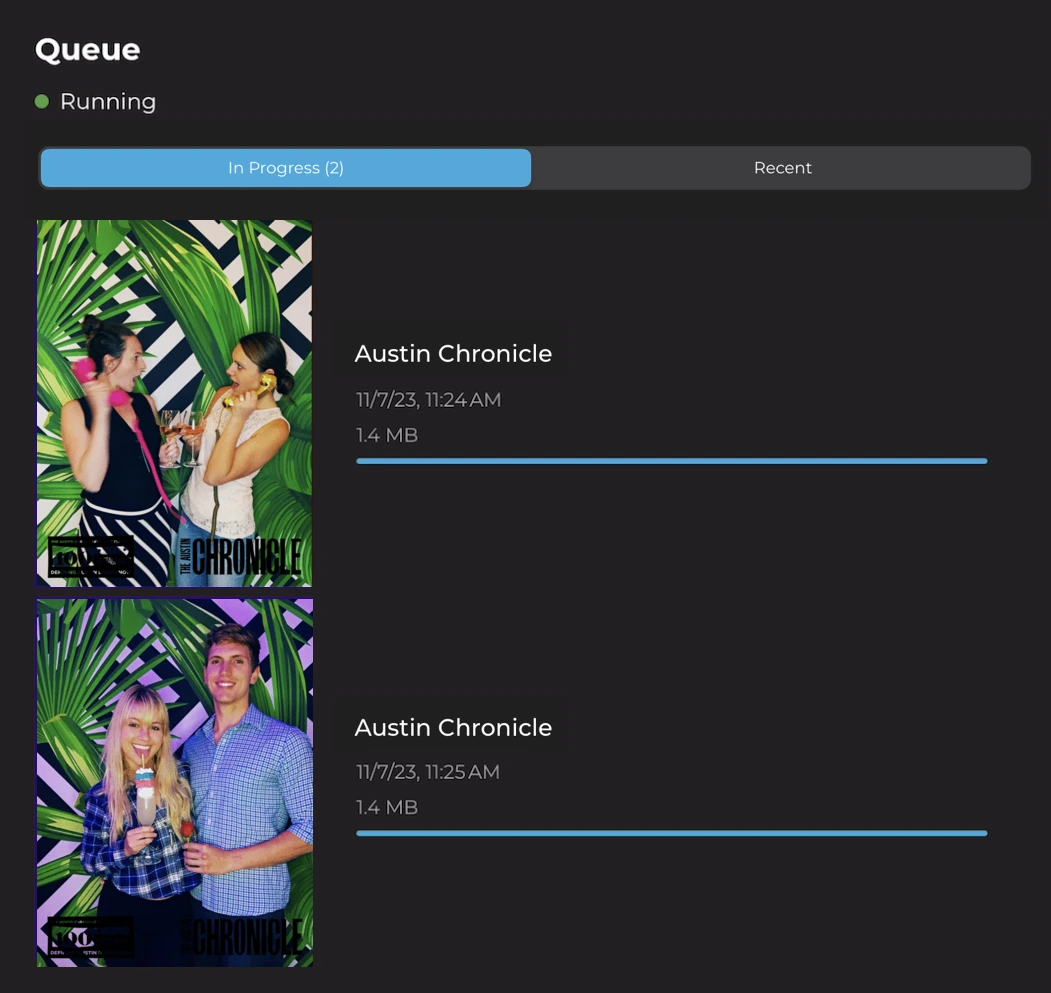
Simple Booth has a structural advantage here. The HALO app queues sessions in offline mode and delivers them when connectivity returns. The booth keeps operating without interruption, so guests never know the venue’s Wi-Fi dropped. For permanent installations and venues with unreliable connectivity, this matters.
Source: Simple Booth
The trade-off is that Simple Booth has more components that can fail. App Store reviews document occasional bugs after software updates, with one reviewer describing four events disrupted by post-update issues.
Simple Booth’s own support advises disabling auto-updates before events. The HALO hardware is built for durability (50,000-hour LED rating, machined aluminum body), but any hardware adds a failure surface that POV’s phone-only approach avoids.
Simple Booth also supports dual voltage (110V–240V) for international use, and compatible portable batteries provide 6+ hours runtime for events without wall power.
Simple Booth vs POV Camera: Which should you choose?
The choice depends less on which platform is “better” and more on what kind of event photography you need.
Choose POV Camera if:
- You’re planning a wedding, birthday, baby shower, or social gathering where candid guest photos matter most
- You want every guest participating from wherever they are at the event, not just those who visit a booth
- Zero setup and zero equipment is a priority
- Per-event pricing fits your budget better than an ongoing subscription
- You value the disposable camera aesthetic (shot limits, scheduled reveals, anticipation)
- Your event has reliable internet and your guests carry smartphones
- You don’t need lead capture, analytics, or CRM integrations
- You want a physical photobook as a post-event keepsake
Choose Simple Booth if:
- You run a photo booth rental business and need professional hardware that pays for itself through bookings
- You’re a venue operator wanting a permanent, unattended photo installation that captures guest data
- Lead capture and first-party data collection are primary goals for your brand activations
- You need AI photo effects, DSLR camera quality, or custom layout design
- Your events happen in locations with unreliable connectivity where offline mode is essential
- You want analytics on social shares, gallery views, and participant demographics
- You need multiple capture formats (GIFs, video, boomerang clips) beyond still photos
- You want a browser-based Virtual Booth for digital or hybrid activations without hardware
Kurt Nielson Photography found that Simple Booth “paid for itself pretty quickly. Now it’s just extra money coming in.”
Consider using both if you’re running a large event where a branded photo booth station captures leads and polished content at one location, while POV covers the candid photography happening everywhere else.
A corporate holiday party could have a Simple Booth HALO in the lobby collecting email addresses alongside a POV event for guests to capture the dance floor, toasts, and spontaneous moments. The two approaches complement each other.
The real question isn’t which platform is better, but what your event photos need to accomplish. If the answer is “capture moments from every guest’s perspective,” POV delivers that with minimal effort and cost.
If the answer is “create a branded experience that generates leads, social content, and marketing data,” Simple Booth is built for that purpose. Each platform does its job well because it doesn’t try to do the others.
Simple Booth vs POV Camera FAQ
What is the main difference between Simple Booth and POV Camera?
POV Camera distributes a disposable camera experience to every guest’s phone via QR code, producing candid, multi-perspective event photos with no hardware or app download required. Simple Booth is a photo booth platform combining proprietary ring-light hardware, an iPad app, and cloud management to produce branded photos with lead capture and analytics.
Can I use POV Camera and Simple Booth at the same event?
Yes. The two platforms serve different purposes and can run simultaneously. Simple Booth works as a dedicated photo station for branded photos and lead capture, while POV captures candid moments from every guest’s phone throughout the venue. They don’t interfere with each other.
Does POV Camera work without Wi-Fi?
No. POV requires an internet connection (Wi-Fi or cellular) for guests to join the event and upload photos. Simple Booth’s HALO app includes offline mode that queues sessions and delivers them when connectivity returns, making it more reliable in venues with inconsistent internet.
How does pricing compare between Simple Booth and POV Camera?
POV uses per-event flat fees starting at $4.99 for 25 guests, with a free tier for events up to 10 guests. Simple Booth uses per-device subscriptions starting at $14.99/week (Lite plan), with hardware kits sold separately starting around $2,090. POV is cheaper for one-off events; Simple Booth’s recurring model suits businesses running events regularly.
Does POV Camera offer lead capture or data collection?
No. POV is built for photo collection, not marketing data. Guests join anonymously by scanning a QR code. Simple Booth collects email, name, phone, and other data through a built-in form during the photo delivery flow, achieving opt-in rates of 87 to 89% and syncing data with MailChimp or a custom CRM via API.
Which platform is better for weddings?
POV Camera is the more natural fit for weddings. Its candid, distributed approach lets every guest contribute photos from their perspective, and the scheduled photo reveal creates a shared post-wedding moment. Simple Booth works well as a dedicated photo booth station at the reception but doesn’t capture the spontaneous moments happening across the venue.
Does Simple Booth require an iPad?
Yes. The HALO app runs exclusively on iPad. The Virtual Booth product is browser-based and needs no hardware, but the core HALO photo booth experience requires an iPad paired with the HALO ring-light kit. POV Camera requires no specific hardware; guests use whatever phone they already have.
Which platform is better for corporate events and brand activations?
Simple Booth is stronger for corporate use cases where lead capture, branded content, analytics, and marketing ROI matter. It captures first-party data, produces branded photos with custom layouts and AI effects, and provides social sharing analytics. POV’s Business Essentials Package adds logo overlays and a live slideshow, but lacks data capture, CRM integration, and reporting.
Keep reading
 Showdowns
Simple Booth vs Darkroom Booth: Which Photo Booth Software Fits Your Business in 2026?
iPad turnkey vs Windows DSLR veteran. Simple Booth or Darkroom Booth?
 Showdowns
Simple Booth vs Flassh: Which Photo Booth Platform Fits Your Events in 2026?
Integrated system vs speedy setup. Simple Booth or Flassh?
 Showdowns
Simple Booth vs LumaBooth: Which Photo Booth Software Fits Your Business in 2026?
Turnkey hardware vs budget cross-platform app. Simple Booth or LumaBooth?